Get Full Government Meeting Transcripts, Videos, & Alerts Forever!
Get email alerts on the Child Welfare Permanency topic
No spam. Unsubscribe anytime.
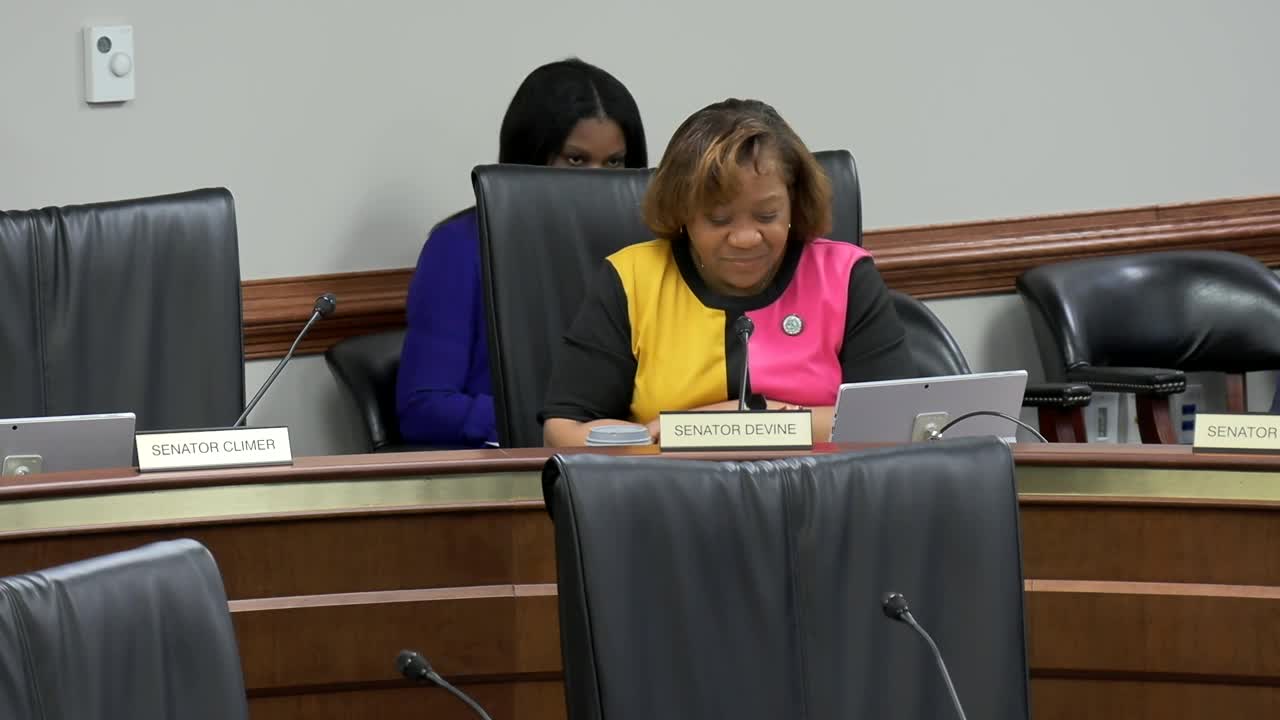
Senate subcommittee advances bill to shorten foster-care permanency timelines and speed adoptions
Summary
A Senate Family and Veteran Services subcommittee voted to give bill S.240 a favorable report to the full committee after agreeing to amendments that shorten permanency-planning deadlines, require earlier hearings and require pre-TPR background summaries for prospective adoptive families.
A Senate Family and Veteran Services subcommittee voted to give bill S.240 a favorable report to the full committee on a voice vote after adopting amendments that tighten timelines for permanency planning and speed steps toward adoption.
The bill, introduced on the floor by Senator Billy Garrett, would reduce the time before a court moves from reunification efforts to a permanency plan that can include termination of parental rights (TPR). "All we're trying to do is take 3 months off of the permanency planning and instead of having, we'll have to wait a year and 18, excuse me, 18 months total, bring it down to 15 months," Garrett said when explaining the measure's core change.
Why it matters: Subcommittee members, adoptive attorneys and child-welfare officials said shorter deadlines and earlier hearings should reduce the number of children who linger in foster care and improve chances of adoption. Amanda Whittle, state child advocate and director of the Department of Children's Advocacy, told the panel that "time matters," noting federal guidance seeking permanency within 24 months and arguing earlier hearings reduce long stays that worsen outcomes. Whittle added, "as of today, there are 3,274 children and youth in foster care in South Carolina," and said an earlier permanency-planning hearing helps identify necessary next steps sooner.
Key provisions and procedural changes - Permanency-planning hearing: The bill aligns state practice with the department's policy by moving the statutorily required permanency-planning hearing from 12 months to 9 months after a child enters foster care, a change proponents said will force earlier evaluation of reunification prospects. - Reunification window: The bill shortens the statutory reunification window from 18 months to 15 months (the 15 months would be measured from the date the child enters foster care), the sponsor said, to reduce repeated extensions and accelerate decisions about filing for TPR. - Pre-TPR work and background summaries: The bill directs that certain pre-adoption work—background summaries and case preparation for prospective adoptive families—begin earlier (within 60 days of filing for TPR), a change witnesses said would allow some adoptions to be finalized more quickly once parental rights are terminated. - Notice and service: The legislation attempts to reconcile notice and service rules for unmarried biological fathers; the subcommittee agreed to an amendment to refine the statutory wording so the two processes do not conflict in practice. - Reporting and review cadence: The bill would require more timely reporting and hearings; sponsors discussed tightening the interval between the merits hearing and the permanency-planning hearing (committee members asked for the statute to reflect consistent investigative and hearing deadlines).
What supporters said - Senator Billy Garrett (Senator, Greenwood County) said the changes are incremental and focused on getting children into permanent homes sooner while preserving judges' discretion for exceptional cases. - Jim Thompson, a private adoption attorney who said his practice handled roughly 61 adoptions last year, told the committee the existing South Carolina law contains internal inconsistencies: "The Feds required that all states have a 15 month timeline, but our statute already had the 18 month timeline…What this is saying is, let's be consistent." He clarified that the 15 months begins when the child enters foster care. - Amanda Whittle, state child advocate and director of the Department of Children's Advocacy, described research and federal goals on timeliness and said moving the permanency-planning hearing earlier and shortening the reunification window would reduce long-stay foster placements and provide better prospects for children.
Concerns and amendments Committee members raised several concerns during the hearing: whether shortening the statutory window might prematurely cut off parents who are achieving progress, how to preserve rights in cases where a child may inherit significant assets, and whether courts and DSS have capacity to meet accelerated deadlines. Several senators asked for statutory language to make clear narrowly defined exceptions where additional time is justified and to ensure judges must put reasons on the record when extending timelines.
The subcommittee agreed to two subcommittee-level amendments that were discussed on the record: tightening the synchronization of investigative and merits-hearing deadlines (members discussed moving the 35/45-day windows into closer alignment) and clarifying the notice/service language for unmarried fathers so it does not require duplicative process. The committee also discussed requiring that any judicial extension beyond the statutory timeline be documented with findings that could withstand appellate review.
Formal action and next steps At the close of the meeting the subcommittee adopted the amendments and gave S.240 a favorable report to the full committee. The chair announced the measure "as amended is going to be received a favorable report to the full committee."
Ending note Committee members asked the bill sponsor and agency staff to provide a one-page visual timeline for parents and practitioners showing key milestones (probable-cause hearing, merits hearing, permanency-planning hearing, TPR filing and required hearing windows). Staff agreed to provide that chart to the committee.