Get Full Government Meeting Transcripts, Videos, & Alerts Forever!
Get email alerts on the Child Welfare Permanency topic
No spam. Unsubscribe anytime.
Senate subcommittee advances bill to shorten foster-care permanency timeline to 15 months
Summary
A Senate Family and Veterans' Services subcommittee voted to forward S.240, which would move several permanency milestones earlier — including changing the permanency planning hearing from 12 to 9 months and reducing the maximum reunification period from 18 to 15 months — and require earlier preparation of adoption background summaries.
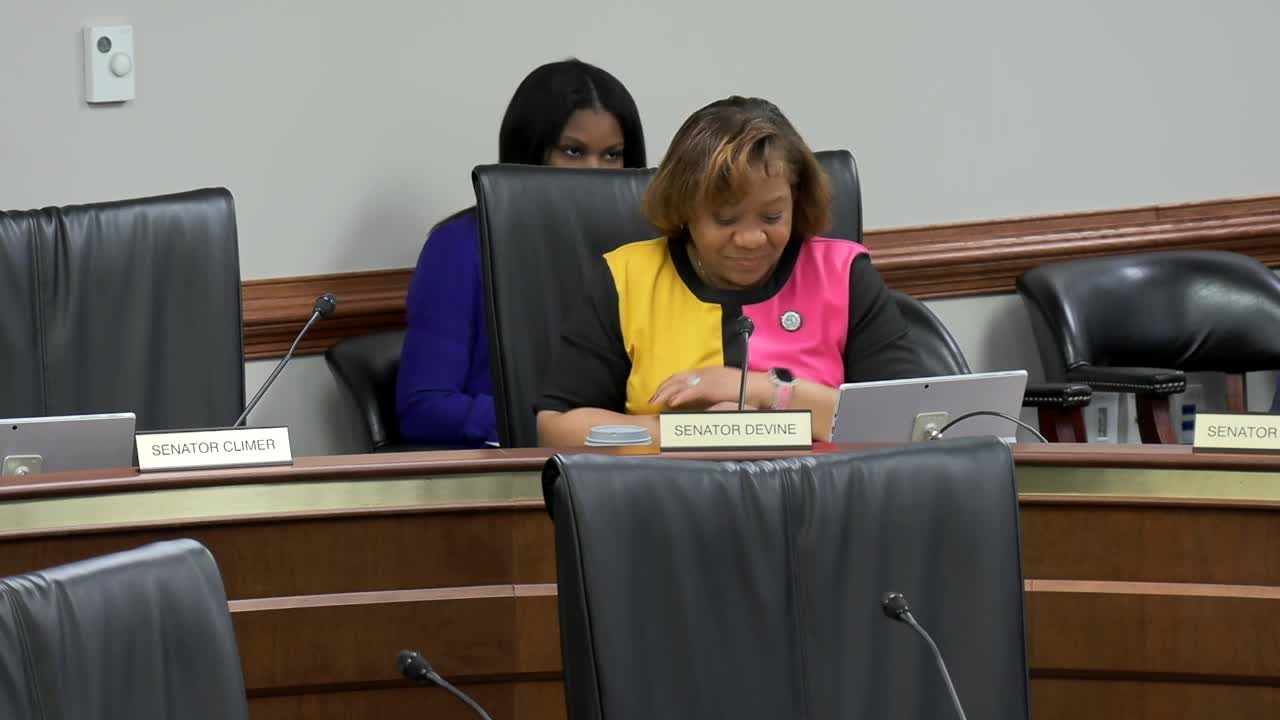
A Senate Family and Veterans' Services subcommittee on Tuesday gave a favorable report, as amended, to S.240, legislation that would shorten several timelines in South Carolina child-welfare cases to move children toward permanent homes more quickly. The subcommittee forwarded the bill to the full committee after a voice vote; the transcript records an affirmative voice vote and no roll-call tally was recorded.
Supporters said the bill aligns state law with federal timelines and Department of Social Services (DSS) practice and would reduce the length of time children spend in foster care. "We have been working on a plan to expedite and try to get adoptions in South Carolina done quickly," said Senator Billy Garrett, the bill sponsor, arguing the proposal would reduce the ostensible three-month gap between current state practice and federal expectations. Garrett said the bill would move the point at which a family moves from reunification efforts to a termination-of-parental-rights (TPR) filing from 18 months to 15 months and shift the permanency planning hearing from 12 months to 9 months.
The measure also includes other provisions supporters described as designed to speed adoption: allowing service by publication when a parent cannot be located, requiring preparation of a background summary for prospective adoptive parents within 60 days of filing for TPR, enabling post-adoption visitation agreements, and a targeted tax exemption to offset some adoption costs.
Why it matters: experts and witnesses told the subcommittee earlier hearings and studies show time in foster care affects children's chances of reunification or adoption and their long-term welfare. Amanda Whittle, the state child advocate and director of the Department of Children's Advocacy, said "time matters," and cited research that the probability of reunification after two years in care falls sharply to about 6 percent. Whittle and witnesses also described how moving the permanency planning hearing earlier creates an earlier judicial review point and, if appropriate, accelerates the start of TPR proceedings and the search for adoptive families.
Debate and concerns: committee members and witnesses debated whether shortening the statutory timeline would harm parents who need more time to complete treatment plans or who lack access to services. Jim Thompson, an attorney who practices adoption and foster-care law, said the bill aims to eliminate a recurring three-month statutory inconsistency in South Carolina and argued "If you are a committed earnest parent, 15 months is long enough." Other members pressed how the change would be enforced in practice and asked whether judges or skilled attorneys could still delay cases for years. Garrett and witnesses said the bill aims to make 15 months the clear public policy and that additional statutory language and court-level reforms — including pilot programs assigning one judge to a case from start to finish — are intended to reduce judicial or procedural delay.
Procedural fixes and clarifications discussed during the hearing included: aligning the merits-hearing statutory deadlines (the transcript shows a merits hearing commonly at about 35 days while DSS investigations may take up to 45 days), specifying the circumstances under which a court may extend the timeline for "extraordinary" cases, resolving ambiguities between "notice" and "service" for unmarried biological fathers, and ensuring DSS will begin the adoptive-family background summary earlier so adoptions can proceed faster if TPR is granted.
Evidence and numbers offered in committee: witnesses provided current-state figures to the panel. Committee staff reported 3,274 children and youth in foster care in South Carolina at the time of the hearing and said that figure is down roughly 1,400 from about four years earlier. Witnesses also said infants surrendered under "Daniel's Law" were averaging about 4 to 5.5 months to adoption in recent cases.
What the subcommittee directed: senators agreed to draft two technical amendments identified during questioning — one to tighten the synchronization between the merits hearing and DSS's investigation timetable (35 versus 45 days) and another to clarify the statutory wording for service/notice to unmarried biological fathers. Senator Garrett said the subcommittee would pursue those amendments before the full committee. Committee staff also agreed to provide a visual timeline of statutory milestones and court deadlines for counsel and parents.
Votes at a glance: the subcommittee recorded a voice vote approving a favorable report on S.240 "as amended" to the full committee; the transcript records a vocal "aye" and "nay" but does not include a roll-call or numeric tally.
Next steps: the bill will be considered by the full Senate committee with the understanding members will circulate the technical amendments discussed in subcommittee. If advanced further, the measure would change several statutory timing points that govern when courts may move from reunification efforts to TPR filings and adoption planning. The legislation, as discussed, retains judicial discretion for truly exceptional cases and contemplates post-adoption agreements and earlier preparation of adoptive-family materials to shorten the time from TPR to finalization.