Get Full Government Meeting Transcripts, Videos, & Alerts Forever!
Get email alerts on the Veterinary Board Nomination topic
No spam. Unsubscribe anytime.
Committee gives favorable report to Bridal Bock for State Board of Veterinary Medical Examiners
Summary
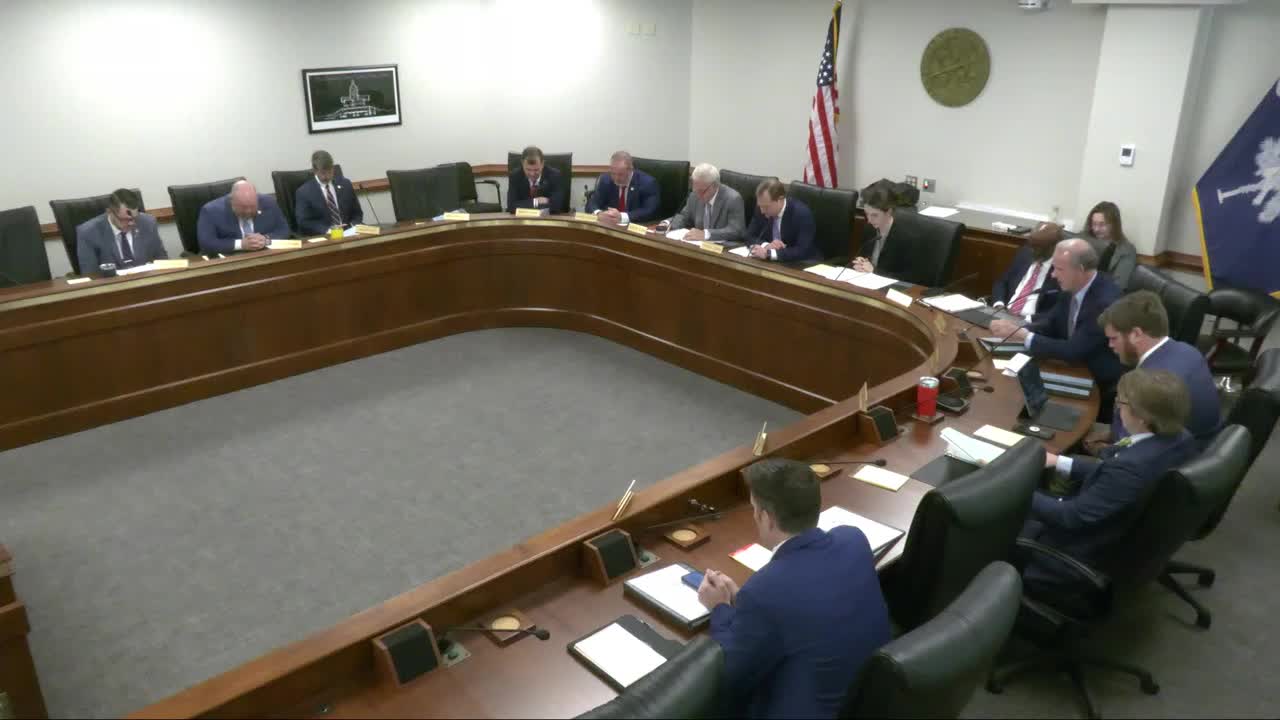
The Senate Agriculture and Natural Resources Committee voted unanimously to give a favorable report to Bridal Bock’s nomination to the State Board of Veterinary Medical Examiners after a hearing that highlighted veterinary technician credentialing and shortages of large-animal veterinarians.
The Senate Agriculture and Natural Resources Committee voted unanimously to give a favorable report to Bridal Bock’s nomination to the State Board of Veterinary Medical Examiners after a confirmation hearing in which senators discussed workforce shortages for veterinary technicians and large-animal veterinarians.
Bock, a veterinary technician who has worked in multiple states and has lived in South Carolina for about six years, told the committee she is motivated to “give back to the field of veterinary medicine,” noting she holds a specialty credential in emergency and critical care. She said professional recognition for veterinary technicians has advanced in recent years and pointed to state-level title protection as one important development.
Those audience and committee members who spoke about industry needs said more licensed technicians and incentives for large-animal veterinarians are needed. “Large animal vets are definitely something we need more of in the state as well,” the senator from Darlington said, and described her district as having “exactly one large animal vet.” The senator said new federal rules requiring veterinarians’ prescriptions for certain livestock medications have increased costs and travel burdens for producers.
Committee members asked Bock about continuing education and professional credentials. Bock said the state requires about 12 hours of continuing education biannually for technicians; she also described the requirements of her specialty board, saying applicants typically document about 50 hours of specialty work before applying and may log roughly 25 hours annually thereafter. She described teaching at a local technical school in Monks Corner and serving as treasurer of the State Association of Veterinary Technicians.
After questions and brief praise for her practical experience, the committee considered a motion to give Bock a favorable report. The motion, moved by the senator from Catawba and seconded, passed with all members present voting in favor; the record also showed several senators submitted proxies in support. Committee leaders said the nomination will be forwarded to the full Senate for consideration at the next appointments session.
The hearing also included discussion of the new veterinary school partnership referenced by several senators as a potential long-term boost to the state’s supply of veterinarians, and committee members mentioned possible tax relief and other incentives being discussed nationally to encourage veterinarians to practice in rural or mixed-animal settings.
The committee did not take any other formal action on rule changes or funding during the session; its recorded action was the favorable report on Bock’s nomination.