Get Full Government Meeting Transcripts, Videos, & Alerts Forever!
Get email alerts on the Open Enrollment topic
No spam. Unsubscribe anytime.
Garfield Heights leaders propose limited open enrollment for high school to stabilize district
Summary
Superintendent Dr. Reynolds proposed a limited open-enrollment plan for grades 9–12 that would admit up to 50 students tied to specific programs such as AG, arts and STEAM; returning district students would get priority and transportation would generally not be provided.
Superintendent Dr. Reynolds proposed a limited open-enrollment plan for Garfield Heights City Schools on Monday, asking the board to consider admitting up to 50 out-of-district students for grades 9–12 who commit to district programs such as the agricultural sciences (AG) program, band and other arts, or STEAM offerings.
The proposal is aimed at stabilizing enrollment in a district the superintendent described as “very transient,” and to boost participation in new and expanding programs. “I am proposing that we do a limited open enrollment of about 50 students,” Dr. Reynolds said, adding that admitted students would be expected to enroll in and commit to a district program on entry.
Board members pressed for details on priorities, transportation and discipline. The superintendent said returning Garfield Heights students would be given top priority and would “not count against our 50” if they were already residents returning to district schools. On transportation, Dr. Reynolds said many high schools do not provide it, and the draft administrative guideline will be adjusted to emphasize that the district typically will not provide high-school transportation for open-enrolled students.
The draft also builds in an annual reapplication requirement: families would apply each year and admissions would operate by capacity and, where needed, a lottery. On discipline and continued eligibility, board members asked whether students who display behavioral problems after enrollment could be dismissed. Dr. Reynolds said the district would need to review legal and operational options and that, once enrolled, students are entitled to the district’s educational and disciplinary processes; eligibility for the following year could be affected.
Board members discussed flexibility in setting the cap and recommended phrasing such as “up to 50 slots” to avoid a hard annual commitment if staffing or enrollment shifts. Several members supported making the program tuition-free; staff noted tuition calculations are governed by state formulas and that the district’s funding mix is largely state-based. Dr. Reynolds said he would revise the proposal to reflect the board’s feedback and bring a refined draft back for committee or board consideration.
The board and staff also noted that related policy changes will be needed, including revisions to residency and registration language and possible updates to insurance and interdistrict policy language. Staff said they will consult with legal counsel and their NEOLA policy contact to identify required policy and procedural changes.
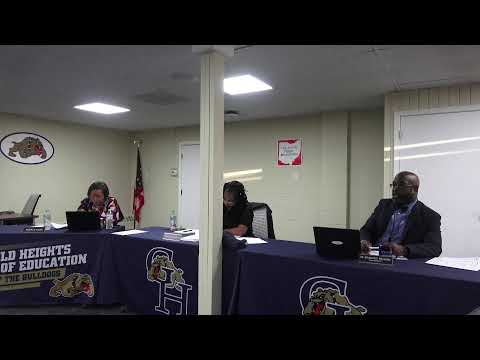
The proposal remains at the discussion stage; no formal board action on open enrollment took place at the March 10 work session.