Get Full Government Meeting Transcripts, Videos, & Alerts Forever!
Get email alerts on the Homelessness Camping Ordinance topic
No spam. Unsubscribe anytime.
Kings County board introduces ordinance targeting unlawful camping, adopts abatement policy
Summary
The Kings County Board of Supervisors introduced and waived first reading of a new ordinance prohibiting unlawful camping and approved an abatement policy that sets procedures, property-retention rules and referral pathways to social services.
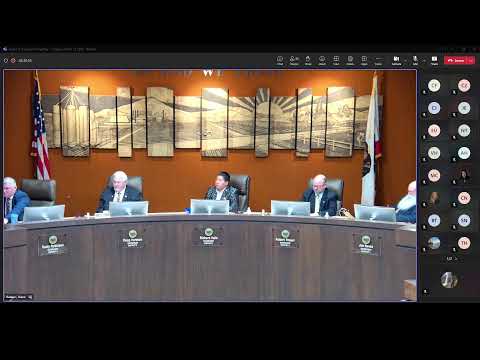
Kings County supervisors on Tuesday introduced and waived the first reading of an ordinance to add Article 12 to Chapter 14 of the Kings County Code, creating new prohibitions and an abatement process for unlawful camping and obstruction of public rights of way. The board also approved the companion Unlawful Camping Abatement Policy, which lays out priority response levels, property-management rules and referral options to services.
The ordinance, presented by Alex C. Walker, administrative analyst for Kings County administration, was framed as a public-health and public-safety measure. Walker said the county drafted the ordinance in light of the U.S. Supreme Court decision in City of Grants Pass v. Johnson and subsequent state direction: "The proposed draft maximizes flexibility and discretion for the county to effectively enforce its ordinances in compliance with the state and federal law while also allowing for noncriminal enforcement to appropriately support those in violation with the ordinance," Walker said.
The county and staff told the board the policy is intended to protect public and private property and to maintain publicly accessible areas "in a safe and sanitary manner for peaceful use and enjoyment for the public at large and to protect the health, safety, and welfare of the community." The policy allows law enforcement and county partners to offer service referrals—such as behavioral health assessments, HSA resources or Care Court—before or during abatement actions depending on the circumstance.
On property handling, Walker said the policy aligns with state guidance and that "the property will be retained for 90 days." The policy specifies that obviously hazardous items (for example, soiled property posing a health risk) may not be collected, while personal property such as identification, photographs and intact backpacks would be bagged, tagged and stored for retrieval consistent with department procedures.
The ordinance is a civil enforcement tool with a criminal component available by statute; staff told the board the civil framework permits noncriminal interventions and referrals where appropriate but does not preclude criminal prosecution where the facts support it. The board was told the ordinance would take effect 30 days after final passage. If the board waives the first reading and introduces the ordinance as it did Tuesday, the second reading and potential adoption are scheduled for March 18, 2025, with an effective date of April 17, 2025.
Supervisor Rusty Robinson moved the motion to introduce and waive the first reading and to approve the abatement policy; Supervisor Robert Thayer seconded. The roll call vote was five in favor, none opposed.
The agenda packet includes the draft ordinance, the abatement policy, and a resource list for people who may be affected by enforcement. Staff said the county will publish required notices and that the policy and ordinance were reviewed by county counsel and circulated among impacted departments.
Ending: If adopted, staff will publish a pre-adoption summary and the ordinance will be on the board agenda for second reading on March 18.