Get Full Government Meeting Transcripts, Videos, & Alerts Forever!
Get email alerts on the Immigration Enforcement topic
No spam. Unsubscribe anytime.
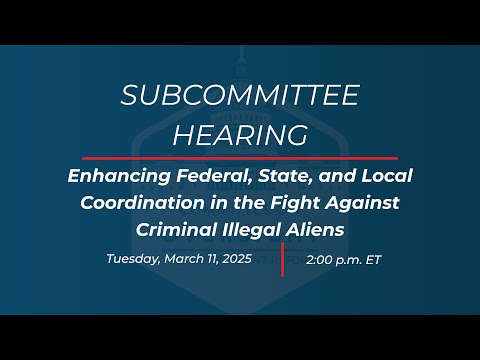
House subcommittee splits over 287(g), ICE detainers and cartel threats at first hearing
Summary
The House Oversight and Reform Subcommittee on Federal Law Enforcement spent its first hearing on competing views of immigration enforcement, local‑federal coordination and the role of transnational criminal organizations in U.S. public safety.
The House Oversight and Reform Subcommittee on Federal Law Enforcement spent its first hearing on competing views of immigration enforcement, local‑federal coordination and the role of transnational criminal organizations in U.S. public safety.
Chairman Higgins opened the hearing explaining the panel would examine "homeland security, criminal justice, federal law, regulatory enforcement, border security, and immigration enforcement," and said the subcommittee would focus in particular on "criminal illegal aliens" and coordination between federal immigration authorities and local law enforcement.
The hearing featured three witnesses: Pinellas County Sheriff Bob Gualtieri; Joseph Humayre, executive director of the Center for a Secure and Free Society; and Carrie Doyle, a former principal legal adviser for U.S. Immigration and Customs Enforcement (ICE). Members of both parties pressed the witnesses on detainer practice, 287(g) task forces, cartel activity and the impact of sanctuary or "welcoming" city policies.
Sheriff Bob Gualtieri (Pinellas County, Fla.) urged expanded local participation in ICE programs and stronger statutory authority for detainers. Gualtieri said many county jails now work with ICE to hold people on detainers accompanied by arrest or removal warrants and described criminal cases his office had transferred to ICE custody. "These people are deported and not released back into the community to yet commit more crime," Gualtieri said, adding that a federal law giving detainers "force of law" would prevent people who have been charged with serious crimes from being released back onto the street. He also described the 287(g) Task Force model and said Florida sheriffs had increased participation since January, asserting that restoring training and designation in jails was central to public safety.
Joseph Humayre argued that mass migration has been "weaponized" by state and nonstate actors to weaken the United States and said transnational criminal organizations are expanding U.S. networks. Humayre testified that his research shows large numbers of recent illegal entries and asserted links between migration flows and rising fentanyl deaths and gang activity; he warned of "convergence" where criminal, terrorist and illicit actors share logistics and infrastructure inside the United States. Humayre attributed the spread of Venezuela‑linked gang Tren de Aragua to organized direction from foreign actors and urged stronger national security responses.
Carrie Doyle, who served as ICE’s principal legal adviser from 2021 to 2024, offered a different emphasis, saying municipal "welcoming" policies can coexist with public safety. Doyle cited Boston as an example of a large city she described as safe while using community‑policing and trust policies that limit routine local cooperation with ICE so residents will report crimes and testify. "A scared city is not a safe city," Doyle said, and she disputed claims that local policies prevent all joint federal‑local enforcement, noting cities regularly cooperate with federal task forces for serious crimes.
Members split along familiar lines. Republicans including Representative Andy Biggs, Representative Paul Gosar and Representative Matt Gaetz pressed witnesses on cartel networks, fentanyl trafficking, and whether sanctuary policies prevent removal of dangerous offenders. Several Republicans endorsed broader use of 287(g) and legislative changes to give detainers greater legal effect. Democrats, led by Ranking Member Summer Lee, raised civil‑liberties concerns and highlighted cases and statistics showing ICE has arrested non‑criminal immigrants; Lee cited the case of Mahmoud Khalil, whose removal was blocked by a judge, and warned that aggressive enforcement can chill speech and family life.
Witnesses and members also disputed facts and causes. Humayre and Gualtieri quoted large numerical tallies for border encounters and drug deaths; Doyle warned that ICE custody includes many people without criminal convictions and that local trust policies aim to keep victims and witnesses safe for policing. Multiple members raised legal questions about detainers' voluntary nature and the limits of state and local authority under the Constitution; Doyle and other witnesses noted detainers are administrative and that their legal effect varies by jurisdiction and court rulings.
Several members also raised the role of private detention contractors and family detention: Ranking Member Lee noted recent announcements that CoreCivic and GEO Group planned new or reopened facilities and questioned whether detention contracts create perverse incentives. Members on both sides pressed the witnesses for details on coordination with tribal authorities, HIDTA (High‑Intensity Drug Trafficking Area) programs and bed capacity for ICE detention.
No formal votes or binding actions were taken at the hearing. Chairman Higgins closed by directing members to submit additional materials and questions for the record and signaled further oversight on these issues.
The hearing made clear that the subcommittee will pursue follow‑up on bed capacity, statutory authority for detainers and 287(g) participation, the domestic footprint of transnational gangs and the immigration court backlog cited by several witnesses.