Get Full Government Meeting Transcripts, Videos, & Alerts Forever!
Get email alerts on the Elections.proof Of Citizenship topic
No spam. Unsubscribe anytime.
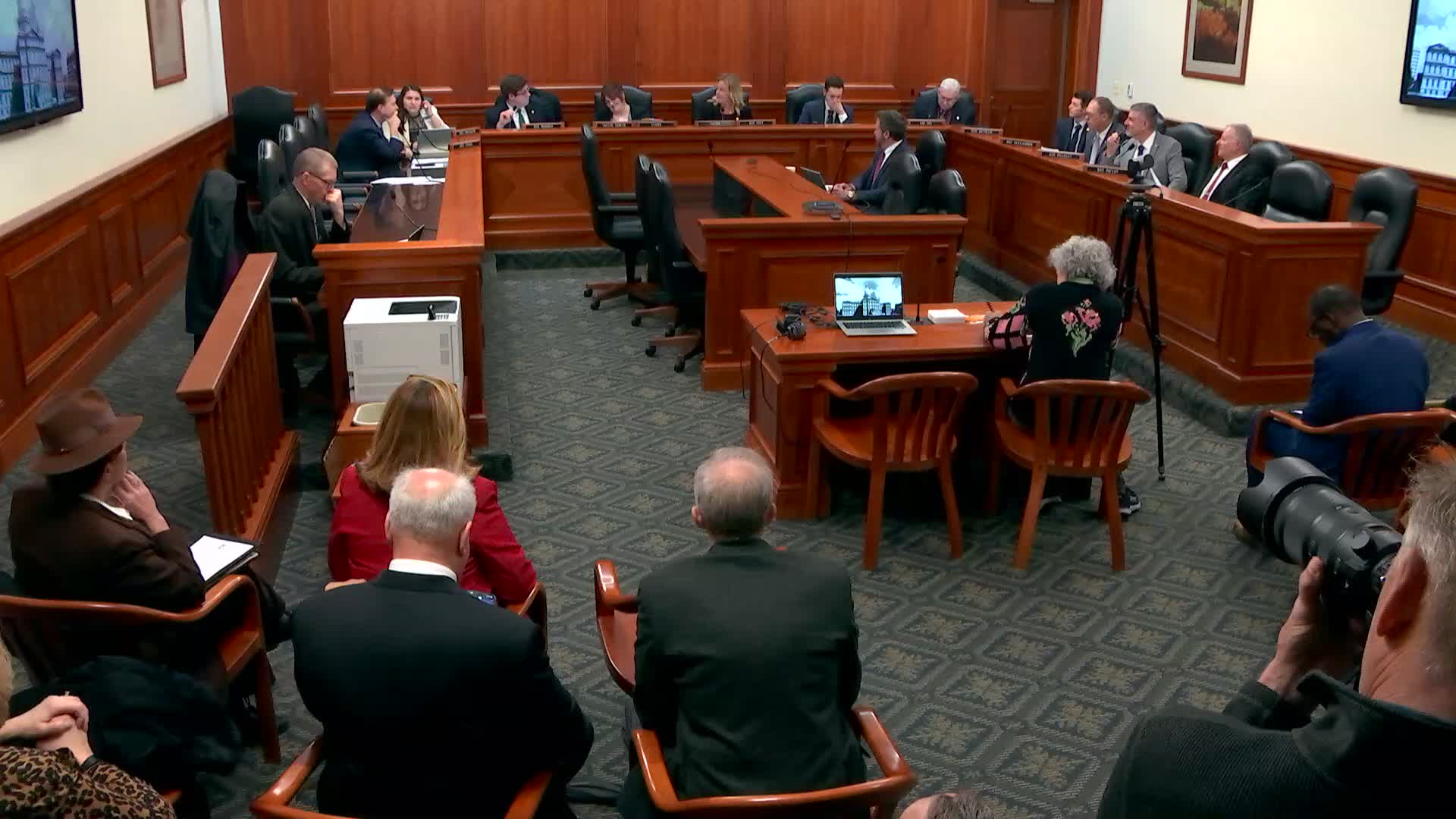
Michigan House election committee hears competing testimony on proposal to require proof of U.S. citizenship to register
Summary
The Michigan House Election Integrity Committee heard testimony on House Joint Resolution B, a proposed constitutional amendment that would require documented proof of U.S. citizenship to register to vote.
The Michigan House Election Integrity Committee heard testimony on House Joint Resolution B, a proposed constitutional amendment that would require documented proof of U.S. citizenship to register to vote. Sponsors and supporters told the committee the change would protect the accuracy of the qualified voter file; the Department of State and a coalition of voting-rights groups warned the proposal could block eligible voters and said the resolution leaves key implementation details undefined.
Supporters included Representative Anne Bolen and Representative Jay DeBoyer, who said the resolution merely requires the Secretary of State to establish a systematic verification process and would “make it harder to cheat.” Bolen said, “It is not the Save Act. It will not lead to women being disenfranchised.” DeBoyer, a former county clerk, said the measure is a “common-sense approach to securing our elections” and argued that recent changes in registration and absentee systems have strained clerks’ ability to keep accurate rolls.
The deputy director of the Secretary of State’s office opposed the resolution in testimony, saying Michigan has improved its administration and that the proposal would “undo all of that success with a shortsighted and anti-voter proposal that we know will harm voters and prevent thousands of people from voting.” The deputy director said the resolution does not define acceptable documents and warned it could create practical hurdles—for example, costs and processing delays for birth certificates and passports—and cited Michigan’s recent rise in election-administration rankings and about 5.7 million Michiganders who cast ballots last November.
Civil-rights and voting-access groups testified in opposition. Kyle Zawakin, legislative director for the ACLU of Michigan, said HJR B “is a threat to voting access to Michiganders” and argued that audits in other states have found only isolated instances of noncitizen voting. Melanie Macy of Promote the Vote said the amendment would “create significant barriers to voter registration and access to the ballot,” noting that obtaining some documents can be costly and slow. Mariah Bryant, director of programs at Voters Not Politicians, said the resolution “forces voters to jump through hoops” and risks rolling back access expanded by recent ballot proposals.
Local election workers and election-integrity advocates offered contrasting views. Shelly Lake, a deputy clerk, said she has “never heard a voter complain about being asked for ID” and urged the committee to act, arguing clerks need more control over the qualified voter file. Patrice Johnson of Michigan Fair Elections and Pure Integrity Michigan Elections told the committee her group conducts volunteer oversight and said verification is needed because the state’s voter rolls include “more registered voters than eligible voting-age citizens” in some counts.
Sponsor Representative Brian Postumas framed the amendment as consistent with public opinion, saying “it should be easy to vote and hard to cheat,” and stressed the legislature would set implementing rules. He told the committee he would not support implementing legislation that “does not allow a clear path for married women to . . . prove their citizenship easily” and said he is exploring a nationwide verification database to reduce burdens on individuals.
Committee members pressed witnesses on specific risks and consequences. Several members cited audits and court cases in other states (witnesses gave differing figures) and asked how many lawful voters could be blocked; witnesses disagreed about scale and implementation. The deputy director said there is no single federal database that definitively shows citizenship status and urged the committee to identify acceptable documents before advancing any constitutional change. The sponsor and some supporters said the legislature can design pathways to avoid burdening service members, seniors and married people who change names.
No formal committee vote on House Joint Resolution B was recorded at the hearing; the panel heard testimony from sponsors, the Department of State, civil-rights groups and other stakeholders and moved to take additional testimony and written comments. Procedural business included a motion to excuse the absence of Representative Sowell, which was granted “without objection,” and Representative Fox’s motion to approve committee minutes from Feb. 25, which the committee approved by voice.
The committee did not adopt the resolution at the hearing; supporters and opponents left differing assessments of how many lawful voters might be affected and what documents the state should accept. The record includes written testimony submitted by multiple organizations; the committee indicated it will continue discussions and may receive additional briefings and draft implementing language before any further action.