Get Full Government Meeting Transcripts, Videos, & Alerts Forever!
Get email alerts on the Open Air Drug Markets topic
No spam. Unsubscribe anytime.
Council presses city for clear plan on open-air drug markets; administration outlines multiagency approach
Summary
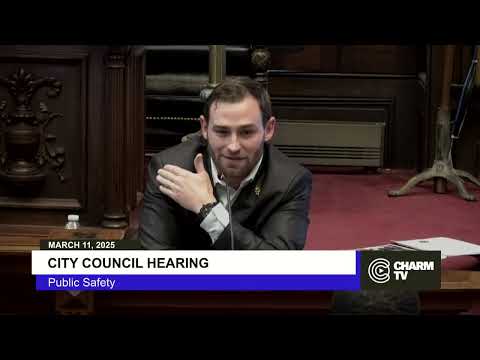
Baltimore City Council Public Safety Committee Chair Mark Conway opened a hearing focused on open-air drug markets; the mayor’s office, police and prosecutors described a multiagency, tiered response but council members pressed for a clear, published plan and timeline.
Baltimore City Council Public Safety Committee Chair Mark Conway opened a hearing focused on one of the committee’s recurring constituent complaints: open-air drug markets that community members say make neighborhoods feel unsafe.
“While today's hearing focuses on open air drug markets, I wanna clarify that this issue is not separate from our broader public safety efforts,” Tyler O'Shanella, the mayor’s legislative liaison, told the committee. “We will not tolerate open air drug markets.” He said the Scott administration pairs enforcement by the Baltimore Police Department with long-term investments such as removing vacant properties, housing assistance, job training and recreational opportunities.
Council members repeatedly pressed for a clear, published plan and a timeline for responding to locations with persistent drug activity. Chair Conway said councilmembers and constituents want to know what happens when they report a recurring drug corner: whether enforcement alone will be used, whether engagement and services will be offered, and how long a neighborhood should expect to wait for measurable change.
Deputy Commissioner, Baltimore Police Department, described a tiered law-enforcement response that begins with district patrol officers, neighborhood coordinating officers and district action teams and can escalate to specialized units including Mobile Metro, the Warrant Task Force and the Group Violence Reduction Strategy (GVRS). The deputy commissioner said those units focus on disrupting drug trafficking organizations that “may be found to drive violence.” He added that officers must balance narcotics enforcement with availability to respond to 911 calls and other core responsibilities tied to the department’s consent-decree obligations.
Lieutenant Colonel Velte, who oversees the anti-crime section and GVRS-related work, explained prioritization: weekly violence-review meetings and scorecards identify groups driving shootings or homicides and guide outreach followed, when necessary, by enforcement takedowns.
Tom Donnelly, deputy state's attorney, said the State's Attorney’s Office coordinates regularly with BPD and other partners and uses several prosecution paths, including citation dockets, district-court drug dockets and circuit-court drug-treatment courts. Donnelly told the committee that prosecutors weigh grand-jury and jury dynamics when deciding which marijuana and drug cases to pursue: “We had a grand jury about a year ago who refused to indict any cannabis or marijuana related cases, even if there were multiple firearms involved in the case.”
Stephanie Mavronos, director of the Mayor’s Office of Neighborhood Safety and Engagement (MONSE), described neighborhood stabilization responses that the administration activates after major law-enforcement takedowns or when data show accelerating violence. She said localized engagement, services and targeted cleanups can reduce visible street-level activity; citing one partnership, Mavronos said a local stabilization effort “showed, I think, a 86% decrease in open air activity” during the engagement period. MONSE staff said stabilizations are tailored to each location and that they work with councilmembers to diagnose problems and coordinate resources.
Council members raised operational concerns: whether MONSE resources are allocated by measured violence metrics or by requests from elected officials; how long stabilizations last before moving to other priorities; and how to ensure that enforcement leads to durable results rather than short absences and quick returns to street sales. The mayor’s liaison committed to returning to the committee with an update on a proposed timeline and plan.
Committee members and agency leaders agreed on the need for a multi-pronged toolset—community engagement and services for young people, targeted enforcement for violent or organized sellers, prosecution pathways and neighborhood stabilization after takedowns—and on the need for clearer documentation so councilmembers can explain the city’s response to constituents. Conway said he will work with the administration to develop a clearer, publishable approach.