Get Full Government Meeting Transcripts, Videos, & Alerts Forever!
Get email alerts on the Childcare topic
No spam. Unsubscribe anytime.
State officials warn MILEAP childcare funding will need more general fund support by FY26
Summary
The House Appropriations subcommittee heard that Michigan’s new MILEAP agency is rapidly drawing down federal carryforward funds used to sustain expanded childcare eligibility and will need additional state general fund dollars in FY26 to maintain current program rules.
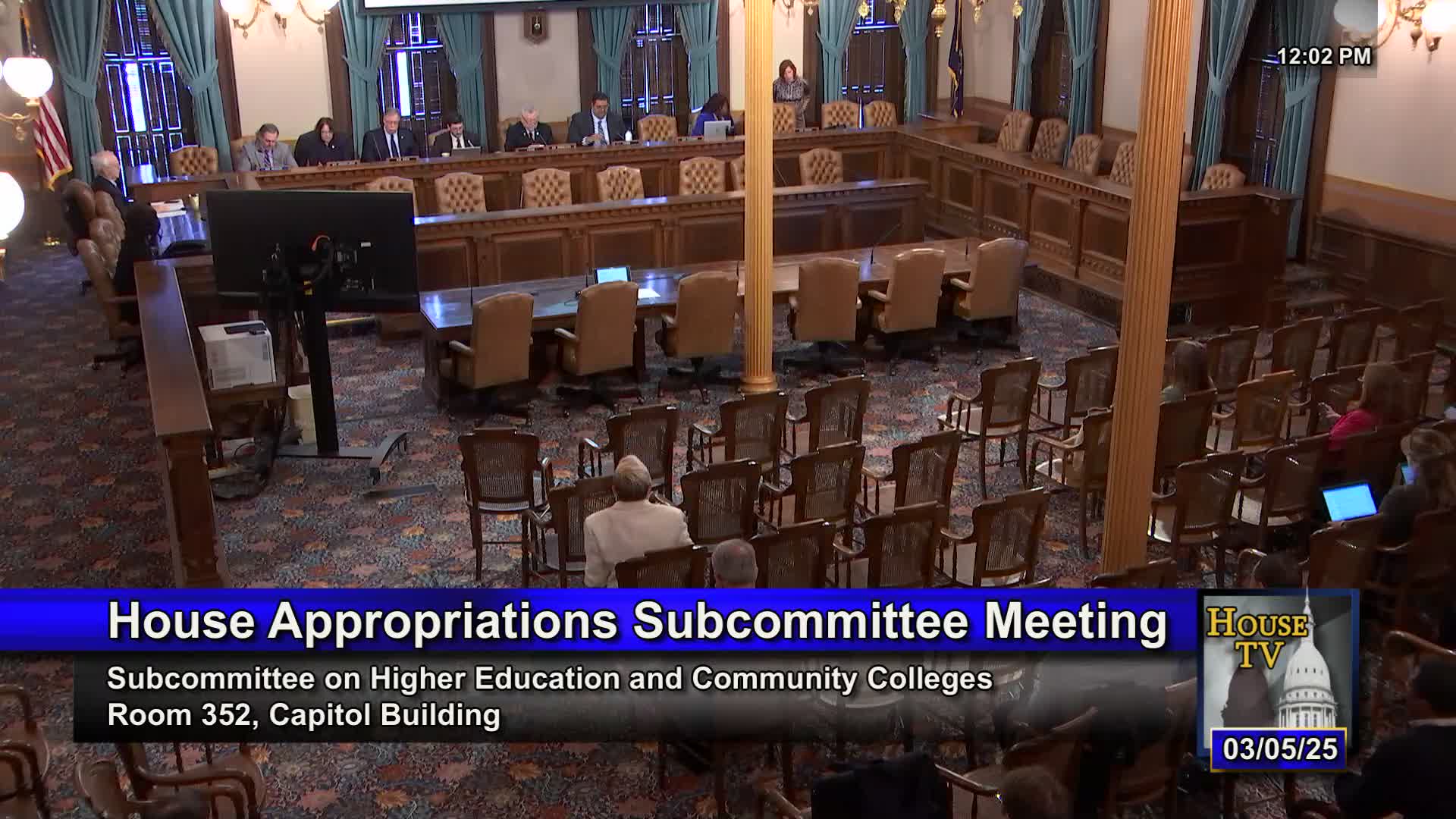
The House Appropriations Subcommittee on Higher Education and Community Colleges heard on an agency budget briefing that the Michigan Department of Lifelong Education, Advancement and Potential (MILEAP) has seen steep cost growth in its Child Development and Care program and will need more state general fund support to maintain current eligibility and benefits.
Noel Benson, fiscal analyst, House Fiscal Agency, told the panel the newly created department’s FY 2024–25 gross budget is roughly $643.9 million and is “almost entirely federal and general fund.” Benson said 79 percent of that budget is federal funding and 21 percent state general fund, with a small amount of restricted and private funds. He said about 91 percent of MILEAP’s budget supports the Office of Early Childhood Education and that the Child Development and Care scholarship is the single largest line item at roughly $499 million.
Benson said the state increased the program’s income eligibility during the COVID era to 200 percent of the federal poverty guidelines and kept that threshold after federal COVID-era funds expired. That decision caused caseloads to grow “far faster than we were anticipating,” Benson said, and the department relied on federal carryforward balances to cover the higher costs. “We were basically carrying forward $200 million every single year to sustain this program … the carryforward going into ’26, we’re not going to have any,” Benson said, adding that “additional general fund appropriated in the ’26 budget” will be required to maintain current program rules.
The committee heard details of provider reimbursement and eligibility. Benson said providers are reimbursed on a block schedule based on child age, provider type and quality rating; licensed exempt home providers can be reimbursed between about $2.55 and $4.30 per hour, while licensed providers’ two‑week payments range roughly from $144 to $864 depending on hours. He said the state serves families with incomes up to 200 percent of the federal poverty guidelines (about $51,600 annually for a family of three, per the presentation) and serves children under 13 (or under 18 when in court supervision or incapable of self‑care).
Committee members asked follow up questions. Representative Rogers said she is hearing from providers that expanding preschool for 4‑year‑olds can have ripple effects on care availability for infants and toddlers; Benson described that concern as anecdotal and said he did not have state caseload data to confirm a trend but offered to seek additional information from the department. Representative Roth asked Benson to identify the restricted funds listed in the budget; Benson said the restricted sources include the adult foster care facilities licenses fund, child home and center licenses fund, certification fees and the Michigan Merit Award Trust Fund (the latter comprising about two‑thirds of those restricted amounts).
The presentation also reviewed other MILEAP functions: administering the Great Start Readiness Program (the state preschool program, funded within the school aid budget but administered by MILEAP), childcare licensing and regulation (functions moved from LARA to MILEAP), out‑of‑school and summer learning programs, the Teach Early Childhood scholarship, Head Start collaboration, and postsecondary scholarship administration and credential attainment initiatives.
Benson said one‑time appropriations in the current budget total about $35 million and that most general fund dollars in MILEAP are directed to early childhood services. Committee members asked for further program‑level data, and Benson offered to obtain and deliver additional breakdowns and clarifications to members.
The briefing produced discussion and requests for follow‑up but no formal committee action or vote.