Get Full Government Meeting Transcripts, Videos, & Alerts Forever!
Get email alerts on the School Safety And Wellbeing topic
No spam. Unsubscribe anytime.
Evanston districts credit SEL work and a no‑phone policy with improved engagement and fewer incidents
Summary
District 202 and District 65 leaders told the joint meeting that social‑emotional learning (SEL) alignment, restorative practices and a bell‑to‑bell no‑cell‑phone policy at ETHS have coincided with higher reported student engagement and declines in disciplinary incidents.
Administrators from Evanston Township High School (District 202) and Evanston/Skokie District 65 described coordinated social‑emotional learning (SEL) programs, restorative practices and a new bell‑to‑bell cell‑phone policy at ETHS that district staff say correspond with increased classroom engagement and lower incident counts.
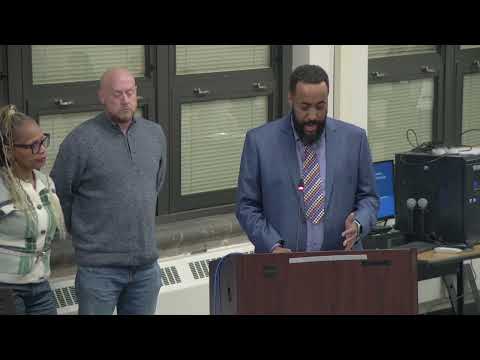
Dr. Tayah Kinsey, assistant superintendent/principal at ETHS, and Brian Harris, manager of culture and climate for District 65, presented aligned SEL goals, professional learning for staff and multi‑tiered systems of support (MTSS) interventions.
"SEL is the process through which all young people and adults acquire and apply the knowledge, skills, and attitudes to develop healthy identities, manage emotions ... and make responsible and caring decisions," Dr. Kinsey said, summarizing the districts’ working definition.
District speakers presented several data points they attributed to coordinated SEL efforts and the new cell‑phone practice at ETHS: - 97% of students reported they know what to do under the bell‑to‑bell phone policy after the first semester; 91% of teachers reported students are engaged in classwork and discussion, up from 53% in 2022. - Sense‑of‑belonging among ETHS students rose from 51% in school year 2023–24 to 58% in 2024–25 on a district survey; SEL well‑being positive responses reached 73% in fall 2024. - Overall unique incidents in the first semester declined 12% year‑over‑year; the school reported a 46% decrease in harassment and intimidation, 31% decrease in unauthorized presence, 9% decrease in fighting, and a 12% decrease in total unique incidents when comparing the current first semester to last year. - Students with IEPs saw total incidents fall from 1,604 (school year 2023–24) to 1,009 (2024–25), and high‑severity incidents fell from 360 to 301 over the same comparison.
Administrators described preventative and tiered interventions — restorative conferences, prevention/de‑escalation training, face liaisons and expanded mental‑health supports — and said the districts are training staff to use restorative practices as alternatives to exclusionary discipline.
District leaders also emphasized transition supports: expanding face‑liaison support into upper elementary grades, family transition nights, summer orientation for incoming freshmen and targeted programming for vulnerable populations.
Multiple board members and the mayor praised the emphasis on adult relationships and on building belonging for students. Rachel, the student representative, urged more bilingual course offerings and translinguistic teaching so students do not abruptly lose access to content taught in Spanish in elementary school.
Why it matters: District officials said the combination of SEL, staff training and practical policies such as the bell‑to‑bell phone rule is aimed at improving student engagement and reducing the types of incidents that remove students from instructional time. They framed the work as school‑wide prevention rather than narrow disciplinary change.
Next steps: Districts plan to continue professional learning, broaden restorative practice training, maintain universal screeners and continue tracking belonging and incident metrics. Administrators said student voice and peer supports will be part of transition efforts.
Ending: Board members thanked staff for work across grades, and leaders said they will keep reporting outcome data as programs evolve.