Get Full Government Meeting Transcripts, Videos, & Alerts Forever!
Get email alerts on the Education Policy topic
No spam. Unsubscribe anytime.
Evanston school leaders say federal orders raise questions but districts will follow existing law
Summary
School and district leaders in Evanston said recent federal executive orders and "dear colleague" letters that target diversity and gender‑inclusion programs raise legal and operational questions but do not supersede existing federal civil‑rights law or Illinois law.
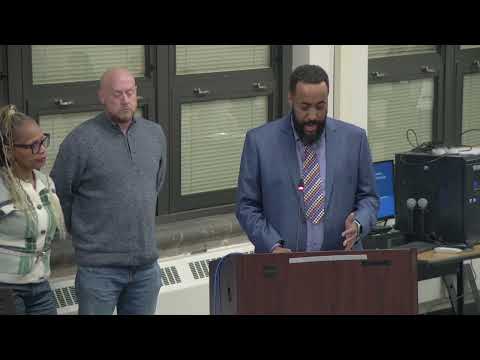
School and district leaders in Evanston told a joint meeting of Evanston Township High School District 202 and Evanston/Skokie District 65 that recent federal executive orders and accompanying "dear colleague" letters raise operational and legal questions but do not change the law they must follow.
The two districts’ administrators and board members framed the orders as an immediate cause for vigilance rather than immediate policy change.
"These orders ... are an affront to our inclusion initiatives," said Dr. Campbell (district administrator), describing the directives as posing "a very particular challenge" for schools that have spent decades expanding access. He said the districts are watching court action and consulting attorneys to determine next steps.
District 65’s Dr. Turner (district administrator) said the district will "remain unwavering in fostering inclusive and uplifting learning environments" and will continue to consult shared legal counsel with District 202. Board member Gretchen emphasized that executive orders and letters do not carry the force of law by themselves.
Dr. Gretchen (board member) explained the legal point more directly: "Executive orders and dear colleague letters do not carry the force of law. We have a host of federal civil rights laws, and we have some very strong Illinois civil rights laws, that remain the law that we follow." She added that only a change by Congress or the Illinois Legislature — or a court ruling — would alter that status.
Administrators said the districts are preparing for possible increases in Office for Civil Rights complaints and are watching how federal guidance and potential litigation will interact with state guidance. Dr. Campbell said the districts are assessing how to respond if compliance with new federal directives would conflict with data‑driven efforts to address racial disparities.
Board members and elected officials who spoke at the meeting framed the issue as both a legal and moral one. Mayor [identified only by first name in transcript] said she was "compelled to acknowledge" the legal point and described the moment as one that calls for public officials to stand with students and families.
Why it matters: The statements make clear the districts intend to keep operating under existing federal and Illinois civil‑rights statutes while monitoring higher‑court and administrative developments. That preserves the districts’ current approach to diversity, equity and inclusion pending any legally binding change.
What leaders said they will do next: District speakers said they will continue to consult shared legal counsel, monitor litigation and federal agency enforcement, maintain existing policies that align with Illinois law, and communicate with staff and families about the districts’ commitments.
The discussion occurred during a scheduled agenda item on federal executive orders and drew multiple public remarks and board comments.
Ending: Board members said they will continue to inform the public as legal guidance evolves and will rely on counsel and court rulings to guide any changes to district practice.