Get Full Government Meeting Transcripts, Videos, & Alerts Forever!
Get email alerts on the Pud Northeast Green Bay topic
No spam. Unsubscribe anytime.
Plan Commission recommends planned‑unit development for 168‑acre NE Green Bay site after lengthy public hearing; residents cite schools, traffic and water
Summary
The Green Bay Plan Commission on March 10 recommended approval of a planned‑unit development for about 168 acres on the city’s northeast side, forwarding the petition to City Council after more than an hour of public comment.
After a multi‑hour public hearing on March 10, the Green Bay Plan Commission recommended approval of a planned unit development (PUD) for roughly 168 acres roughly bounded by Algoma/Scottwood, Sussex, Church and Bay Settlement roads, forwarding the petition to City Council for the March 18 meeting.
What was proposed: Staff and the developer described an integrated low‑density residential subdivision with a mix of single‑family homes, limited two‑family buildings, two multifamily clusters (totaling about 160 units) and a small commercial parcel. Staff’s summary of the proposal identified approximately 396 total dwelling units: 218 single‑family homes, nine two‑family buildings (18 units) and 160 multifamily units; about 29.5 acres (≈17.5%) would be preserved as permanent open space and stormwater features. Staff noted the proposed development is lower density than the maximum range in the 2022 comprehensive plan once environmental constraints are taken into account.
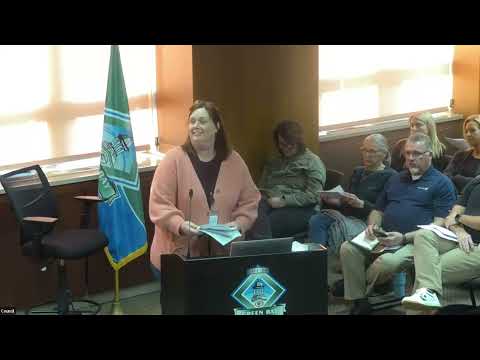
Why residents objected: More than 20 residents spoke at the hearing. Concerns focused on traffic and safety near Red Smith School and Sussex Road (drop‑off/pick‑up congestion), stormwater and flooding on downstream properties, potential loss of open space and the proximity of multifamily rental housing to established single‑family neighborhoods. Multiple residents asked whether the school district had been consulted about capacity; several urged limiting or eliminating the multifamily component.
Environmental and engineering points: Staff said the site contains significant wetlands and two navigable waterways that were not fully reflected in the 2022 comprehensive‑plan assumptions; that constraint, together with steep slopes up the Niagara Escarpment, reduced buildable acreage and lowered achievable density relative to some comp‑plan estimates. The developer said it had completed a topographic and wetland survey in the previous year and has sized on‑site stormwater ponds to handle the project’s runoff; developers also told the commission they had discussed partnering with the city to route additional upstream flow into the development’s stormwater system to slow discharge downstream.
Infrastructure matters: Several residents cited low potable‑water pressure in parts of the neighborhood. Developer representatives said they plan to install a dedicated water main and a pressure‑regulating valve to serve the new development; the developer mentioned the valve’s purchase cost as a material item required to raise pressure for the project. The developer said the project will be constructed in phases from south to north to build mains and services sequentially.
School capacity and timing: The developer said the school district’s enrollment trends indicated capacity would not be exceeded and that the project will be built over many years; residents disputed short‑term operational impacts at Red Smith School, especially during morning drop‑off and afternoon pickup.
Action and vote: Vice Chair Miller moved approval of the PUD as drafted; Commissioner Ryvinsky seconded. The Plan Commission voted in favor (voice vote) and forwarded the request to City Council for March 18.
Next steps and conditions: The PUD approval sets zoning and preliminary plan exceptions (lot frontage reductions, adjusted setbacks and higher impervious coverage thresholds for smaller lots). Detailed engineering, final platting and stormwater plans will be reviewed in subsequent subdivision and permit phases; any improvements to county roads would require county review and action.