Get Full Government Meeting Transcripts, Videos, & Alerts Forever!
Get email alerts on the Wildfire Mitigation topic
No spam. Unsubscribe anytime.
UC Cooperative Extension introduces tribal land stewardship adviser focused on beneficial burning
Summary
UC Cooperative Extension introduced Ali Zangdresik as the new beneficial burning and tribal land stewardship academic advisor. The position will support tribal partnerships, trainings, regulatory support and monitoring across Lake and Mendocino counties.
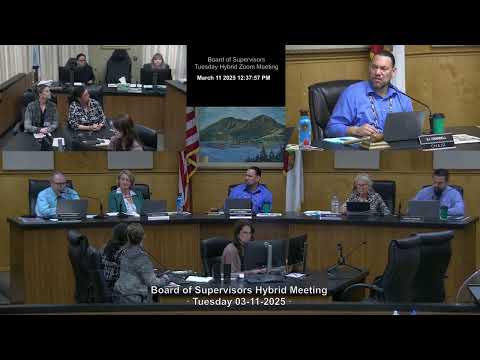
The University of California Cooperative Extension (UCCE) introduced Ali Zangdresik as the new academic advisor for beneficial burning and tribal land stewardship. The position is 1 of 3 statewide roles created to engage with tribal nations and support tribal stewardship work.
Matthew Barnes, UCCE area director, said the position will focus on tribal partnerships and community-based participatory research. Zangdresik outlined her background—bachelor’s degree in conservation biology from UCLA and a master’s in environmental justice and ecosystem science management from the University of Michigan—and described priorities that include relationship building with tribes, needs assessments, culturally informed monitoring and regulatory support such as CEQA and NEPA assistance.
Board members and the audience welcomed the hire and invited collaboration. Supervisors noted the role’s potential to support the county risk reduction authority and the Risk Reduction Authority’s risk-reduction work. A staff follow-up suggested inviting UCCE to the Risk Reduction Authority meeting (third Monday of the month) and coordinating on pre/post-fire monitoring and stewardship activities.
Ending: UCCE said the next steps will be relationship-building with tribes, a needs assessment this year to inform program activities, and organizing educational workshops and monitoring support based on tribal priorities.