Get Full Government Meeting Transcripts, Videos, & Alerts Forever!
Get email alerts on the Behavioral Health Opioid Response topic
No spam. Unsubscribe anytime.
Spokane County outlines Phase 2 plan for opioid settlement dollars, seeks city partnership to split costs
Summary
County staff asked commissioners to approve exploring a joint funding approach with the city to expand medication-assisted treatment, sobering services and STARS bed capacity using opioid settlement funds; staff estimated a county share of $400,000–$600,000 annually if the city joins, or about $800,000 annually if funded by the county alone.
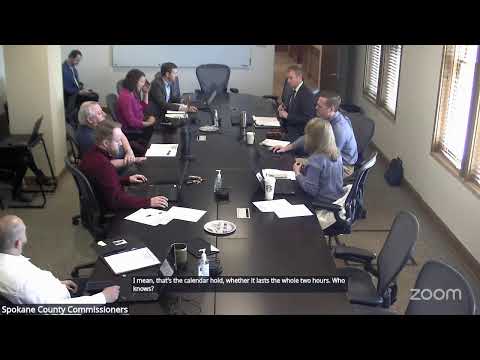
Spokane County officials presented a Phase 2 plan on March 10 to expand crisis and treatment options funded by opioid settlement (OPUS) dollars, asking commissioners to endorse further negotiations with the City of Spokane to share costs.
The proposal focuses on two linked expansions: (1) increasing walk-in medication‑assisted treatment (MAT) and daytime hours at Spokane Regional Health District (SRHD) clinics to reduce barriers for people after overdose or ER discharge, and (2) enlarging sobering and withdrawal‑management capacity at STARS (Sobering Treatment and Recovery Services) and improving connections to the planned Spokane Regional Crisis Relief and Sobering Center (CRC).
County staff said SRHD estimates an annual cost of about $800,000 to expand walk‑in MAT hours and staffing to serve more law‑enforcement drop‑offs and voluntary walk‑ins. County presenters said staffing costs are the largest driver because evaluations and medication dispensing require credentialed clinicians and nurses; overtime and administrative costs were included in the estimate. The county recommended leveraging SRHD’s insurance contracts so long‑term care transitions to Medicaid or commercial coverage after initial encounters.
STARS and partner organizations already provide sobering and triage services. County figures show 221 people used those services since Dec. 9, including 26 in the most recent month; about 80% were transitioned to withdrawal‑management services and 62 were referred to MAT. Staff recommended expanding STARS from the existing 6 beds and 6 triage chairs toward a scalable 12‑bed/12‑chair model (24 slots) so more people can be held safely off the street and transferred to inpatient treatment when clinically appropriate.
Staff described operational links between SRHD, STARS and the future CRC: when SRHD cannot accept a walk‑in or law‑enforcement drop‑off, STARS would provide an interim bed and transport back for a follow‑up clinical assessment. The county is also discussing transportation coordination with sheriff’s patrol and city contracted detox vans (CAR 50).
The county proposed a 50/50 cost split with the City of Spokane for the named projects; under that scenario the county’s annual exposure would be roughly $400,000 to $600,000 depending on the final scope. Staff said the county can fund the projects at the full amount without additional state substance‑abuse block grant funds through the near term, but cautioned future state or federal budget changes could affect available resources.
Commissioners gave staff direction to continue negotiations and meet with legal counsel to structure an interlocal agreement if the board chooses to move forward; one commissioner said she saw “all five head nods” to continue exploring the partnership. No formal vote was taken on March 10.
County staff flagged timing and uncertainties that could affect later decisions: final terms of city participation, final SRHD cost estimates once staffing needs are firmed, and potential changes in state funding or federal block grants. Staff committed to return with more detailed numbers and proposed legal language if the board wants to pursue an interlocal agreement.