Get Full Government Meeting Transcripts, Videos, & Alerts Forever!
Get email alerts on the Comprehensive Plan topic
No spam. Unsubscribe anytime.
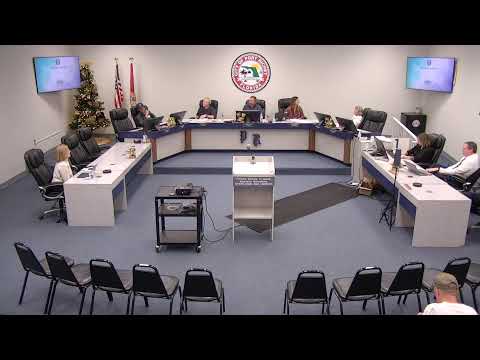
Port Richey planning board backs comprehensive plan update emphasizing coastal resilience, tourist‑accommodation registration
Summary
The Port Richey Planning and Zoning Board voted to forward a comprehensive plan update that extends the city’s planning horizon to 2045 and replaces the conservation and coastal management element with new policies aimed at flood resilience, infrastructure hardening and post‑disaster recovery.
PORT RICHEY, Fla. — The Port Richey Planning and Zoning Board voted to forward a comprehensive plan update that extends the city’s planning horizon to 2045 and replaces the conservation and coastal management element with new policies aimed at flood resilience, infrastructure hardening and post‑disaster recovery.
Tammy Vrana, an on‑call city planner with Vrana Consulting, told the board the rewrite responds to a 2023 state evaluation and appraisal and to state requirements that local plans include “peril of flood” policies. “The purpose of the public hearing is to review particularly the goals, objectives, and policies for certain elements of the city's comprehensive plan for which we found some inconsistencies with the latest state statute,” Vrana said.
The changes adopted in concept by the board include a complete replacement of the conservation and coastal management element; policies to assess and map flood risk; strategies for retrofitting or upgrading critical public infrastructure to improve flood resilience; and a package of multilayered land‑development code measures such as increased setbacks, erosion controls, bioswales and limits on impervious surfaces.
The updated language also clarifies what kinds of public infrastructure spending are acceptable inside the coastal high hazard area. The proposed text preserves restrictions aimed at avoiding incentives for new development in vulnerable areas while explicitly allowing limited investments that protect life, property and existing facilities — for example, repair, hardening or restoration of critical public infrastructure and improvements to stormwater systems and wastewater conveyance.
Board members and staff discussed how infrastructure projects such as road elevation will require measures to avoid shifting flood impacts to adjacent properties. Vrana said the policies are intended to create a framework that can be followed by later land‑development code amendments and building‑department standards: “This gives us a reasonable frame … so that we can sit down and workshop how do we deal with flooded roads in the future,” a board member said.
The update also touches nonconservation elements. Under the infrastructure element the board agreed to lower the city’s potable water level‑of‑service standard from 105 gallons per capita per day to 96 gallons per capita per day based on updated demand data. The plan directs the city to align its 10‑year water supply facilities work plan with the Southwest Florida Water Management District regional water supply plan and to remove an obsolete financial‑feasibility requirement from the capital improvements element.
Members discussed emergency preparedness measures for visitor accommodations and short‑term rentals. The draft language would require overnight tourist accommodations to maintain an evacuation plan; the board removed a specific reference to the business tax receipt process and discussed using a registration mechanism for short‑term rentals and other tourist lodging instead. A long public comment urged the city to create a one‑page, uniform evacuation sheet for hosts and incorporate registration into permit or registration filings for short‑term rentals.
Public comments at the start of the meeting highlighted local concerns unrelated to the plan text. Bob Hubbard, a Port Richey resident and local business advocate, urged the city to update its sign code so existing electronic signs can be repaired and newer LED/LCD technology can be allowed under a variance: “If it's existing, they should be able to repair their own signs,” Hubbard said. Another resident asked the board to place seawall repair and maintenance on a future agenda item.
After deliberation, Member Michael Perez moved to recommend the ordinance to city council “with the changes addressed today.” The motion carried on a voice vote; members recorded the motion as approved and agreed to forward the update to city council for final action.
The board also approved minutes for October and November 2024 earlier in the meeting and adjourned shortly after forwarding the comprehensive plan recommendation.
What’s next: The Planning and Zoning Board will forward its recommendation to Port Richey City Council for consideration. The board and staff indicated follow‑up code amendments and a public meeting on signage are planned to refine how the new plan policies are implemented.