Get Full Government Meeting Transcripts, Videos, & Alerts Forever!
Get email alerts on the Municipal Votes topic
No spam. Unsubscribe anytime.
Port Richey council approves series of ordinances and resolutions, including floodplain and impact-fee updates
Summary
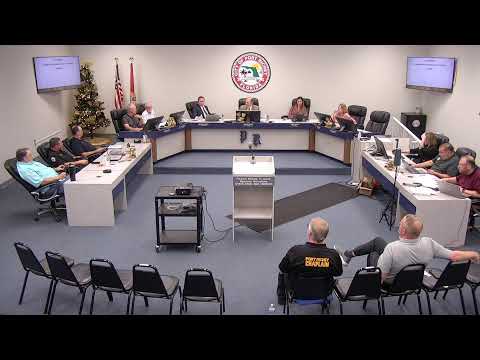
At its March 11 meeting the Port Richey City Council approved multiple second‑reading ordinances and companion resolutions covering floodplain rules, code enforcement, impact fees and nondiscrimination and approved several administrative items, including a board appointment.
Port Richey City Council on March 11 approved a slate of ordinances and companion resolutions updating floodplain regulations, code‑enforcement rules and development impact fees, and adopted administrative measures including a nondiscrimination policy and a grant application authorization.
The measures passed on second reading included amendments to the city code to update floodplain management (ordinance 25‑7‑11), changes to code‑enforcement language and permit procedures (ordinance 25‑7‑12), updated police and fire impact fees (ordinance 25‑7‑30) and a revised transportation impact fee schedule (ordinance 25‑7‑31). Council also approved a companion resolution adopting the transportation impact fee schedule (Resolution 25‑19), a Title VI nondiscrimination policy and plan (Resolution 25‑21) and authorization to apply for a stormwater master‑plan hazard‑mitigation grant (Resolution 25‑22).
Why it matters: the ordinances changed technical requirements for development and building in the city — including higher minimum elevations and other floodplain provisions — and updated developer fees that the city charges for new construction. The nondiscrimination policy is required for some state and federal grants; the grant resolution clears the way for the city to seek state hazard‑mitigation funds for a stormwater master plan.
Key actions and immediate effects - Ordinance 25‑7‑11 — floodplain management (second reading): approved on second reading; changes include updating the supporting study date, revising definitions for "substantial damage" and "substantial improvement," raising minimum building elevations, limiting enclosed contents below required elevations and requiring registered design professionals for dwelling foundations in coastal zones. (Effective date: as stated in ordinance.)
- Ordinance 25‑7‑12 — code enforcement and related definitions (second reading): approved on second reading; updates include expanding site cleanup requirements, aligning permit‑by‑affidavit language with the Florida Building Code and other technical edits.
- Ordinance 25‑7‑30 — police and fire impact fees (second reading): approved on second reading; updates police and fire impact fees in chapter 113, article 3 of the city code.
- Ordinance 25‑7‑31 — transportation impact fee (second reading): approved on second reading; the ordinance replaces the prior "fair share" calculation with a fee schedule and increases the transportation impact fee. Council later adopted Resolution 25‑19 as the companion schedule.
- Resolution 25‑19 — adopting transportation impact fee schedule: approved; council adopted the fee schedule recommended by staff and the city’s impact‑fee review.
- Resolution 25‑21 — Title VI / nondiscrimination policy and plan: approved; staff said the policy is required for some grant applications, including recent water‑facility and fire department grants.
- Resolution 25‑22 — authorize hazard mitigation grant application (stormwater master plan): approved; the resolution authorizes the city manager to submit the application to the Florida Department of Emergency Management and to execute grant documents.
- Board appointment: Jeanne (Jean) Rankin was added to the Board of Adjustment by majority vote after council amended the agenda to consider the nomination.
How the votes were recorded: Council took each matter on second reading; in each case the mayor called for the vote and councilmembers responded “Aye.” No roll‑call tallies with individual yes/no names were recorded in the meeting transcript; each motion was announced as carried after the vocal vote.
What council and staff said: City attorney Nancy Meyer read ordinance titles for the record. City staff described the technical and administrative changes in each ordinance during the public readings. Staff also told council the transportation impact fee schedule had not been updated in more than a decade and needed revision to reflect current costs.
What’s next: Each ordinance and resolution includes the standard codification, severability and effective‑date language; several items (notably the floodplain and seawall code topics) were flagged by councilmembers for follow‑up edits or future committee review if needed.
Ending note: Council approved the consent agenda and several minutes earlier in the meeting; the second‑reading items listed above were taken in sequence and each was approved during the same session.