Get Full Government Meeting Transcripts, Videos, & Alerts Forever!
Get email alerts on the Municipal Budget topic
No spam. Unsubscribe anytime.
Frostburg reviews first draft of FY2026 budget, flags water shortfall and employee pay requests
Summary
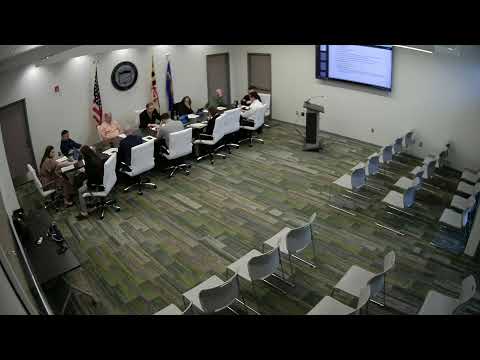
Frostburg City officials reviewed a condensed draft of the fiscal year 2026 budget at a work session, discussing tax‑rate options, a proposed $2 monthly garbage increase, a $613,000 projected water‑fund shortfall, and employee pay requests.
Frostburg City officials reviewed a condensed draft of the fiscal year 2026 budget at a work session, discussing tax-rate options, utility and garbage fees, employee compensation proposals, and several fund shortfalls.
City finance staff presented a high-level draft that assumes the current real‑estate tax rate of $0.70 per $100 of assessed value is maintained. Staff said keeping the rate — instead of adopting the calculated constant‑yield rate of $0.6639 — would yield roughly $159,000 in additional real‑estate tax revenue for FY2026. Staff noted they will follow state law and run necessary hearings only if the council sets a rate above the current level.
The presentation emphasized several revenue risks: a drop in the Frostburg State University memorandum of understanding payment (from prior years’ levels to $10,000 and earmarked for the volunteer fire department), uncertainty in state aid tied to the governor’s supplemental budget, and a significant decline in one‑time ARPA reimbursements. Those changes make the draft conservative on revenue and relatively aggressive on expenses.
City staff recommended the council consider a $2 per month increase in the municipal garbage charge. Staff said that would translate to an average $3.70 monthly increase on a typical overall bill if water and sewer rates remain unchanged, and that the garbage fund is currently short of its target balance by about $58,000. Commissioners present signaled support for the $2 increase to move the fund toward its target; no formal vote was recorded at the work session.
The draft shows a projected shortfall of about $613,000 in the water fund under current rates and requested capital needs. Staff asked the council whether it wanted to evaluate expense reductions, accept a larger use of fund balance, or consider rate increases to close that gap.
On personnel costs, the draft budget includes a preliminary 5% citywide compensation assumption. Staff ran alternate scenarios at 3% and 5% and produced a budget impact table: a 3% citywide increase plus a small set of internal promotions would add roughly $3.29 million in total payroll costs across funds; 5% pushes that to about $3.40 million. Council members suggested starting with the 5% scenario and trimming if needed, while acknowledging unknowns such as final insurance rates.
Separately, the police department requested special salary adjustments for four supervisory positions (one lieutenant, one first sergeant, one sergeant and one corporal). Staff said the lieutenant salary lagged roughly $15,000 behind comparable local agencies and recommended an approximate 8% uplift for those specific positions. Commissioners expressed support for an 8% adjustment for those four positions to improve middle‑management retention; no formal adoption occurred at the session.
Staff also described internal accounting changes: the finance director and the parks director currently allocate 25% of their salaries to garbage, water and sewer funds; staff proposed reallocating those percentages to 15% for some enterprise funds and the balance to the corporate fund as a more realistic reflection of work time.
Operational details discussed: the city has moved to monthly utility billing, increasing mailing and e‑payment volume; staff is currently absorbing roughly $1 per e‑check transaction but said encouraging ACH would reduce costs. Staff added a $2.95% third‑party card fee in the schedule to reflect processor changes. The draft also includes several capital and project items (roundabout reimbursements, street paving and equipment, water line replacements and a $200,000 filtration contract estimate tied to rising chemical costs). Staff noted the county water surcharge structure is being discussed but cannot be restructured for FY2026.
Rental housing enforcement and fee proposals were reviewed as part of the budget conversation. Bethany, the city rental‑housing staffer, presented options to raise the annual unit registration fee from $40 to $50 (or higher) and to increase late‑payment penalties; councilmembers asked staff to model revenues using current unit counts. Staff said bringing inspections in‑house would increase department staffing costs and that fee adjustments are intended to offset that expense.
Staff flagged two anticipated retirements next year and included a roughly $60,000 one‑time liability in the salary budget to cover payout of unused time. The packet also listed outside requests paid from hotel‑motel tax revenue; commissioners asked for additional outreach and comment before finalizing contributions to some organizations, and some commissioners asked staff to check with local businesses about Frostburg First’s request before making a decision.
Next steps: staff will run more detailed revenue and expense scenarios, refine the fee schedule, and return to the council with ordinance language when appropriate. The council directed staff to hold water rates steady for now and to assume maintaining the current real‑estate tax rate unless future information suggests otherwise.