Get Full Government Meeting Transcripts, Videos, & Alerts Forever!
Get email alerts on the Tabadero Solar Abatement topic
No spam. Unsubscribe anytime.
Residents press commissioners as Young County begins work on tax-abatement policy for proposed Tabadero Solar project
Summary
After presentations from two outside attorneys and public comment, Young County commissioners voted 4-0-1 to hire counsel to rewrite the county's tax-abatement policy and begin reinvestment-zone planning for a proposed Tabadero Solar project, contingent on the company agreeing in writing to pay the county's legal costs.
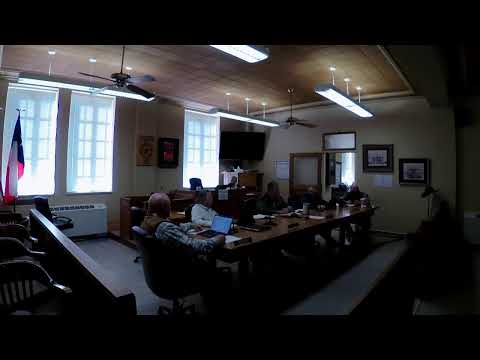
Young County Commissioners Court took an initial procedural step on a proposed Tabadero Solar project after a lengthy discussion about tax abatements, reinvestment zones, and community impacts. Commissioners voted to hire outside counsel to update the county's abatement policy and draft reinvestment-zone documents, provided Tabadero Solar confirms in writing that it will cover the county's legal fees.
The vote — 4 in favor, 0 opposed, 1 abstention — authorizes the county to begin drafting proposals and scheduling the public hearings required by state law. Commissioners emphasized that an updated abatement policy and reinvestment-zone documents would be required before any final decision on tax relief.
Why it matters: Tabadero Solar has proposed a large-scale solar farm in Young County. County action to prepare abatement policy and reinvestment-zone language would enable formal negotiations and public hearings that could affect county tax revenue, local infrastructure, volunteer fire departments and neighboring property owners.
What the county heard from legal counsel
County staff said they interviewed two attorneys experienced in reinvestment zones and tax abatements. Bob Bass (identified on the record as a consultant with prior experience advising counties) told the court counties have broad latitude when negotiating abatement terms and reinvestment-zone provisions, but state law constrains certain elements. He flagged that some legislators have proposed limiting counties' authority to grant abatements and said that, in his view, such legislation could pass — a point Bass characterized as his opinion.
Bass and the second attorney, Jake Letterly of Wetzel & Letterly, gave overlapping practical guidance:
- Typical negotiated abatements in recent practice run in the 40–70% range; 50% is common in current deals. - Legal fees for drafting abatement/reinvestment-zone documents commonly range from $10,000 to $20,000. - A meaningful fraction of projects that request abatements do not reach construction — counsel estimated around 40% may fail to reach the finish line after initial application. - It is possible to include conditions in agreements such as escalating payments if build commitments are missed, separate bonds/replenishable accounts for road repair, or contributions to local volunteer fire departments. Bass said state law requires certain bonds for property remediation, but he also noted limitations (for example, a county generally cannot prevent a company from negotiating with other taxing entities such as a hospital district).
County financial example presented on the record
County staff walked commissioners through a spreadsheet the county prepared using a company-provided investment figure. The staff example used an estimated project investment of $264,600,000 and showed that, at full taxable value with no abatement, the project could generate roughly $9.7 million in county tax revenue over 10 years (subject to depreciation and tax-rate assumptions). Staff also modeled different abatement levels (70%, 60%, 50%, 40%) and fixed pilot options to show how revenue varies under each scenario.
Public comment: neighbors and landowners speak against the proposal
Multiple residents spoke during the public-comment period. Marla Johnson said she lives next door to the proposed site and told the court, "I'm adamantly opposed to it." She asked commissioners to disclose whether any members stood to benefit personally; the court responded with disclosures on the record and one member announced an abstention from the later procedural vote citing potential financial considerations.
Mary Ann Montgomery, who identified herself as a nearby landowner, asked whether the project had received federal approval or funding and whether Tabadero would proceed without a county abatement; she also sought specifics about the company's acreage and compensation for nearby landowners. County staff and a company representative committed to provide requested documentation to the speakers and to the record.
Commission action and conditions
Commissioner Wiley moved to engage external counsel (Bob Bass's firm) to rewrite the county's abatement policy and begin reinvestment-zone planning, on the condition that Tabadero Solar provide written confirmation they will pay the county's legal and administrative costs. Commissioner Craig seconded. The motion passed with four votes in favor and one abstention; commissioners asked staff to obtain Tabadero's written confirmation before contracting with outside counsel.
Next steps
- Staff will request a written commitment from Tabadero Solar that the company will cover county legal costs for policy drafting and negotiation. - If that confirmation is provided, the county will engage counsel to update its abatement policy and draft reinvestment-zone documents; staff said any change to the county's abatement policy will likely require public hearings and re-advertisement if the existing policy has expired. - Commissioners asked counsel to consider including protections such as phased escalators, bonds for road repair, and contributions to volunteer fire departments, and to prepare model language for public review.
Ending
The court's vote does not grant any tax relief or approve a project; it simply authorizes the county to create updated policy and draft documents so commissioners can hold the statutorily required public hearings and make a fully informed decision if Tabadero moves forward. Residents who spoke asked for written answers and pledged continued participation in the public process.