Get Full Government Meeting Transcripts, Videos, & Alerts Forever!
Get email alerts on the School Irrigation Oakland Middle School topic
No spam. Unsubscribe anytime.
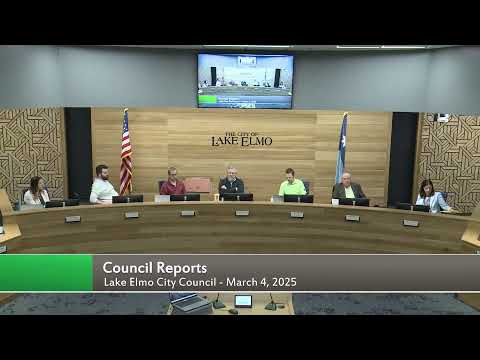
Lake Elmo council accepts irrigation alternatives memo for Oakland Middle School, then directs staff to block municipal-water irrigation in final plans
Summary
Council accepted the Stillwater Area Public Schools’ irrigation alternatives memo and separately directed staff to deny final construction plans that show irrigation hooked to city water, citing local water conservation concerns; council vote to accept the memo was 4–1.
The Lake Elmo City Council accepted an irrigation-alternatives memo the Stillwater Area Public Schools submitted for the Oakland Middle School expansion and then voted to direct staff to deny any final construction plans that include a hookup to city water for irrigation.
The council acted after a presentation from a staff member and questions from council members about water use, operational costs and the life of the school’s existing irrigation well. The school district’s team told the council their plan is to connect irrigation to municipal water, and that if municipal water were not available they would move to not irrigate the fields.
Council members pressed for more operational-cost analysis for alternatives including a new well, stormwater reuse and pumping from Rose Lake. The staff report and a district memo dated Feb. 27, 2025, estimate the current irrigation use at slightly under 16,000 gallons per day and project capital costs for alternatives: just over $200,000 for a replacement well, more than $300,000 for a stormwater-reuse system and over $200,000 for a pumping system from Rose Lake. The memo noted PFAS/PFOS testing and permitting questions for wells and surface-water pumping but did not include a full lifecycle operating-cost comparison for each alternative.
Council discussion focused on whether the district had satisfied condition No. 10 of the conditional use permit (CUP) that required an irrigation-alternatives assessment. Several council members said the memo met the CUP requirement to show alternatives, while others said the analysis lacked operational-cost estimates and net-present-value comparisons needed to choose among options.
Council then took two separate votes. First, by a 4–1 vote, the council accepted the district’s irrigation alternatives memo dated Feb. 27, 2025. Later the council passed a motion to direct staff to deny final construction plans that include hookup to city water for irrigation; that motion passed on a voice vote after discussion about the city’s longstanding efforts to reduce municipal irrigation demand.
The council and staff noted that the city’s code does not currently require stormwater-reuse irrigation systems but that such systems have been implemented in recent projects, usually as part of planned-unit-development benefits or to meet watershed rules. Staff explained that adopting a citywide code requirement for stormwater-reuse irrigation would require additional analysis — including site sizes, soils, irrigable area and long-term maintenance arrangements such as homeowners associations.
The district’s representatives said the district’s preference is to use city water for irrigation but that they would not proceed with alternatives 2–4 if municipal water were not available — instead they would move to not irrigate. The council discussed directing staff to require an alternative to municipal water as a condition of approving final construction plans; staff confirmed the city controls approval of those final plans and the related site-improvement agreement.
The council’s actions do not change the conditional use permit itself; they provide staff direction for reviewing the school district’s forthcoming final construction plans and site-improvement agreement.