Get Full Government Meeting Transcripts, Videos, & Alerts Forever!
Get email alerts on the Special Education Facility topic
No spam. Unsubscribe anytime.
Board of Finance OKs up to $1 million to buy 2 Farms Village for in‑district special‑education program after public hearing
Summary
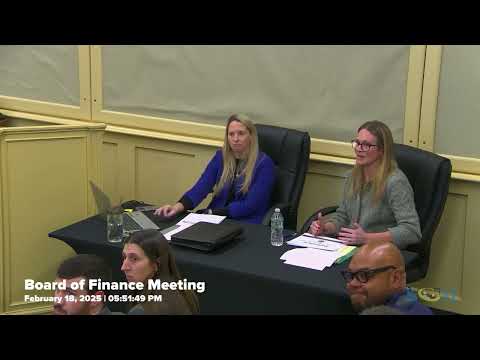
Simsbury’s Board of Finance on Feb. 18 approved an appropriation not to exceed $1,000,000 from the Capital Reserve Fund to buy 2 Farms Village for a proposed in‑district special‑education program, after a public hearing that drew parents, specialists and school leaders.
Simsbury — The Board of Finance on Feb. 18 approved an appropriation not to exceed $1,000,000 to purchase 2 Farms Village as the site for a proposed in‑district special‑education program, voting 4–1 after a public hearing that drew parents, specialists and school leaders.
The appropriation — drawn from the town’s Capital Reserve Fund — sets a legal cap on what the town may spend on acquiring the property; the Board of Finance repeatedly clarified at the hearing that it was not approving the educational program itself or the contract to purchase the building. “An appropriation is a legal cap in the amount of dollars that may be spent for this purchase,” the board chair said during the hearing.
The Board of Education and the Board of Selectmen retain separate roles: the Board of Education will design and implement the program if authorized; the Board of Selectmen will negotiate and approve the purchase contract and authorize the town manager to sign it.
Why it matters: Presenters said the purchase would let Simsbury develop an in‑district therapeutic program to serve students with complex emotional and behavioral disabilities who currently attend out‑of‑district day schools. School officials argued the move could both improve students’ access to community‑based services and contain rising special‑education costs that have strained district budgets.
What the boards heard: Katie Krasula, director of pupil services for Simsbury Schools, and Amy Merriweather, Simsbury finance director, presented program and financial analyses. Krasula said the district seeks a “smaller, structured, therapeutic, and clinical setting” for students who currently rely on out‑of‑district placements. She described the proposal as phased: year one would relocate the district’s Pathways alternative‑education classroom from modular units behind Simsbury High School into 2 Farms Village; year two would add a second classroom; year three would grow to four classrooms serving roughly 20–25 students (grades 3–12) with up to 10 tuition slots for students from other towns.
Merriweather gave the financial outline the board considered. The purchase motion before the Board of Finance requested authority for a not‑to‑exceed $1,000,000 appropriation. The base purchase price in the study was $650,000; the seller offered to perform some work including fire‑sprinkler installation ($247,000), HVAC work ($84,000) and a gas‑line connection (about $16,000), putting the property purchase line at $997,980 in the plan presented to the board. The town’s own estimate for renovation and work to bring the building to education standards was roughly $400,000 and was included in the FY26 capital plan, yielding a total near $1.3–$1.4 million in assumptions used for payback and return‑on‑investment calculations.
Merriweather said the district modeled tuition for out‑of‑town placements at $70,000 per tuition slot and presented three phased financial scenarios. In the Phase‑2 scenario — when the program would operate two classrooms and begin to accept tuition students — the district projected an estimated operating‑budget “cost containment” of about $438,000 from bringing four students back in‑district, and an estimated program deficit of about $462,000 to run the program. Offsetting those figures produced a near‑neutral net fiscal effect (a slight deficit of roughly $23,000 in the model for that year). In the Phase‑3, full‑capacity model (four classrooms, up to 10 tuition spots), the district estimated larger operating cost containment (about $1.3 million) and program revenues of roughly $700,000 from tuition, with estimated program expenditures about $1.5 million; the combined model showed net cost containment to the town of roughly $515,000 at full build‑out. The presenters said the plan expected a return on investment in about five years under the assumptions shown.
Public comments and concerns: About a dozen residents and parents spoke during the hearing. Many supported an in‑district option but pressed district leaders for details on programming, staffing and safeguards. Rebecca Vega, a parent, asked specifically whether the facility and budget included “daily living skills” supports (kitchen, laundry) and nursing services for medically fragile students: “A nurse, a lot of them are medically fragile. Seizures. I don't see that in the budget,” she said.
Other parents urged caution about moving students who are “thriving” at existing out‑of‑district placements, and asked that teams make individual decisions. Laurie Salito, whose daughter attends one of the referenced therapeutic schools, said, “I think you should definitely open the building ... but that doesn't mean you have to take our kids that are already thriving ... away from where they have been amazing.” Several speakers asked for more detail on professional development, clinical staff levels, recreation and secure outdoor space, parking and admissions criteria; Tom Roy, who led the town’s property review, said the 2 Farms Village site carries the practical advantages of proximity to the high school, an open interior configuration and a roughly 30‑space parking lot.
Officials’ responses: Krasula and Merriweather repeatedly said student placement would remain a planning‑and‑placement‑team decision made with families, and not an automatic reassignment. “These are individual decisions with a student's family,” Krasula said, adding that the program would be phased and that not all out‑of‑district students would automatically be returned. Town Manager Mark Nelson confirmed that the purchase contract’s schedule would be written so required work was completed prior to closing; if the seller performs the work before closing, the seller assumes that construction risk.
Vote and next steps: The Board of Finance approved the appropriation motion (effective Feb. 18, 2025) to “approve an appropriation not to exceed $1,000,000 for the purchase of the property at 2 Farms Village Road utilizing funds from the Capital Reserve Fund.” The motion passed 4–1. The board chair noted Selectman Art Wallace had intended to attend but was delayed on travel.
The chair and presenters reiterated the procedural sequence: the Board of Education must approve the program design and implementation; the Board of Selectmen must approve and sign the purchase contract; the Board of Finance’s vote was a financial authorization only. If the contract and program proceed, the presenters said the FY26 capital budget would include the additional estimated $400,000 in improvements needed to meet educational facility standards, to be considered in the upcoming budget process.
Clarifying details: The finance presentation listed the purchase base price as $650,000 and the not‑to‑exceed appropriation as $1,000,000; seller‑offered improvements totaled about $347,000 (sprinklers, HVAC, gas connection) putting the property line at $997,980 in the plan. Estimated additional renovations and move‑in work were about $400,000 (FY26 capital plan). The district used a $70,000 tuition assumption for modeling.[Note: quotations and figures reflect the presentation and public hearing as recorded.]
What’s next: The Board of Selectmen will review and negotiate the purchase contract terms and authorize the town manager to sign. The Board of Education will continue program planning, including staffing, entrance/exit criteria and clinical supports; presenters said placement decisions would be made on a student‑by‑student basis through the legally required planning‑and‑placement‑team process.
Speakers (excerpted and attributable): Katie Krasula, director of pupil services, Simsbury Schools (presenter); Amy Merriweather, finance director, Town of Simsbury (presenter); Mark Nelson, town manager; Matthew Curtis, superintendent of schools; Tom Roy (Town property consultant); Rebecca Vega (parent/resident); Laurie Salito (parent/resident); Davina Fogle (resident); Wilson Vega (resident); Kyle Cedars (behavior analyst); Jane Fox (resident); Jackie Badas (resident).
Ending: The Board of Finance’s appropriation makes funds available to negotiate and close on 2 Farms Village but does not itself authorize educational programming or contract terms. Those decisions remain with the Board of Education and the Board of Selectmen; further appropriations for renovation work were signaled for FY26 and will be considered during the budget process.