Get Full Government Meeting Transcripts, Videos, & Alerts Forever!
Get email alerts on the Charter Governance topic
No spam. Unsubscribe anytime.
Charter review panel weighs governance changes: town manager role, term lengths and party representation
Summary
The Charter Revision Commission discussed whether to clarify that the town manager reports to the Board of Selectmen, extend selectmen terms from two to four years, add staggered terms, and create clearer pathways for unaffiliated candidates. No charter language was adopted; commissioners asked staff for options and legal guidance.
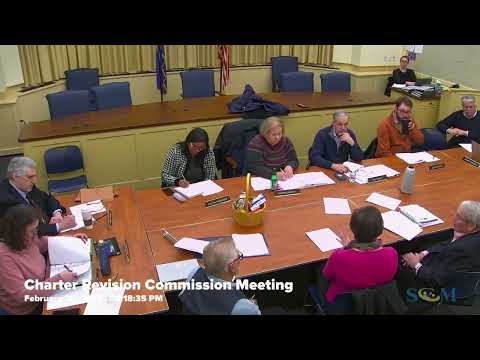
Simsbury’s Charter Revision Commission debated several governance and electoral questions Wednesday, including whether to clarify the relationship between the Board of Selectmen and the town manager, extend the board’s term from two to four years, require staggered terms, and change how party and unaffiliated candidates gain access to local office.
Several commissioners said the town manager role should be defined as the chief administrative officer while the board should remain the policy-setting body. “I am of the opinion that the Board of Selectmen should be the CEO and that the town manager should be the chief administrative official,” one commissioner said, arguing for clearer job delineation in the charter. Commissioners and staff noted that the current charter requires the town manager to provide “periodic reports” to the board; several commissioners asked that “periodic” be made specific (for example, monthly or quarterly) so the board receives regular status updates on projects and budget items.
The commission also discussed term length and continuity. Multiple members said two-year terms create a steep learning curve for newly elected selectmen and recommended longer terms and staggered cycles. “The second year, I feel like we are actually hitting the ground running now,” one commissioner said, supporting four-year terms with staggered start dates so institutional knowledge is preserved across election cycles.
Party representation and pathways for unaffiliated residents were debated at length. Commissioners noted that unaffiliated voters are a large portion of Simsbury’s electorate but are underrepresented in elected office because of party-focused nomination processes. One commissioner proposed a hybrid approach used in other towns — a mix of party-nominated seats and at-large or open seats anyone may contest — to create a clearer pathway for unaffiliated candidates without creating a statutory third party slot. Another commissioner cautioned that changing representation rules can have unintended consequences for partisan balance and urged legal review.
Finally, the commission discussed the practice that the top vote-getter for First Selectman currently becomes a member of the Board of Selectmen even if the candidate had been running primarily for the top post. Commissioners debated whether the First Selectman should be a separate, stand-alone office (win it or not remain separate) or whether the existing rollover practice should remain. Several commissioners said the current practice can confuse voters; others said it helps preserve experienced officeholders on the board.
Ending: Commissioners asked staff and legal counsel to prepare options, including specific charter language and examples from other Connecticut towns, and to circulate those options for public comment before drafting final recommendations.