Get Full Government Meeting Transcripts, Videos, & Alerts Forever!
Get email alerts on the Planning Zoning topic
No spam. Unsubscribe anytime.
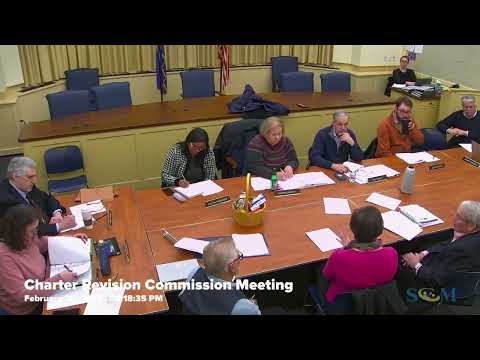
Simsbury charter review panel hears split views on combining planning and zoning commissions
Summary
Planning commissioners and zoning members told the Charter Revision Commission Wednesday that combining planning and zoning could reduce delays but also risks sidelining planning expertise. Commissioners asked staff to gather comparative data and written input before recommending change.
Members of the Charter Revision Commission debated whether to consolidate Simsbury’s separate Planning Commission and Zoning Commission into a single planning-and-zoning body, with supporters saying a combined board could streamline developer review and reduce repeated hearings and opponents warning that planning would take a back seat to zoning’s workload.
The discussion opened with an extensive presentation from a planning commissioner who outlined the commissions’ statutory roles and the Plan of Conservation and Development (POCD). “The focus of the Planning Commission is to draft, amend and adopt the Plan of Conservation and Development. That is really our biggest charge,” the planning commissioner said, arguing that a combined body would remove the need for referrals and could reduce staff time and duplicate meetings. The commissioner also noted the heavy work of the POCD update — a once-in-a-decade undertaking that typically requires a year of meetings and consultant support.
Residents and zoning members voiced concerns about practicality and meeting length. Jackie Badis, a long-serving member of the Zoning Commission, urged the Commission not to combine the boards, saying Simsbury worked to shake a reputation of being “not a builder-friendly town.” “When a builder or developer comes to the zoning commission for a new development, they bring their land use attorney, their architect, their landscape architect, their water pollution control engineer and sometimes their traffic management consultant,” Badis said. She said developers already faced long meetings: “We had 25 zoning board meetings [last year]. There were five meetings under one hour. The majority of meetings were between one and a half hours and a little over three hours.”
Supporters said a combined board could be organized to avoid longer waits for applicants — for example, by scheduling planning items at a different position on the agenda or through staff review when appropriate. The planning commissioner described existing practices that already reduce duplication, such as design-review meetings scheduled immediately prior to zoning sessions to allow applicants to present once.
Commissioners requested concrete data before taking a position. They asked staff to collect: (1) how many applications in recent years were required to appear before both planning and zoning; (2) the experience of nearby or similar towns that have combined commissions (including board size and workload); and (3) whether developers have withdrawn applications citing local process delays. The Charter Revision Commission also asked the Planning Commission to solicit written comments from its members and forward them for the record.
The conversation repeatedly distinguished two kinds of effects: procedural gains for applicants and staff versus potential loss of technical planning focus. Several commissioners suggested exploring hybrid approaches such as joint monthly meetings or a combined commission that uses subcommittees to preserve planning expertise while shortening applicant timelines.
The Commission did not take a formal vote on charter language; members instead set a follow-up plan for research and written comment and asked staff to arrange interviews with town planners and chairs from towns that have made the transition.
Ending: The Charter Revision Commission left the question open and directed staff to compile comparative data and written input from the Planning and Zoning commissions and town planners in other jurisdictions before drafting any charter language.