Get Full Government Meeting Transcripts, Videos, & Alerts Forever!
Get email alerts on the Boards And Commissions topic
No spam. Unsubscribe anytime.
Charter panel reviews boards and commissions: ZBA size, historic‑district residency, conservation concerns and unaffiliated appointments
Summary
Commissioners reviewed written input from multiple town boards about membership counts, staggered terms, unaffiliated appointments and public‑comment rules. The panel asked staff for clarifying statute references and a timeline for written changes rather than immediate charter edits.
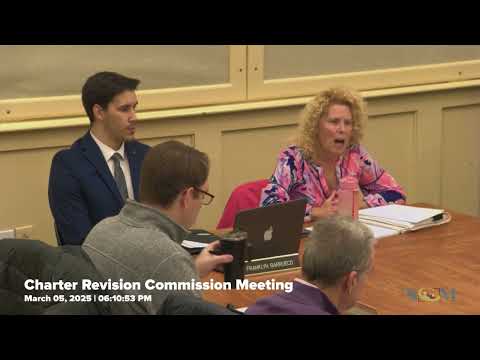
The Charter Revision Commission spent part of its March 5 meeting reviewing comments from multiple town boards about membership, statutory language and public participation.
Discussion began with the Zoning Board of Appeals. Commissioners noted the charter language references “three members” while the board currently operates with six members plus alternates and a four‑member quorum. Commission members asked staff to clarify the charter and code wording that governs staggered elections and alternates so the town and residents can read consistent language.
The Historic District Commission requested that the town’s handbook requirement — that at least three regular members and two alternates be owners or residents within the East Weatogue Historic District — be reflected consistently in town documents. The commission noted the same text appears differently in code and charter provisions and asked that the Board of Selectmen be offered the suggestion to align its ordinance with the handbook. Commissioners said they generally preferred that code/ordinance changes be handled by the Board of Selectmen rather than by lengthy charter wording unless permanency was the explicit intent.
The Conservation Commission chair raised a separate set of concerns: volunteers said the commission receives fewer referrals on land‑use matters than they expect and that the commission lacks a budget and staff support to fulfil some of its statutory duties. Commissioners asked staff to confirm which Connecticut statutes establish conservation‑commission duties and whether the commission’s role is advisory versus regulatory in the town’s practice.
The meeting also included a sustained discussion of how unaffiliated voters are placed on appointed bodies. Commissioners heard a staff‑prepared road map describing the current vacancy process for unaffiliated seats: openings are advertised, applicants are verified and interviewed by town staff, and the town manager recommends an appointment to the Board of Selectmen. Commissioners noted an existing practice in Simsbury — historically the two party town committees have filled unaffiliated vacancies and brought names to the Board of Selectmen — and asked that the town manager coordinate with party chairs before any change in practice is adopted.
The commission also reviewed voter registration counts disclosed at the meeting: total registered voters (19,557); unaffiliated voters (7,901); Democrats (6,890); Republicans (4,450); unaffiliated share about 40.4% of registered voters. Commissioners said a plain‑English flowchart on how unaffiliated residents may access elected and appointed positions would be useful for residents.
On public participation, several board chairs urged making “public audience” a required part of regular commission meetings so residents have a scheduled opportunity to speak. Commissioners discussed whether the charter should mandate a public‑comment slot or whether that belongs in board practice and suggested including a requirement that each board publish a clear process for written comments and speaking opportunities.
The commission did not change charter text at the meeting. Instead it asked staff for statute citations, clarification of which board authorities are codified versus governed by ordinance, and a recommendation on which requests are best handled by code updates and which require charter amendment.