Get Full Government Meeting Transcripts, Videos, & Alerts Forever!
Get email alerts on the Federal Policy topic
No spam. Unsubscribe anytime.
Commission hears federal rollbacks could threaten LGBTQ older‑adult research, services
Summary
A federal rollback of LGBTQ and DEI initiatives and recent executive orders drew warnings at the commission meeting about suspended research grants, data removals from federal sites, and the possible disruption of international HIV programs.
Federal policy changes and executive orders affecting LGBTQ and DEI programs drew detailed warnings from a national policy expert at the Commission on LGBTQ Aging’s quarterly meeting.
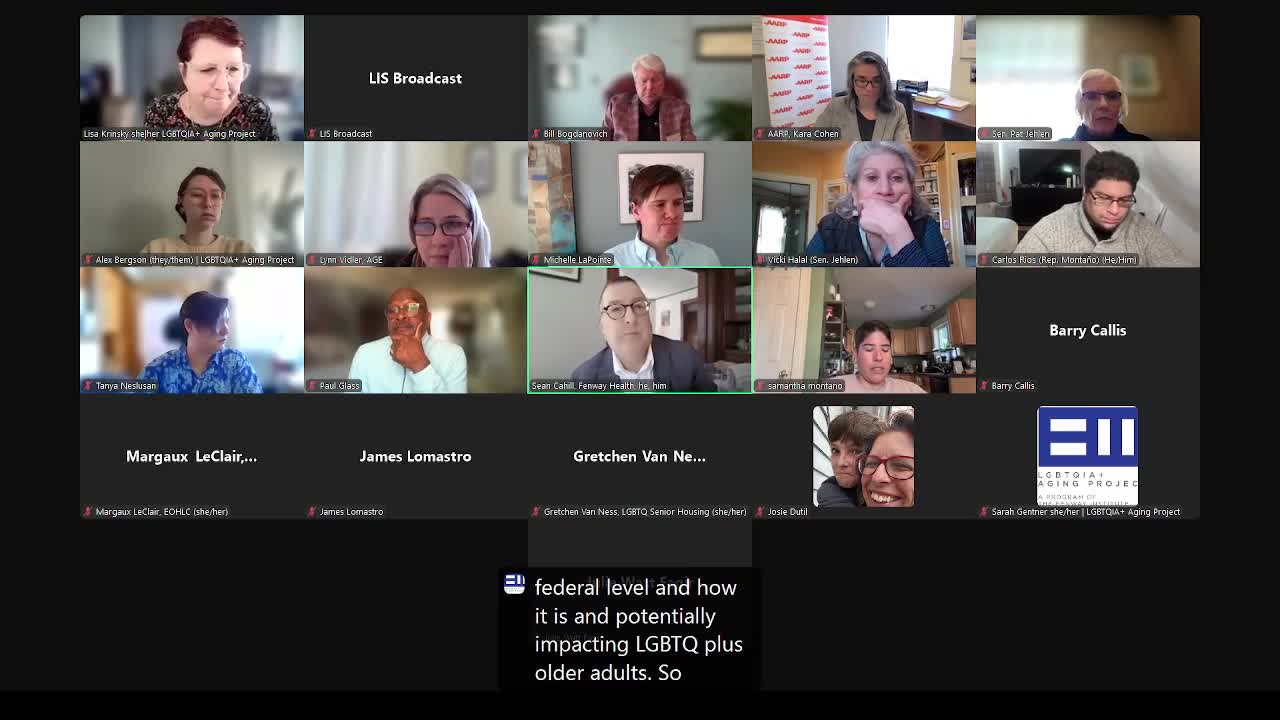
Sean Cahill, public policy appointee at the Family Institute, told commissioners that recent federal actions are already curtailing research and programmatic work that previously included LGBTQ older adults and people living with HIV. Cahill said agencies that under the Biden administration explicitly included LGBTQ older adults in Older Americans Act guidance are pausing or rescinding related work, and researchers have reported abrupt defunding.
Cahill cited several examples: large grants for LGBTQ‑focused aging research were told to stop work mid‑grant; a multiyear R01 looking at Alzheimer’s disease in LGBTQ populations was defunded in year four; and review committees notified applicants that transgender‑related proposals would not be considered. Cahill also described what he called a “gender ideology” executive order that he said does not use the word transgender but has led federal agencies to halt LGBTQ health equity activities. “The executive order does not mention transgender people at all, but… it’s clearly attacking transgender people,” Cahill said.
He warned that agencies have also taken down data and guidance about disparate HIV burdens and other health inequities from federal websites, a move Cahill said may violate federal statutes including the Paperwork Reduction Act and provisions of the Public Health Service Act. Cahill urged state and local actors to use public‑comment opportunities, administrative law processes and litigation where appropriate to slow new rulemaking and preserve ongoing work.
State response and legal context: Department of Public Health representatives said Massachusetts is coordinating internally to continue health‑equity work and to preserve locally useful data even if federal reporting changes. “We are going to keep our health equity work moving forward,” Barry Callas, representing the Massachusetts Department of Public Health, said. Lynn Bittler, assistant secretary at the Executive Office of Aging and Independence, said the office has regular checkpoints with federal counterparts and is monitoring the situation closely.
Why it matters: Commissioners said changes in federal grant administration, data collection guidance, and rulemaking could directly affect state programs that serve LGBTQ older adults, including long‑term care, prevention programs and research on aging and HIV. Several speakers encouraged submitting public comments and preparing for potential legal challenges to abrupt policy changes.
Suggested actions: Cahill asked the commission to consider submitting comments to federal rulemaking processes and to coordinate with state agencies and advocacy groups on legal and administrative responses.