Get Full Government Meeting Transcripts, Videos, & Alerts Forever!
Get email alerts on the Financial Crimes Center Expansion topic
No spam. Unsubscribe anytime.
Committee approves expanding Financial Crimes Intelligence Center's statutory mission to cover payment fraud
Summary
The committee voted to report SB 1499, which would formally expand the Texas Financial Crimes Intelligence Center's (FCIC) statutory mission to include payment fraud beyond skimming; banks, retail and law enforcement testified in support.
Senator Nichols presented SB 1499 to the committee as a clarification and expansion of the Financial Crimes Intelligence Center’s statutory mission to include payment fraud more broadly than the original skimmer-focused enabling language.
The bill would align the center’s enabling statute with work the FCIC has already undertaken since its 2021 creation: investigations into ATM and pump skimming, check and card fraud, unauthorized electronic transfers and other emerging payment-fraud schemes. Supporters testified that expanding the center’s mission in statute will authorize its investigators to continue assisting local prosecutors and banks across the state.
Jeff Headley, field operations captain at the FCIC, told the committee the center has a 16-person team that works with local, state, federal and international partners and has prevented or recovered “almost $300,000,000 in loss” in roughly 3.5 years. Banking and retail witnesses expressed support: Jan Mills, CEO of First National Bank of Winnsborough and then-chair of the Texas Bankers Association, said member banks report “financial fraud at historically high rates” and credited the FCIC with meaningful recovery and investigative support. Desiree Castro of the Texas Food and Fuel Association described the center as a valuable partner for the convenience-store and fuel industry.
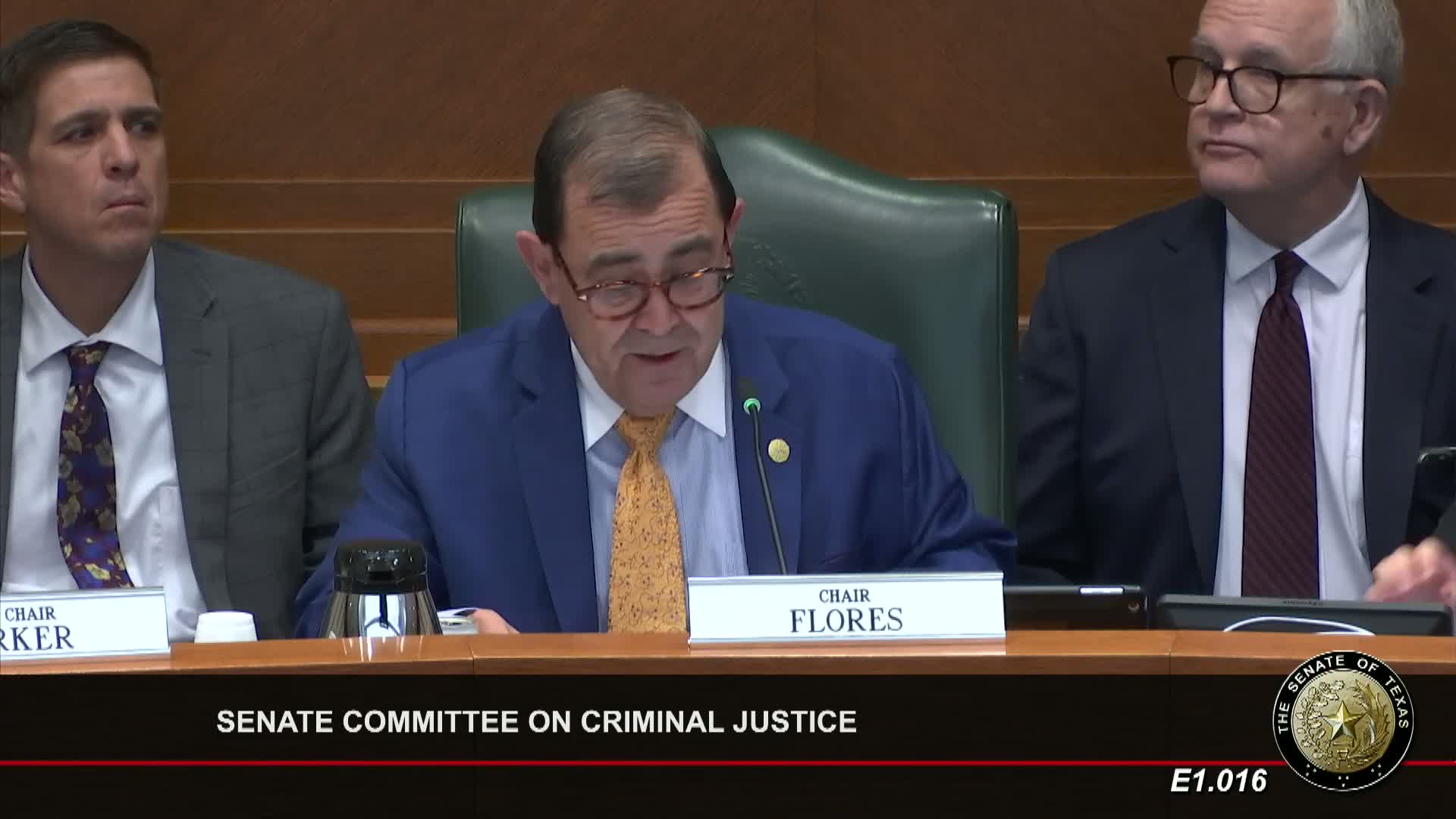
After invited and public testimony the committee voted to report SB 1499 favorably to the full Senate (tally reported by the committee: 7 ayes, 0 nays). The measure was referred to the Local & Uncontested calendar at the sponsor’s request.
Supporters argued the statutory change is mainly housekeeping—explicitly permitting activity the center already performs—and would encourage continued cooperation between industry and law enforcement. No public opposition was recorded during the committee's testimony period.