Get Full Government Meeting Transcripts, Videos, & Alerts Forever!
Get email alerts on the Housing Policy topic
No spam. Unsubscribe anytime.
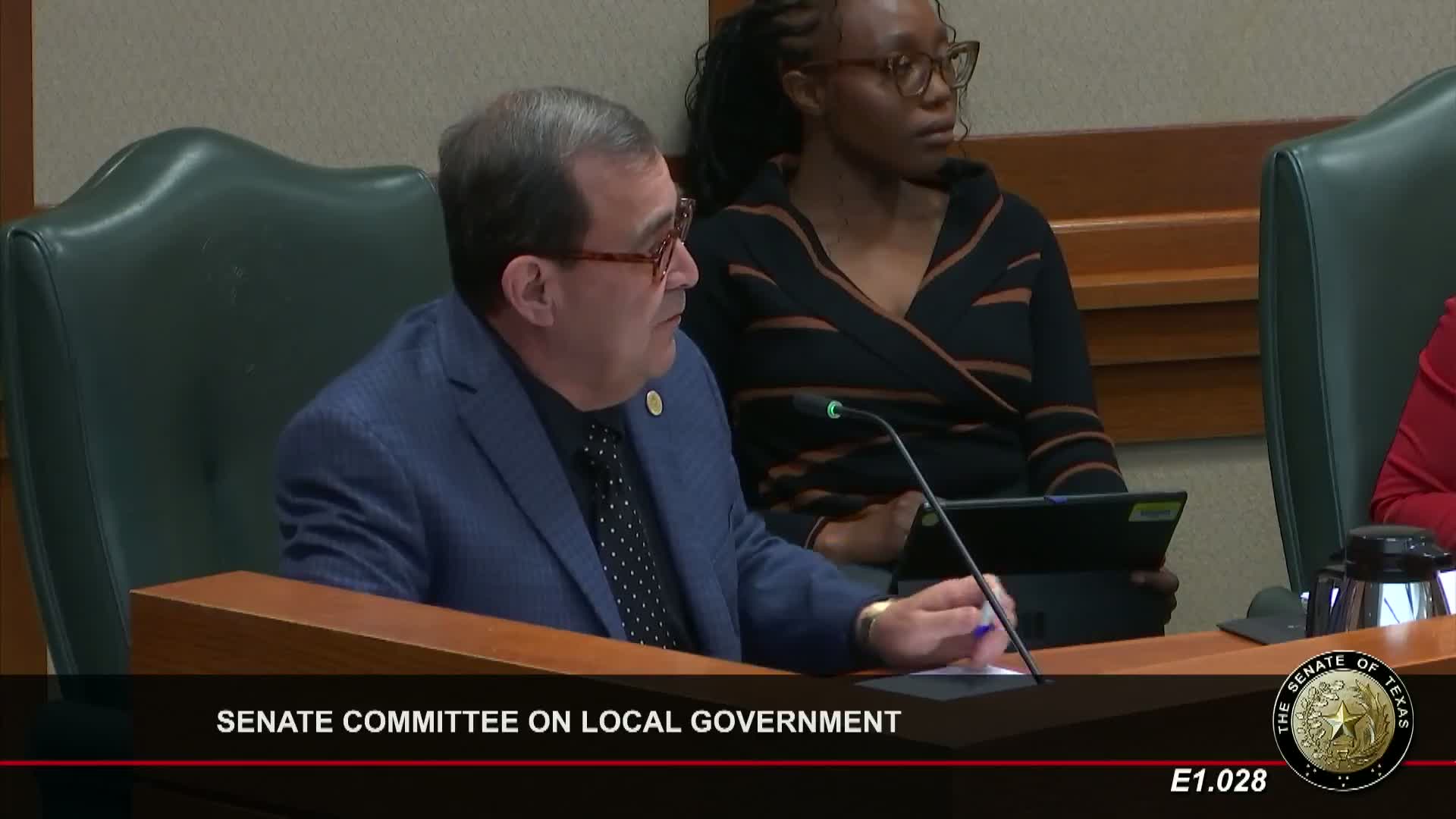
Senate committee debates package of bills to ease zoning, expand starter homes and convert commercial space to housing
Summary
The Texas Senate Committee on Local Government spent a major portion of its hearing on several bills intended to increase housing supply by allowing accessory dwelling units, permitting residential uses in commercial zones, letting churches develop underused land for housing, and lowering minimum lot standards.
The Senate Committee on Local Government spent the longest portion of its hearing on a package of housing bills that would loosen local restrictions to add smaller, infill housing across Texas.
Senator Robert Hughes said the centerpiece, Senate Bill 6 73, "would prevent political subdivisions from keeping you from building accessory dwelling units, casitas, cottages, granny flats, mother-in-law suites as they're sometimes called." He told the panel the bill keeps local building standards such as setbacks and does not override deed restrictions or homeowners associations.
Supporters — developers, housing advocates and several university students — said ADUs and allowing residential uses in commercial zones can add supply quickly and at comparatively low cost. John Benora of the Texas Public Policy Foundation said removing owner‑occupancy requirements and other restrictions will "reclaim housing affordability in Texas" by enabling homeowners to rent small units and help cover mortgage costs. Felicity Maxwell of Texans for Housing cited an estimate that Texas needs about 306,000 new homes and pointed to ADU growth in California as a precedent.
Senate Bill 8 40 would allow conversion of commercially zoned properties to residential or mixed‑use without a rezoning, while Senate Bill 8 54 — dubbed "Yes in God's Backyard" in the committee — would let religious organizations build multifamily or mixed‑use housing on their underused parcels as a matter of right, subject to standard municipal building and health regulations. Proponents noted churches and other faith organizations increasingly seek to leverage land for long‑term affordable housing and service delivery.
Opponents — including several mayors and local elected officials from fast‑growing suburbs — urged caution. Flower Mound officials warned the bills could dramatically increase population on limited water, wastewater and road capacity, forcing large bond programs and tax increases. Mayor Pro Tem Anne Martin said planned, metered growth allowed her town to lower tax rates and called for population brackets or exemptions for smaller municipalities.
Speakers representing homelessness and housing advocacy said market and nonprofit efforts must be combined with infrastructure planning. Developer panels, architects and trade groups told the committee the primary lever the legislature can pull to reduce housing costs is to reduce land‑use barriers and increase supply. Several witnesses urged guardrails for industrial sites and wastewater impacts, recommended targeted exemptions for small towns or downtowns, and suggested preserving local roles on infrastructure and design standards.
No final votes were taken. Committee members said they will work on committee substitutes and bracketed language to address concerns about heavy industrial adjacency, infrastructure costs and population thresholds before returning the bills for further consideration.