Get Full Government Meeting Transcripts, Videos, & Alerts Forever!
Get email alerts on the Historic Preservation topic
No spam. Unsubscribe anytime.
Committee hears bills to create Freedmen’s cemetery designation and codify historic‑cemetery program
Summary
Senate bills to create a historic Texas Freedmen’s Cemetery designation and to codify the state’s historic cemetery program were presented; Texas Historical Commission staff described the designation as a notification tool and explained the commission’s discretion in applying it.
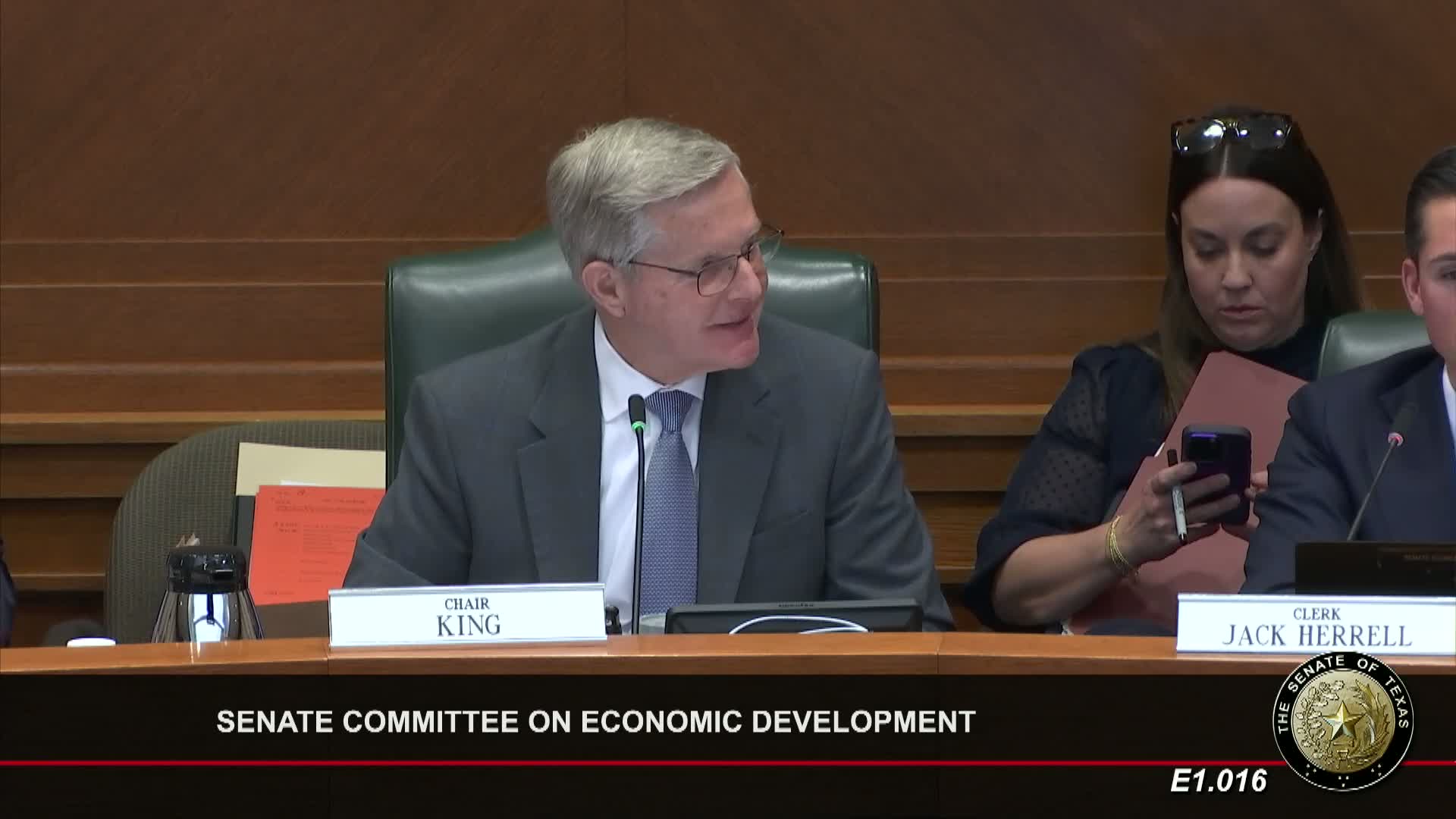
Senate Bill 217 (historic Texas Freedmen’s Cemetery designation) and Senate Bill 586 (placing a popular historic‑preservation program into statute) were presented to the committee by Senator West and received resource testimony from the Texas Historical Commission.
Senator West said SB 217 would mirror the existing historic Texas cemetery designation program but would specifically allow recognition of cemeteries that are the final resting places of formerly enslaved people or their descendants. He told the committee that more than 517 freedmen towns or settlements have been identified in the state and that many have associated burial sites.
Charles Sadnick of the Texas Historical Commission testified as a resource witness and clarified that, under the commission’s rule definition, a cemetery is “any burial of at least one individual.” He said the historic Texas cemetery designation is a notification designation that places notice of the cemetery and deed records at the county level; it does not itself provide law‑enforcement protections or authority to move interred remains. Sadnick said other statutes and bills exist that work in combination to provide legal protections for cemeteries.
Senator Schwartner asked whether a designation based on a single interment could create development impediments; the commission witness and Senator West said the commission retains discretion to evaluate facts before granting a designation and that the designation’s primary effect is notification to current and future landowners.
Both bills were left pending, subject to the call of the chair.