Get Full Government Meeting Transcripts, Videos, & Alerts Forever!
Get email alerts on the County Budget topic
No spam. Unsubscribe anytime.
Kern County supervisors approve guideline to start fiscal 2025–26 budget amid projected shortfall
Summary
The Board of Supervisors received a financial forecast showing a projected $24.9 million general fund shortfall for fiscal 2025–26 and approved a general fund contribution guideline directing departments to hold budgets to current-year levels while staff develops multiyear plans.
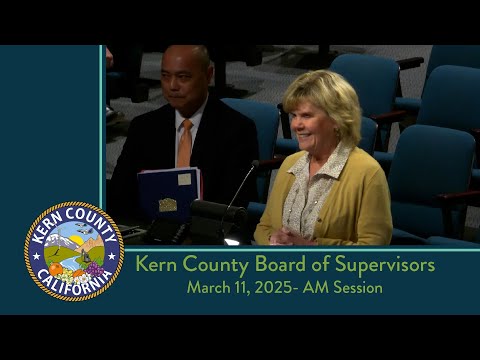
The Kern County Board of Supervisors on March 11 received a budget development report and approved a recommended general fund contribution guideline to begin preparation of the fiscal year 2025–26 budget.
The county administrative officer, Elsa Martinez, told the board the county projects a $24.9 million general fund deficit for 2025–26 and expects costs to outpace revenue in subsequent years. “Projections indicate costs are outpacing revenue with the anticipated deficit at $24,900,000 in the general fund in fiscal year 25–26,” Martinez said.
The guideline approved today tells departments to prepare budgets at current-year levels while identifying efficiencies and potential cost reductions. Alex Alba, the county’s budget director, gave the board a preliminary revenue update: assessed value growth will be modest, and county officials expect continued pressure from declines in assessments tied to oil and gas property values. “Property assessments for oil and gas properties are projected to decrease by 15% in fiscal year 25–26,” Alba said, adding that a modest rise in residential and commercial assessed value partially offsets the loss.
Martinez and staff briefed the board on several drivers behind the gap: negotiated salary increases already in place for public safety, rising program and benefit costs, and uncertainty in state and federal funding. The county has set aside one-time resources and is using a temporary reduction in retirement costs to mitigate the deficit in 2025–26; Martinez warned those savings are likely one-time and that multiyear planning will be necessary. “Without long-term fiscal plans this is not sustainable,” Martinez said.
Board members pressed staff on next steps for departments and the public schedule. The CAO’s office said department budget kickoff meetings start March 13, a preliminary budget will return to the board on June 24, and the board will hold an evening session July 28 to solicit public input before final hearings in August.
Supervisor David Couch moved to receive and file the report and approve the guideline; Supervisor Phillip Peters seconded. The motion passed on a roll call with all supervisors voting aye.
Why it matters: Kern County relies in part on revenue streams tied to energy assessments and local sales tax; county officials said the combination of declining energy assessments and slowing consumer-driven sales tax growth leaves less discretionary money available for county programs. The guideline sets a conservative planning baseline and signals that departments may need to propose efficiencies or reductions during budget hearings.
Looking ahead: Staff will return with updated estimates as assessed values and state/federal actions become clearer, and the board asked departments to prepare step-down plans for possible longer-term deficits.