Get Full Government Meeting Transcripts, Videos, & Alerts Forever!
Get email alerts on the Capital Facilities topic
No spam. Unsubscribe anytime.
Glendora council directs staff to itemize facility capital needs, show financing scenarios
Summary
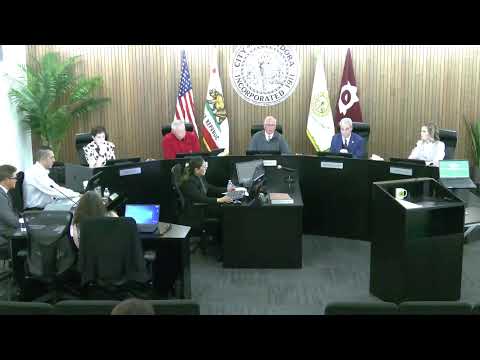
The Glendora City Council voted unanimously to direct city staff to prepare detailed, facility-by-facility estimates of capital needs and to present multiple financing scenarios, including bond structures and modeled impacts on property owners.
The Glendora City Council voted unanimously to direct city staff to prepare detailed, facility-by-facility estimates of capital needs and to present multiple financing scenarios, including bond structures and modeled impacts on property owners.
The action, approved after more than an hour of discussion, instructs staff to: 1) provide a general description of all major city facility needs with an estimated cost for each facility; 2) prepare a summary of financing scenarios involving bond issuance and illustrate the financial impact on property owners; and 3) explore contracting with an outside consultant to document visual impacts and needed improvements. Councilmembers asked staff to return with findings within the next quarter.
Why it matters: Council members and city staff described long-running deferred maintenance across multiple municipal buildings and infrastructure. Staff estimates more than $50 million in current needs just to maintain a status quo (roofs, HVAC and similar repairs) and placed a larger figure—more than $250 million—on the cost to modernize and substantially upgrade city facilities. Councilmembers said those figures, combined with falling population and constrained local revenue since the 1990s, mean the city must present clear options to residents if it seeks voter approval for revenue measures.
City Manager Adam Raymond told the council the $50 million figure addresses immediate repairs needed to keep facilities functioning, while the $250 million-plus figure covers a fuller set of renovations that would modernize buildings and expand public access. Several council members described visible signs of deferred maintenance. “Sunlight is the best disinfectant,” Councilmember Shawna said, urging transparent public education about the scope of needs. Councilmember Mendel and others described tile failures and water intrusion at the library and lingering temporary repairs such as tarps and sandbags at work yards.
Councilmembers stressed they want the report to be concrete and usable by citizen groups considering a ballot measure. The staff presentation reviewed the city’s recent capital work—$50 million in the past five years on streets, sidewalks and water infrastructure—and a 30-year water plan that identified roughly $350 million in needed water-system investments; the council previously incorporated $30 million into a two-year spending plan.
Councilmembers debated timing and the mechanics of a potential revenue measure. Staff explained the differences between a council-placed measure (which would require a two-thirds vote for a bond) and a citizen initiative (which can qualify for the ballot with signatures and then pass with a simple majority). City Clerk Kathleen confirmed citizen-led measures would likely need to target the November 2025 election for the earliest feasible placement. Councilmember Bridal asked staff to maintain a public contact list so residents interested in organizing can receive information; the clerk agreed to track inquiries.
The motion, offered by Mayor Pro Tem Hallowis and seconded by Councilmember Bridal, passed unanimously. City staff said they will return in the next quarter with the requested facility descriptions, cost estimates, financing scenarios, and a recommendation on engaging a consultant.