Get Full Government Meeting Transcripts, Videos, & Alerts Forever!
Get email alerts on the Military Service Credit Leave topic
No spam. Unsubscribe anytime.
Committee advances bill to credit military service toward state annual-leave accrual
Summary
Senators advanced a bill that would let prior military service count toward state annual-leave accruals, allowing veterans to accrue leave at higher state-tier rates sooner; supporters said it aids recruitment and retention, while fiscal impact was not determinable in committee analysis.
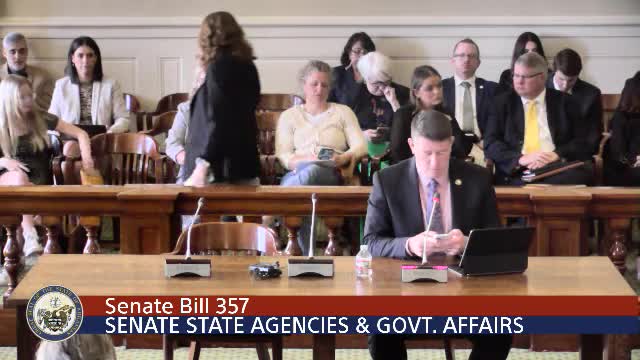
Senator Joshua Bridal (Senate District 32) introduced a bill to allow prior military service to count toward a state employee's annual-leave accrual rate, saying the change would make state employment more competitive for veterans and reservists.
"I think those are the type of candidates we want to hire inside of our state workforce," Bridal said, describing veterans as trained, service-minded candidates. He described the bill as a recruitment and retention incentive that would apply prior active-duty, reserve and National Guard service toward the state accrual formula for annual leave.
Bridal and staff described how state annual-leave accrual works under current Office of Personnel Management (OPM) practice: entry-level state employees earn roughly eight hours per month (about 12 days a year) in their first three years; accrual increases with years of service. The bill would treat qualifying prior military service as prior state service for purposes of calculating accrual tiers, allowing veterans to reach higher accrual tiers more quickly.
Committee members pressed on fiscal impact and eligibility. Senator Peyton asked whether the change affected retirement or salary; Bridal said the bill affected leave only. Jeff Wood from the Department of Military explained that OPM maintains accrual charts and that the department used a 365-day formula to translate guard/reserve "points" into equivalent days to ensure fair crediting of different types of service. Staff reported the fiscal office was "unable to determine" a revenue impact because costs depend on eligible employee counts and use patterns.
Members debated whether the leave benefit would materially change recruitment outcomes. Supporters said the proposed credit would be modest in most cases but could tip some recruits toward state employment; skeptics noted the state already offers competitive leave and other incentives.
The committee adopted the bill after debate by voice vote; the transcript records the motion to pass and a voice vote but no roll-call tally.