Get Full Government Meeting Transcripts, Videos, & Alerts Forever!
Get email alerts on the Capital Punishment Methods topic
No spam. Unsubscribe anytime.
Senate approves bill allowing nitrogen hypoxia as execution option; debate highlights moral and procedural objections
Summary
The Senate approved House Bill 14 89, authorizing nitrogen hypoxia as an option for executions; the measure prompted extended debate on the ethics, risk of suffering, and victims’ rights.
The Arkansas Senate approved House Bill 14 89, which adds nitrogen hypoxia as an option the Department of Corrections could use in carrying out a sentence of death. The measure drew an extended floor debate touching on moral, procedural and practical concerns and passed on a recorded vote.
Representative Burrison, identified in the chamber as the bill’s author, framed the measure as providing another legally available method when courts and suppliers have limited access to lethal-injection drugs. “I wanna present this bill today,” Burrison said on the floor, and described the proposal as an option for the Department of Corrections.
Supporters invoked victims’ rights and the need for the state to have a practical method to carry out lawful sentences. Senator Hammer said the state had to respond to crimes and noted the harm suffered by victims’ families.
Opponents raised ethical and medical questions. Senator Ledding, speaking against the bill, called capital punishment immutable and argued the state should not adopt a method that many medical professionals and human-rights groups have characterized as experimental or potentially inhumane. Senator Scott likewise warned about reports of botched executions and urged investment in rehabilitation and criminal-justice reforms rather than expanding execution methods.
Senators asked procedural questions about whether the execution method would be mandatory or optional; the sponsor and others said the bill authorizes the Department of Corrections to use the method and does not itself prescribe a mandatory selection rule for the condemned.
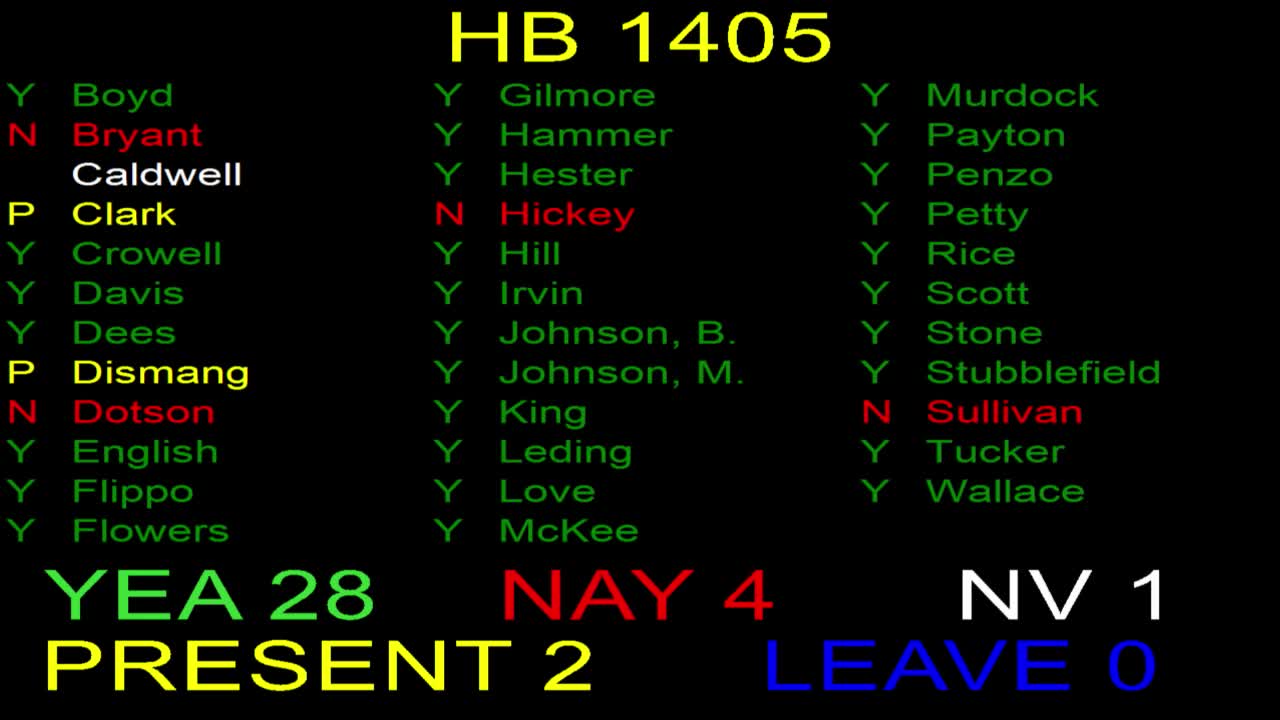
Final vote: The chamber recorded passage by a roll call; the Senate recorded the measure as passing with a majority vote and the bill will return to the House for further action as required by legislative process.
What this means: The Department of Corrections would have an additional method available if the bill becomes law. Several senators said they were troubled by the moral implications and by the lack of full scientific consensus on the method’s humaneness; others argued the state must have a lawful means to complete sentences affirmed by the courts.
Implementation and oversight: The bill includes no detailed medical protocol in the floor record; senators who opposed the measure warned that administration and monitoring would require careful oversight if used.