Get Full Government Meeting Transcripts, Videos, & Alerts Forever!
Get email alerts on the Library Curriculum topic
No spam. Unsubscribe anytime.
U-46 proposes new secondary library/media curriculum, requests $456,274 for resources and staffing
Summary
District staff presented a secondary library and media curriculum aligned to updated Illinois standards and the Media Literacy Act and requested $456,274.50 for implementation in 2025-26, including staffing to ensure full-time librarians and paras in secondary schools and increases to collection funding.
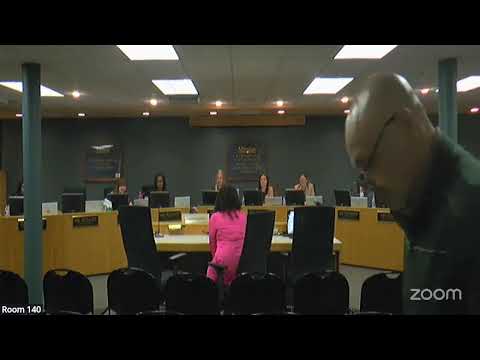
At the March 10 School District U-46 Board of Education meeting, district staff presented a proposal to adopt a new secondary library and media curriculum aligned to updated state and national standards and to fund associated resources and staffing for the 2025-26 school year.
Why it matters: The proposal would expand information and media-literacy instruction across grades 6–12, increase library collections and makerspace materials, and aim to staff all middle and high school libraries with full-time librarians and full-time paraprofessionals to maintain access before school, during lunch and after school.
Celia Banks, Director of Curriculum and Instruction, and Jackie Johnson, coordinator of PreK–12 literacy and libraries, told the board the curriculum writing began in July 2024 and aligned to guidance from "ISB, ISAIL, and the American Association of Libraries," and to changes connected with the Media Literacy Act. The recommended program includes five units (digital literacy, information literacy, media literacy, individual literacy and STEM/makerspace) mapped across grades 6–12 with targets for beginning, developing and sustaining levels of student skill.
Staff recommended several resource investments and staffing changes. Key budget and program items staff identified: - One-time and near-term implementation cost: $456,274.50 (presenter stated this total in the presentation). - Estimated annual consumables: $40,315. Estimated per-pupil cost for library services: $11.50 per year (presenter cited per-pupil figures). - Collection development: increase per-library base funding from $2.50 to $3.50 per student; an additional needs-based fund request of $12 per student for three years to refresh and diversify collections. - Makerspace funding to replace items last updated in 2017 (robots, coding materials, consumables and non-tech makerspace items). - Destiny resource manager (inventory/accountability system) and continued subscription to academic databases and shared ebook collections via the Rails consortium. - Staffing: move four middle schools from part-time to full-time librarian coverage (estimated need: two additional full-time librarians) and convert paraprofessionals to full-time 7-hour schedules to ensure consistent library access.
Banks said the district will administer an information-literacy assessment (described in the presentation as the "S.A.L.E.S. assessment") to middle and high school students to identify baseline skills and tailor instruction. She said the intent is to align the assessment and units to the secondary ELA curriculum and to implement the new curriculum and resource plan in the 2025-26 school year.
Board questions focused on delivery and measurement. Dawn asked whether librarians or classroom teachers would deliver the lessons; Banks replied lessons will be available in a repository for teachers but may be delivered by librarians, co-taught, or pushed into classrooms depending on scheduling and readiness. Sue asked about pre/post assessment; Banks said existing ELA research components provide end-of-course measures and the S.A.L.E.S. assessment will guide instruction and later application in coursework. Board member Samreen asked for an implementation timeline; staff said they expect content connections to be created by the end of the 2025-26 year and will track student and classroom utilization through circulation records and librarian calendars.
Staff noted Dream Academy and Central School libraries already receive the same funding and have newer facilities, so their renewal needs are smaller. Banks said Destiny resource manager licensing and some platform renewals are timed differently; the proposal included one-year licensing for some tools with planned multi-year renewals later.
Next steps: The presentation was delivered in the work session; staff recommended the resources and staffing changes and said they would return with final contract proposals and budget lines for board action during the regular agenda or subsequent meeting cycle.