Get Full Government Meeting Transcripts, Videos, & Alerts Forever!
Get email alerts on the Economic Development topic
No spam. Unsubscribe anytime.
Planning commission recommends adoption of economic opportunities analysis and utility master plans into comprehensive plan
Summary
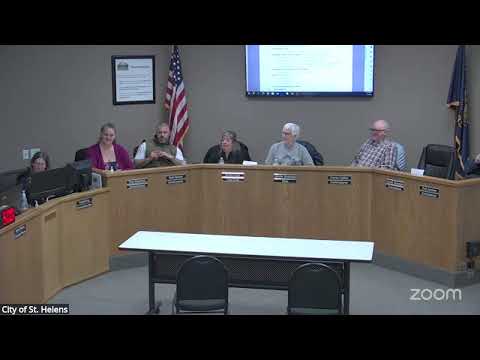
The St. Helens Planning Commission recommended that the City Council adopt an Economic Opportunities Analysis and add the city—s water, wastewater and stormwater master plans to the comprehensive plan.
The St. Helens Planning Commission voted to recommend that the City Council adopt a consultant‑prepared Economic Opportunities Analysis (EOA) and formally incorporate the city’s water, wastewater and stormwater master plans into the comprehensive plan.
Beth Goodman, the project consultant, told commissioners the EOA meets state Goal 9 requirements and serves as the factual basis for future comprehensive plan and zoning map changes, explaining that the analysis helps the city “plan for 20 years of growth.” She told the commission the EOA draws on a buildable lands inventory and employment forecasts to identify where commercial and industrial land is available and where policy attention is needed.
Goodman said the analysis found roughly 302 acres of vacant, unconstrained commercial and industrial land within the urban growth boundary — about 280 acres inside city limits and 22 acres in unincorporated areas — with most vacant land zoned heavy industrial. The report’s mid‑range forecast calls for roughly 1,400 additional jobs by 2045; staff and the consultant recommended retaining prime industrial sites, addressing a relative shortfall of commercial land, and pursuing targeted rezones only where appropriate.
Goodman summarized recommended policy actions that accompany the technical report: hire an economic development specialist, conduct a market analysis to evaluate rezoning options, perform a code audit to align zoning regulations with economic goals, and pursue programs to foster small‑business growth and tourism tied to the riverfront and corridor plans. “The EOA…would be adopted into your comprehensive plan,” Goodman said, adding that the analysis is meant to inform both policy and practical implementation steps.
Planning staff noted the city had already adopted the water, wastewater and stormwater master plans by resolution in recent years and that the current action would incorporate those documents into the comprehensive plan by ordinance, a best‑practice recommendation from the state Department of Land Conservation and Development (DLCD). Jacob Tumteh, planning staff, told commissioners the draft goals and policy text amendments are included in the packet for review.
After questions about methodology, employment density assumptions and how the analysis handles self‑employment and remote workers, the commission voted to recommend approval of the EOA and the inclusion of the three utility master plans in the comprehensive plan. The commission’s recommendation will go to City Council; staff announced the council public hearing on the ordinance is scheduled for April 16 at 6:00 p.m.