Get Full Government Meeting Transcripts, Videos, & Alerts Forever!
Get email alerts on the Confidential Communications topic
No spam. Unsubscribe anytime.
Board hears first reading of confidential-communications policy; members seek clearer language on immigration-status protections
Summary
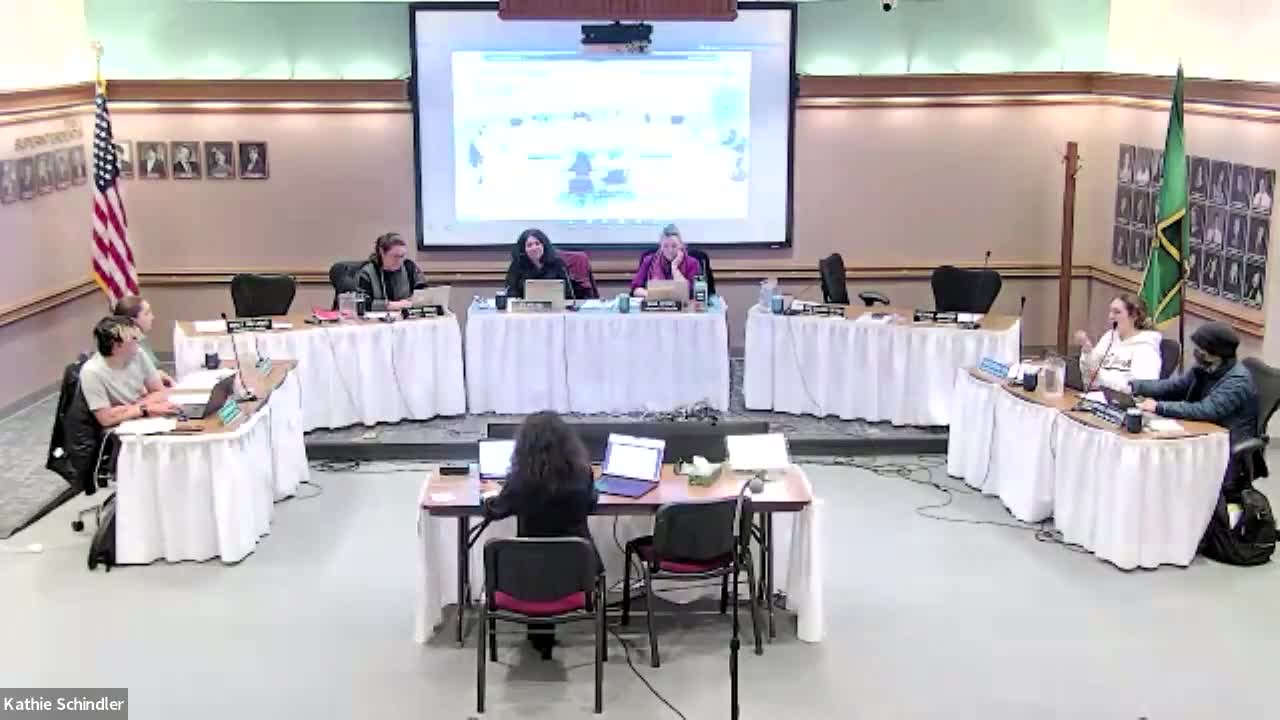
The Shoreline School Board held a first reading of a revised Confidential Communications policy that incorporates WASDA model language and adds an explicit Shoreline provision protecting an individual's immigration status from disclosure except as required by law.
The board held a first reading of draft Policy 4-100 (Confidential Communications), which updates district language using the Washington State School Directors Association (WASDA) model and adds a Shoreline-specific sentence that an individual's immigration status will be treated as confidential except as required by law.
Superintendent Dr. Reyes told the board that most underscored language in the draft is WASDA model text; the board-specific additions — shown in bold in the packet — include an explicit sentence shielding immigration status from disclosure except where required by law. Representative Rouhani (student representative) raised a substantive point during discussion: undocumented immigration status generally is a civil matter rather than a criminal violation and therefore the policy text should not be read to conflate immigration status with criminal conduct.
Directors and staff agreed the sentence as placed could be misread alongside a clause about mandatory reporting or disclosure where a crime has been committed. Members suggested either moving the immigration-status protection to a standalone clause or otherwise rewording the provision to avoid implying immigration status is a crime. The administration and legal counsel were asked to redraft to make the protection clearer and to ensure the policy's exceptions are narrow and consistent with current law.
The board received the first reading and invited written feedback to the superintendent ahead of the next revision. No adoption vote was taken; the item will return for a second reading in the board's regular schedule.
Ending: Directors thanked staff and the student who flagged the civil/criminal distinction and asked the superintendent and counsel to produce clarified wording for the second reading.