Get Full Government Meeting Transcripts, Videos, & Alerts Forever!
Get email alerts on the Virtual Schooling topic
No spam. Unsubscribe anytime.
Highline Virtual Academy presents enrollment and learning models; students describe blended and self-directed pathways
Summary
School leaders and three students described Highline Virtual Academy's enrollment growth, student supports, and three learning pathways during a board presentation; principal cited improvements in belonging and academic supports.
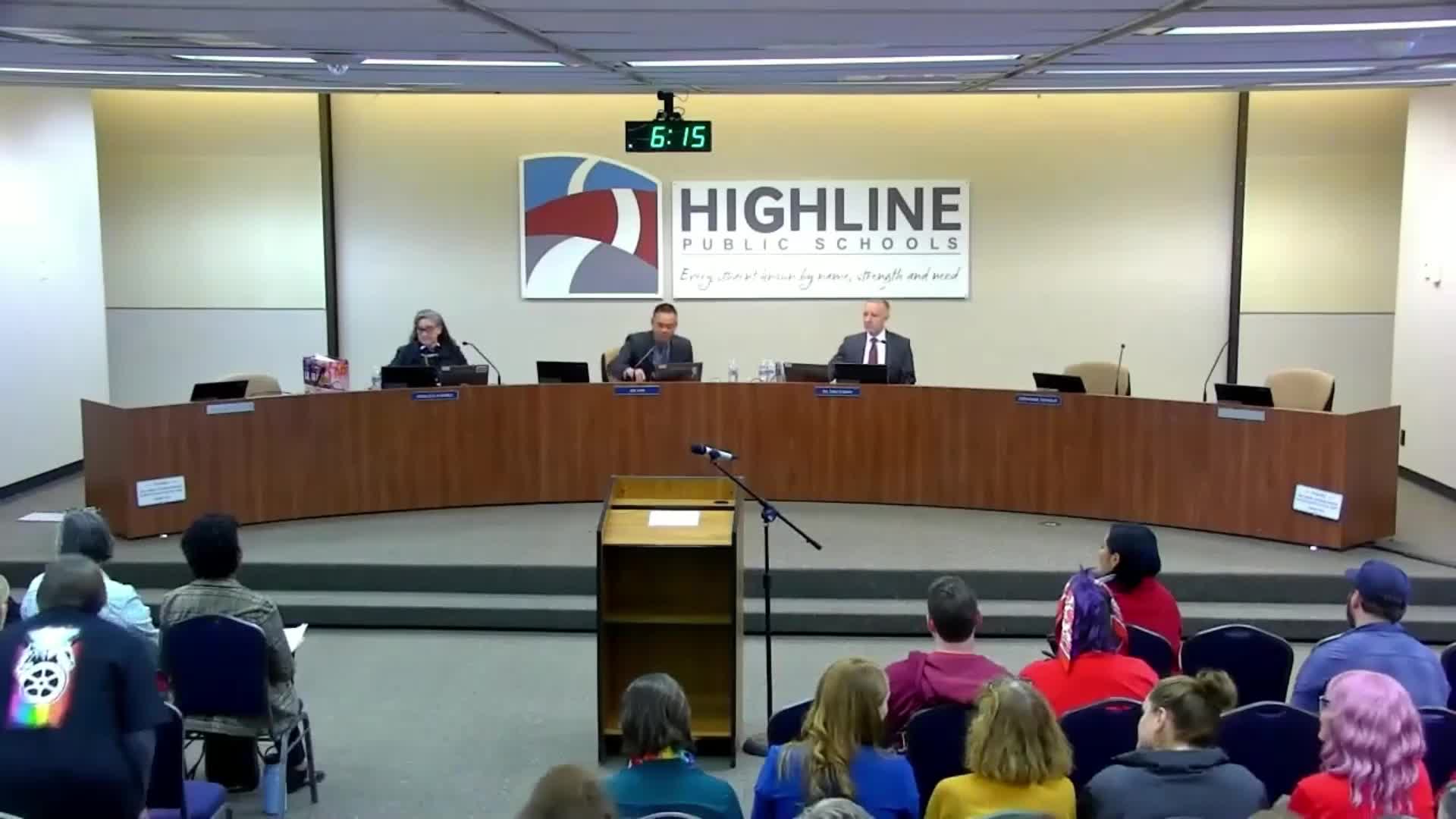
Highline Virtual Academy (HVA) leaders presented an overview of the school’s enrollment, instructional models and student supports at the Highline School District board meeting. Principal Amy Carlson and school staff highlighted enrollment trends, program pathways and social-emotional supports; three students described their experiences in the academy’s blended, self-directed and independent models.
Carlson said HVA serves a diverse student body and supports the district’s strategic goals to know “every student by name, strength and need.” Counselor Kishana Russell reported the school serves 249 students districtwide, with 53 in the independent model; since the start of the school year 74 students have enrolled, Carlson said. Russell gave demographic figures the school is tracking: 45% of HVA students identify as Hispanic/Latino, 29% qualify for multilingual support (with Spanish the largest language group), and about 14% receive special education services.
HVA described three primary pathways: a blended model where students receive live instruction via Microsoft Teams plus asynchronous work; a self-directed pathway that uses scheduled advisory and pacing through Canvas; and an independent model that uses Ingenuity for coursework combined with weekly teacher check-ins. Teacher Kelvin Allen said most students follow the blended model, while the independent option is meant for highly self-motivated learners who can work largely on their own.
The school emphasized multi-tiered supports: universal expectations reinforced by PBIS (labeled CARE — compassionate, adaptive, responsible, engaged), tier 2 interventions like check-in/check-out and small groups, and tier 3 supports including one-on-one instruction with teachers, counselors and social workers. Carlson said every student has a required weekly one-on-one check-in with an advisory teacher and that in-person start days and optional in-person Fridays help build relationships.
Student speakers said the models have helped them manage schedules, access individualized support, and make academic progress. Camila Reyes Pedroso, a blended-model student, said the school helped her recover academically and emotionally after struggling in a previous school. Bersabe Daniel, a self-directed 10th grader, said the self-directed pathway taught time management, self-discipline and accountability. A prerecorded video from an 11th-grade independent-model student described weekly check-ins and in-person Fridays as helpful supports.
HVA cited survey results showing a 71% student sense of belonging on a Panorama well-being survey (an 18-point increase from the previous spring) and a 79% “equity” measure on Panorama (a 10-point increase), figures the school said reflect gains in belonging and student voice. Carlson said HVA will continue to expand project-based learning opportunities, strengthen community partnerships, and improve district-wide literacy and math interventions.
Directors thanked students and staff for the presentation; Director Alvarez and others praised the student testimonies and asked about enrollment growth, which Carlson described as ongoing and tied to students’ changing needs across the district during the year.