Get Full Government Meeting Transcripts, Videos, & Alerts Forever!
Get email alerts on the Code Enforcement topic
No spam. Unsubscribe anytime.
Independent review of Delray Beach code enforcement recommends clearer policies, training and updated software
Summary
An independent review of Delray Beach’s code enforcement division called for rewriting the procedures manual, simultaneous hearing notices, stronger cross‑training of inspectors, improved training and modernized case‑management software, aiming to reduce perceptions of inconsistent enforcement.
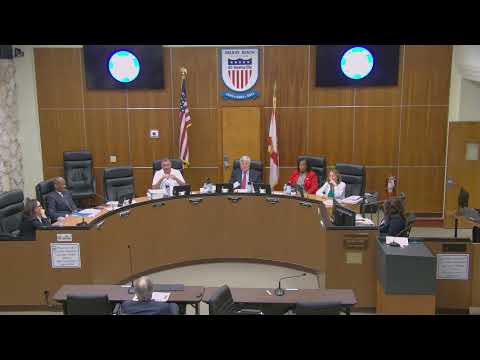
Calvin Giordano & Associates presented a final code enforcement review to the Delray Beach City Commission on March 11 that recommends a package of procedural, training and administrative changes to bring the division into closer conformity with state law and to improve transparency and consistency.
Why it matters: Code enforcement actions frequently affect property owners and businesses, and the consultant said clear, consistent procedures and better training will reduce perceptions of selective or inconsistent enforcement.
Key findings and recommendations: Consultant Bernard Pita told the commission that Delray Beach’s code enforcement structure provides a strong foundation but has specific gaps and opportunities. Major recommendations included: - Rename and align the existing operating manual to the ordinance (Code Compliance Policies and Procedures Manual) and ensure compliance with Chapter 162 of Florida Statutes for notice and complainant disclosure rules. - Issue the Notice of Violation and the Notice of Hearing simultaneously so that a magistrate date is already set when a respondent receives initial notice, improving procedural fairness and limiting ad‑hoc deadline extensions. - Use the citation program for repeat or egregious violations and strengthen repeat‑offender processes so magistrates can impose final orders against chronic violators. - Expand subject‑matter collaboration and cross‑training: assign or coordinate building inspectors for structural matters, designate public‑works‑focused inspectors for stormwater/illicit discharge and formalize business tax receipt (BTR) coordination for commercial cases. - Implement a tiered violation schedule and consider a relief/mitigation process with application fees for hardship relief, modeled after other Florida cities. - Strengthen training and performance measures: adopt field training officer evaluations, tailored training tracks, measurable goals, and benchmark caseloads against Florida or national peers rather than flat quotas. - Replace the legacy AS/400 case management system with a modern platform (Tyler/other) and audit existing case data to remove data inconsistencies.
Commission response and next steps: Commissioners thanked the consultant and generally supported the recommendations. Commissioner Burns urged prompt action on statutory compliance and better public records handling for complainant information; Pita said the city largely complied with Chapter 162 but suggested procedural improvements. The consultant and new neighborhood director said they would implement many recommendations administratively and use the new case‑management software to address data gaps.
Ending: The commission accepted the report and directed staff to begin implementing the recommended administrative changes; staff said additional specifics and timeline would be presented as the new software and training program are rolled out.