Get Full Government Meeting Transcripts, Videos, & Alerts Forever!
Get email alerts on the School Construction Maintenance topic
No spam. Unsubscribe anytime.
Board and department describe competitive CIP process, say they advocate for district applications but not bond moratorium change
Summary
Officials described how the state prioritizes school construction and major maintenance projects through a competitive process; the board and department said they document needs and support district applications but have not advocated to lift the state moratorium on bond debt reimbursement.
Committee members pressed the State Board and Department of Education and Early Development on deferred maintenance and school construction funding at the March 10 hearing. Officials said they compile and provide documentation to support districts’ applications for the school construction grant fund and the major maintenance grant fund, but that the state system remains highly competitive and resourcing is limited.
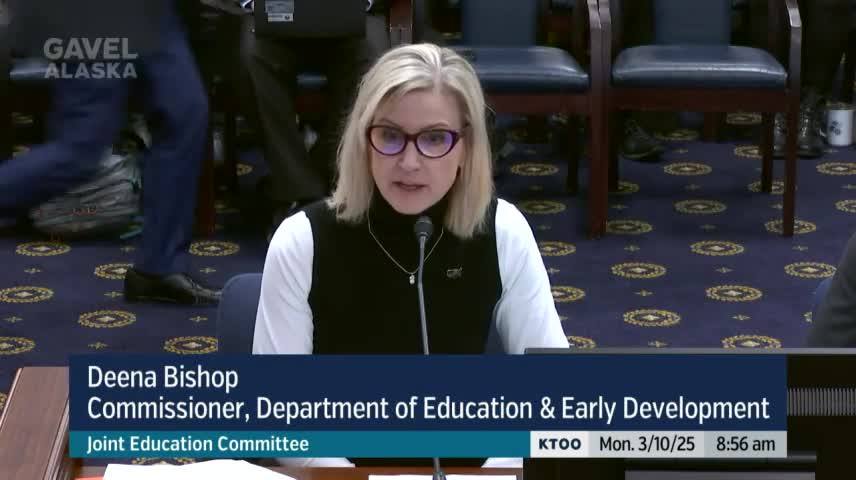
Board Chair James Fields and Commissioner Dina Bishop said the department travels to rural districts to document conditions when necessary and provides guidance to help districts prepare competitive applications. They said the competitive ranking system is based on need and that some districts have waited many years to receive funding.
Representative Story specifically asked whether the board has advocated to lift the moratorium on school bond debt reimbursement; the board said it has not taken an advocacy position on the bond-debt moratorium. Officials described application costs — including architect assessments and required documentation — as frequently burdensome for small districts and said the department is exploring ways to reduce administrative burdens so small districts can better compete for limited funds.
Committee members asked about districts that have remained on CIP lists for decades and about the financial strain from unplanned capital expenses, such as a recent heating system replacement cited by one board member. Officials reiterated that the department supports districts in application preparation and said they will continue to document needs and offer technical assistance.