Get Full Government Meeting Transcripts, Videos, & Alerts Forever!
Get email alerts on the Land Bank Extension topic
No spam. Unsubscribe anytime.
Committee sends House Bill 129 to amendment order after split testimony over extending land‑bank holding period
Summary
The Senate Resources & Environment Committee voted to send House Bill 129 to the 14th order for possible amendments after extensive testimony both supporting and opposing an extension of the land bank holding period from five to ten years.
The Senate Resources & Environment Committee voted to send House Bill 129 to the 14th order for possible amendments after extensive testimony both supporting and opposing an extension of the land bank holding period from five to ten years.
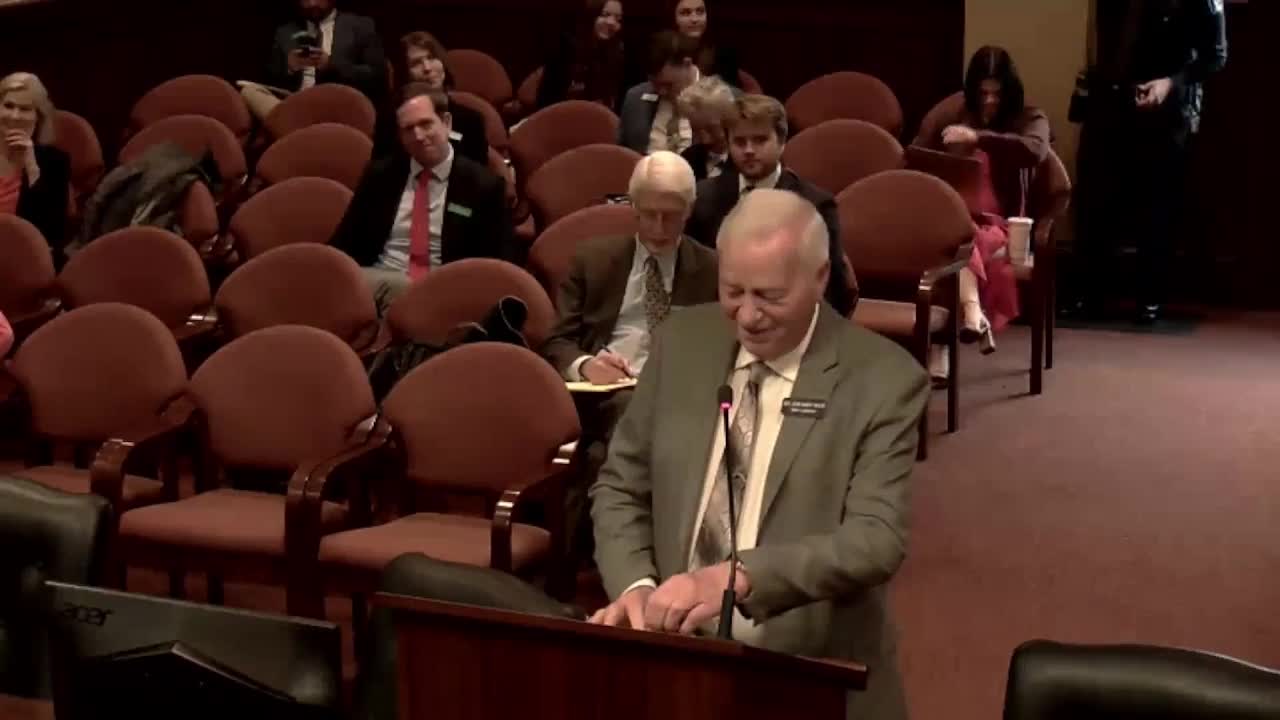
Representative John Vander Ryder described the bill as a mechanism to give the state Land Board and Idaho Department of Lands more time to reinvest proceeds from sales of state property into endowment lands, rather than automatically transferring those proceeds into the permanent endowment fund after five years. “That money is placed in the land bank from sale of state property,” Vander Ryder said. “This bill would allow them an additional five years … to hang on to the money should something become available later.”
Supporters argued the extension would allow the Land Board to acquire more endowment lands that provide public access and steady revenue. Heather Eastman, executive director of Idaho Business for the Outdoors, said the extension would help the Department of Lands weather market fluctuations and pursue acquisitions that benefit recreation and the state economy. “Idaho Business for the Outdoors … strongly support the passage of House Bill 129,” Eastman told the committee.
Conservation and recreation groups including the Idaho Wildlife Federation, Idaho Outfitters and Guides Association, and Idaho Forest Group also testified in favor, saying longer holding authority could secure more public‑access lands and long‑term value for beneficiaries.
Opponents said the change risks expanding state land ownership at the expense of private property and local tax bases. Russ Hendricks of the Idaho Farm Bureau Federation said the current system has acquired significant acreage in recent years and warned that additional authority would enable further net purchases from private owners. “Government already owns more than 70% of our entire state,” Hendricks said, arguing that the bill would make it easier for the state to acquire private land.
Representative Vander Ryder and other witnesses gave figures during testimony: he said there was about $85,000,000 in the land bank and estimated “about 5 or 7,000,000 that would probably go out this year and another 20,000,000 next year,” and that without action the funds would transfer to the permanent endowment within five years. Testimony from Idaho Business for the Outdoors said an additional $36,100,000 is scheduled to transfer out of the fund in the next two years if the time frame is not extended; the Idaho Farm Bureau cited Department of Lands statistics showing a net increase of roughly 63,906 acres over the last decade (101,516 acquired, 37,610 sold), and the Idaho Conservation League cited IDL website data showing about 43,000 acres acquired in a similar interval.
Senator Taylor moved to send the bill directly to the Senate floor with a due‑pass recommendation; that motion died for lack of a second. Senator Guthrie then moved to send House Bill 129 to the 14th order for possible amendments; Senator Hart seconded. The committee conducted a roll call and the motion passed 7‑2. Recorded votes included: Chairman Burton Shaw (aye, with reservation), Hart (aye), Guthrie (aye), Harris (no), O’Konowitz (aye), Cook (no), Van Orden (aye), Cole (aye, reservation), Taylor (aye).
Committee members who supported sending the bill to amendment order said they wanted more time to craft changes that address concerns about land purchases and county tax impacts; proponents said the extension preserves the state’s ability to make strategic land acquisitions while the market fluctuates. Opponents urged holding the bill or amending it to protect private property and the local tax base. The bill moves to the 14th order for amendment.