Get Full Government Meeting Transcripts, Videos, & Alerts Forever!
Get email alerts on the Lava Ridge Wind Project topic
No spam. Unsubscribe anytime.
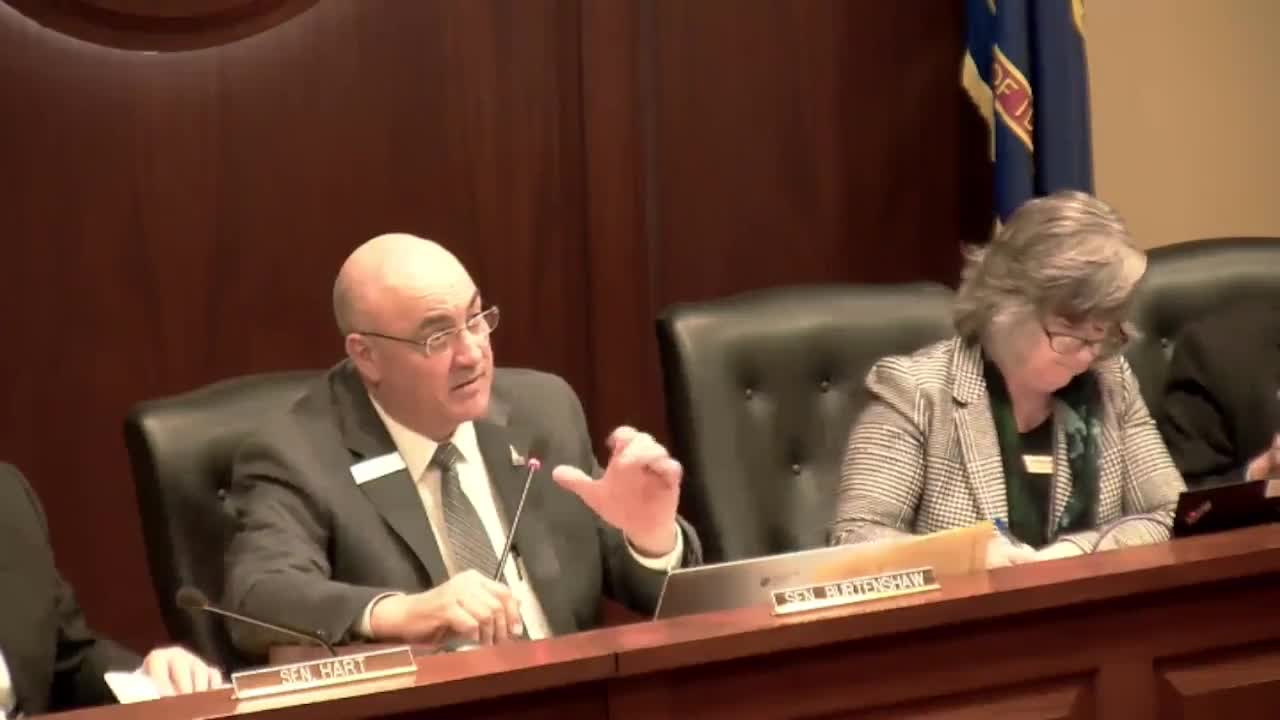
Senate committee backs memorial and resolution asking federal and state officials to block Lava Ridge wind project
Summary
The committee sent House Joint Memorial 5 and House Concurrent Resolution 8 to the Senate floor, urging congressional and executive action to halt the Lava Ridge wind project over community and environmental concerns, including possible impacts to the Eastern Snake Plain Aquifer and local roads.
The Senate Resources & Environment Committee voted to advance two measures asking federal and state officials to reconsider the Lava Ridge wind project, which sponsors said would place large industrial wind infrastructure on federal lands above a major aquifer.
Representative Lance Clow told the committee the measures—House Joint Memorial 5 and House Concurrent Resolution 8—are intended to register the legislature’s opposition and to urge the governor, attorney general and the state’s congressional delegation to press for reversal or further review. “Lava Ridge is a … use of federal lands that would have a very disruptive impact on the Magic Valley,” Clow said, pointing to the number of roads that would be built atop lava flows and to the project’s location over the Eastern Snake Plain (Snake River) Aquifer.
Representative Jack Nelson, whose district covers part of the area, echoed Clow and described widespread local opposition. “I’ve never seen my community so grumpy about something like this,” Nelson said, arguing the project would bring heavy short‑term construction impacts and little local mitigation while most of the electricity generated would be sent out of state to California and Nevada.
Clow told the committee the Bureau of Land Management approved the project last December and that the president issued a 90‑day moratorium to review the decision—but sponsors said the moratorium had not concluded and they want the state and federal leadership to seek further action. “The project was approved by the Bureau of Land Management last December,” Clow said. “The president’s executive order … says he’s putting a moratorium on it for 90 days to look into it.”
Senator Taylor moved to send HJM 5 to the Senate floor with a due‑pass recommendation; Senator Cole seconded and the committee approved the motion by voice vote. Taylor made a separate motion to send HCR 8 with a due‑pass recommendation; Cole seconded and the committee approved that motion as well.
Both measures now move to the full Senate for consideration; committee members recorded no roll‑call for these voice votes at the hearing.