Get Full Government Meeting Transcripts, Videos, & Alerts Forever!
Get email alerts on the Homestead Consent topic
No spam. Unsubscribe anytime.
Committee delays final action on bill letting sole-owner sell or encumber pre‑marriage homesteads
Summary
After extended debate and a written legal objection, the committee sent House Bill 150 to the fourteenth order for possible amendment to study conflicts between homestead and community-property rules.
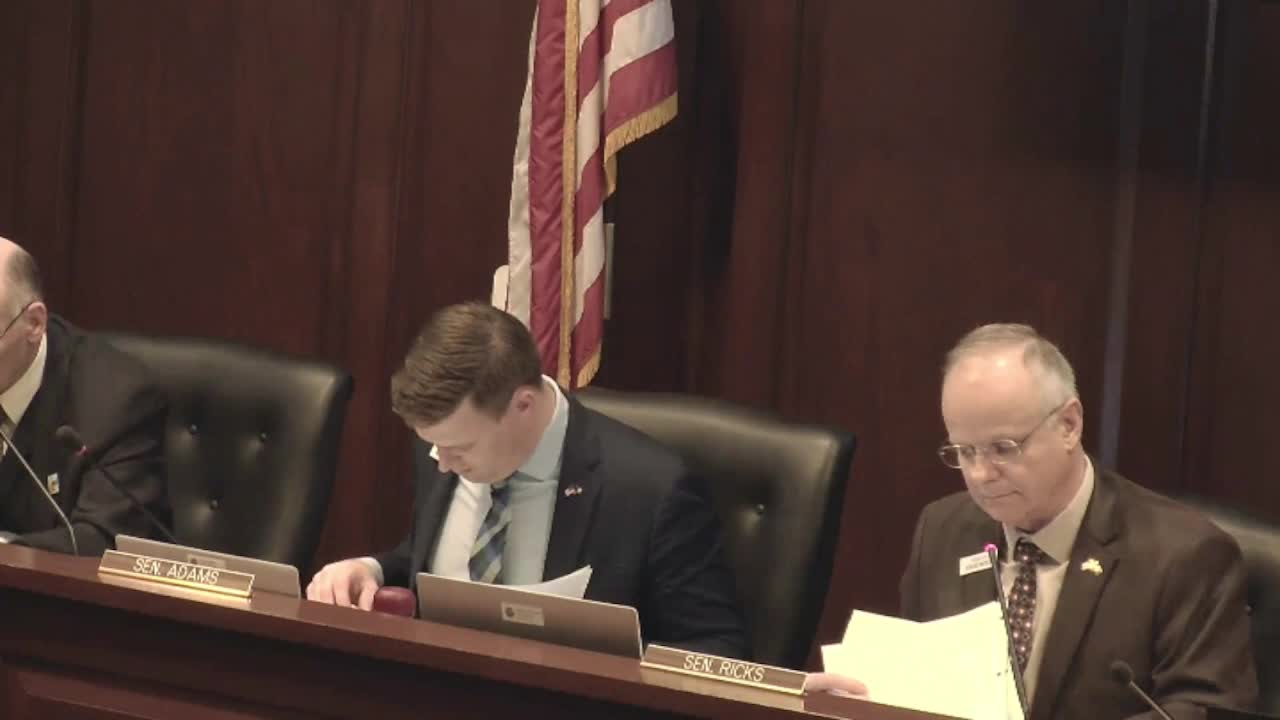
The Senate Local Government and Taxation Committee on March 6, 2025 sent House Bill 150 to the fourteenth order for possible amendment after extended discussion about how the bill would interact with Idaho community-property and homestead law.
Representative John Shirts (District 9) sponsored the bill and said it would allow an owner of a property titled as "sole and separate" to sell or encumber that property without requiring the signature or consent of a non‑owning spouse. He described common practical problems—divorce or an absent spouse—that can prevent sale or refinancing when a nonowner's consent is currently required.
Witnesses and committee members raised concerns about unintended consequences. A written letter from attorney Alex Cabell (Twin Falls) argued that the bill's last sentence could permit a sole owner to grant consensual liens without notice to a spouse who holds a community-property reimbursement claim, potentially exposing the homestead to foreclosure by a consenting creditor. Bob Rice, president of the Idaho Land Title Association, testified the bill was intended as a narrow fix to let sole owners deal with their separate property and said comparable language exists in statutes in other community-property states; he emphasized the drafters did not intend to alter community-property reimbursement rights.
Committee members pressed on whether the bill would allow a sole owner to encumber a house to the point of eliminating community reimbursement, and whether a court order could block an otherwise permitted sale. Testimony noted distinctions between ownership, reimbursement claims, consensual liens (deeds of trust) and judgment liens; members asked for clearer interplay with existing statutes, including the homestead code section cited in testimony (identified in the hearing as 55-1007) and related code sections discussed during questioning.
Senator Anton moved and Senator Toews seconded a motion to send HB150 to the fourteenth order for possible amendment. The motion carried by voice vote.
The committee's action pauses the bill for further drafting and legal review; proponents urged that the change would solve routine title problems for owners of pre‑marriage property, while critics urged safeguards to protect a spouse's community-property reimbursement and to ensure consensual liens do not inadvertently defeat homestead protections.
The bill will return for further consideration in the fourteenth order with opportunities for amendment.