Get Full Government Meeting Transcripts, Videos, & Alerts Forever!
Get email alerts on the Water Domestic Wells topic
No spam. Unsubscribe anytime.
Senate committee advances bill to limit irrigation from domestic wells in stressed groundwater areas
Summary
The Senate Resources & Environment Committee voted to send Senate Bill 1083 to the fourteenth order for possible amendment after a lengthy hearing on rules for domestic well exemptions, combined wells, enforcement and local planning authority.
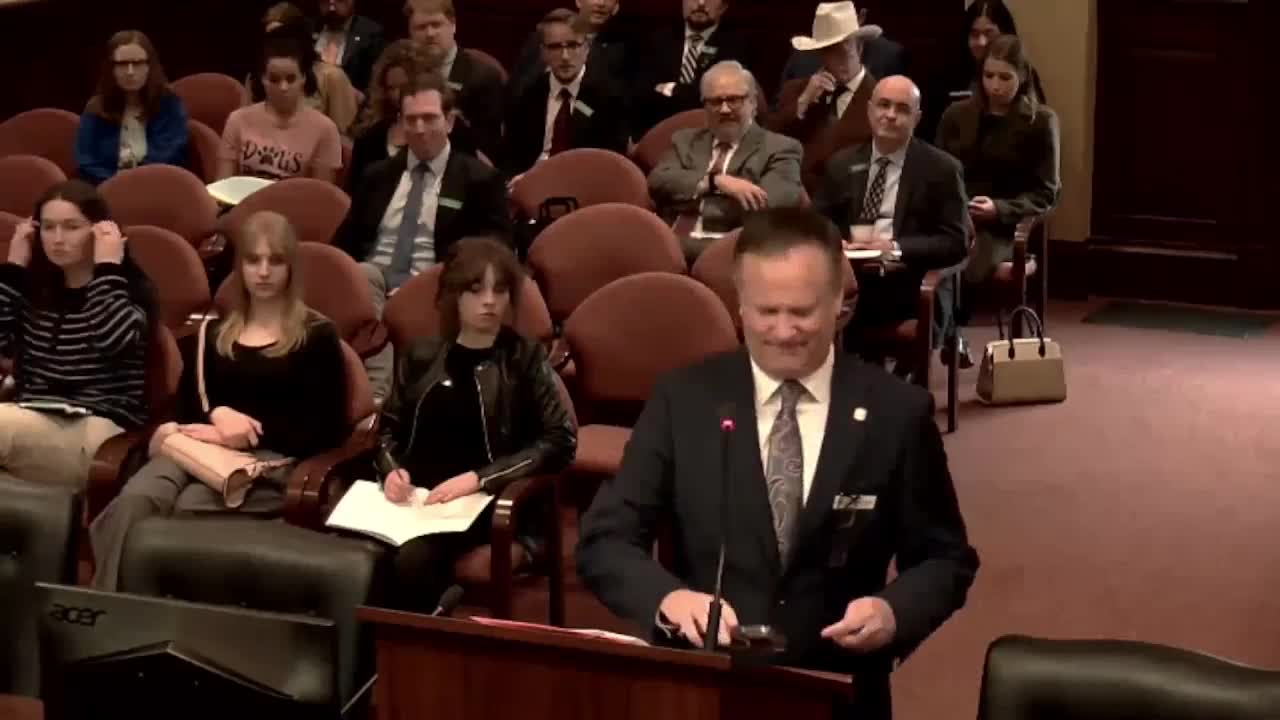
The Senate Resources & Environment Committee voted to send Senate Bill 1083 to the fourteenth order for possible amendment after a multi-hour hearing that brought water users, municipal officials, builders and county planners.
The bill, presented by Sen. Kelly Anthon, would narrow how Idaho’s domestic-well exemption operates in areas designated as having groundwater stress (for example, groundwater management areas, critical groundwater areas or moratorium areas). Under current law the domestic exemption allows one household use, up to one-half acre of irrigation and up to 13,000 gallons per day without a water right. SB 1083 would limit exempt well use in designated areas to in-home uses and livestock watering; irrigation, lawn and landscape uses in those areas would require a water right or other authorization.
Supporters, led by Paul Arrington of the Idaho Water Users Association, said the measure is the product of a three‑year, multi‑stakeholder process that also adds a voluntary option to allow multiple residences to share a single well for in‑home uses, strengthens the department’s enforcement pathway for domestic‑exemption overuse, and clarifies local planning authority to consider water availability in comprehensive plans. “This is an effort to be thoughtful and surgical,” Arrington told the committee, describing four priorities: fairness in administration, water‑quality risk reduction, enforceability, and clearer local planning authority.
Municipal and utility representatives said the bill helps protect municipal supplies and gives cities a role when subdivision wells lie within their area of impact. Tom Points, representing the Idaho Water Utility Council and the city of Nampa, told the committee the bill “gives us the option to connect and use” community wells where appropriate and offers clarity on municipal involvement in construction standards.
Association and county representatives described compromises and remaining concerns. The Idaho Home Builders Association and several realtors and developers said portions of the bill remain unclear or create costs for rural development. Ken Burgess, representing the Idaho Home Builders, said the association voted to oppose because of how irrigation districts’ review authority is handled. Several landowners and brokers said mandatory community wells and additional oversight would increase development costs and be a poor fit for small rural properties.
On water‑quality concerns, Shelley Roberts of the Idaho Rural Water Association and others emphasized the number of new private wells drilled each year and the resulting opportunities for contamination. The bill includes a voluntary mechanism to allow in‑home uses for multiple residences to be served by a single well, which supporters said reduces the number of “holes in the ground.”
The bill does not require community wells or public water systems, Anthon emphasized. Paul Arrington and supporters also proposed several amendments before the committee, including removing a meter requirement at the point of diversion for shared in‑home wells and adding a definition of “in‑home use.” Another proposed amendment would permit counties to collect certain fees on behalf of the Department of Water Resources and retain half for local administration if they accept that responsibility.
Senators asked about implementation and scope. Arrington told the committee the bill’s limits on irrigation from domestic exemptions would apply prospectively from the date of enactment in designated areas; enforcement provisions would apply to all domestic uses starting on enactment day. Questions about workload and the fiscal note persisted; some senators and county representatives warned the measure may increase department workload for permits and enforcement.
After about three hours of testimony and questions, Senator Harris moved to send SB 1083 to the fourteenth order for possible amendment; Senator Taylor seconded. The committee voted aye and the motion carried.
Votes at a glance SB 1083 — Send to 14th order for possible amendment; motion moved by Senator Harris, seconded by Senator Taylor; outcome: approved by voice vote.