Get Full Government Meeting Transcripts, Videos, & Alerts Forever!
Get email alerts on the County Fair Boards topic
No spam. Unsubscribe anytime.
Committee debates repeal of population trigger for county fair boards; motion made to hold bill
Summary
Representative Gerald Raymond introduced House Bill 106, saying the bill would remove a 200,000-population trigger in Idaho Code that allows counties to convert county fair boards from administrative to advisory status and would "go back to the way that the state has been operating county fairs since 1922."
Representative Gerald Raymond introduced House Bill 106, saying the bill would remove a 200,000-population trigger in Idaho Code that allows counties to convert county fair boards from administrative to advisory status and would "go back to the way that the state has been operating county fairs since 1922." Raymond told the committee the change would let fair boards continue to "tell the story of agriculture" as populations grow and urbanize.
The measure would repeal language in Title 22, Chapter 202A that lets county commissioners convert fair boards to advisory status by ordinance once a county reaches 200,000 residents; the bill would grandfather the two counties that already exceeded that threshold and provide a pathway for them to remain advisory if they choose.
Supporters told the committee the change protects fair boards’ ability to manage day-to-day fair operations and preserve agricultural education. Robert Bautista, director of the Western Idaho Fair in Boise, testified that he views advisory/administrative arrangements as workable and that county commissioners should retain oversight of county expenditures but that the current administrative role of fair boards has been functional: "I frankly think that this operation that Ada County has is a very functional and very worthwhile way to manage fairs." Braden Jensen of the Idaho Farm Bureau Federation said the Farm Bureau "stand[s] in support of House Bill 106" and argued the change would help fair boards continue ag outreach.
Opponents told the committee the bill would remove a choice now available to counties. Kootenai County Commissioner Leslie Duncan testified she opposed the bill and called it "a solution looking for a problem," saying counties should retain the option to make a fair a county department for greater transparency and accountability. Ada County Commissioner Tom Daley, speaking for Ada County and the Idaho Association of Counties, also opposed repeal and asked that Idaho Code 202A remain in place so counties affected could choose their governance model: "Idaho code 202A should not be repealed. The counties by population should continue to have the flexibility to treat their fair boards as advisory."
Committee members asked about the two counties that have already passed the threshold (Ada and Canyon) and about Kootenai County, which was described in testimony as near the threshold at about "185-ish" thousand people. Committee members also discussed whether county commissioners would be required to convert fair boards to advisory status when the threshold is reached (testimony said conversion requires an ordinance by commissioners, not an automatic change).
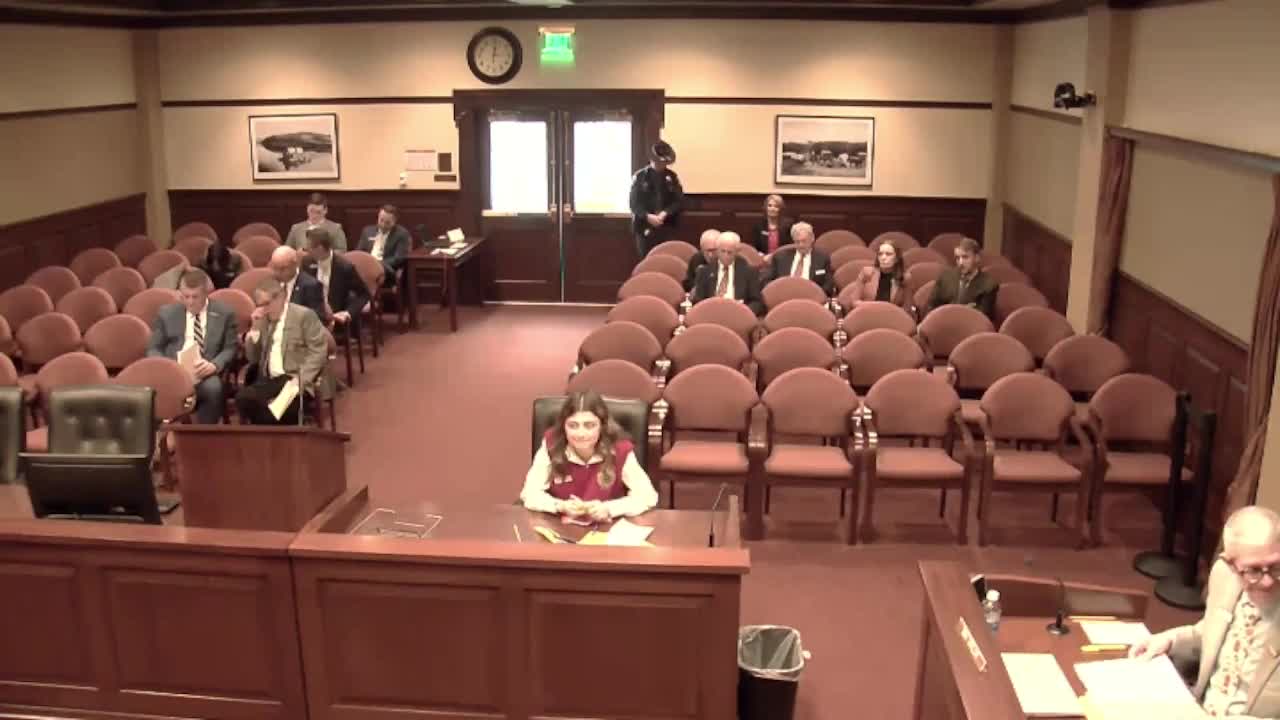
After testimony and questions the committee took a motion to hold House Bill 106 in committee. Senator Adams moved to hold the bill and Senator Toews seconded the motion; the committee then took a voice vote and the chair recorded his vote as opposed. The committee did not advance House Bill 106 out of committee at this meeting.
The record includes written testimony provided to the committee folder and multiple speakers representing county fairs, county government, and agricultural stakeholders. The bill sponsor asked the committee to send the bill to the floor with a do-pass recommendation if members were persuaded, but instead a motion to hold was offered and accepted for further consideration.