Get Full Government Meeting Transcripts, Videos, & Alerts Forever!
Get email alerts on the Local Government And Taxation topic
No spam. Unsubscribe anytime.
Senate committee sends bill to increase Idaho grocery tax credit to floor with unanimous 'do pass'
Summary
The Idaho Senate Local Government and Taxation Committee voted unanimously to recommend House Bill 231, which raises the statewide grocery tax credit to $155 per person and creates an optional itemized reimbursement process of up to $250 per person; sponsors say the measure would provide about $50 million in tax relief.
The Idaho Senate Local Government and Taxation Committee voted unanimously to send House Bill 231 to the Senate floor with a "do pass" recommendation after testimony and questions about how the measure would be administered and who would benefit.
Sponsor and proponents say the bill raises the grocery tax credit available to Idaho residents to $155 per person and would provide roughly $50 million in tax relief statewide. Representative Monks, a sponsor presenting the bill, said the change is intended to give direct relief amid higher food prices and described the bill as a straightforward way to return money to taxpayers. "I want to give $50,000,000 back to people," Monks told the committee.
The bill also creates an optional, itemized reimbursement process. Under the optional provision individual taxpayers who keep and submit qualifying sales receipts would be eligible to claim up to $250 per person. Representative Monks and other witnesses said the Tax Commission expects to accept electronic copies (photos or PDFs) of receipts as verification rather than requiring paper scanning.
Committee members and witnesses debated the choice to raise the refundable credit instead of exempting groceries from sales tax entirely. Several testifiers said a credit avoids contentious definitional fights about what counts as "food." Mark Johnson, speaking as a private citizen, said the credit approach is "beautifully simple" compared with attempting to define exempt food items. Ron Nate, president of the Idaho Freedom Foundation, testified that grocery taxes are particularly burdensome and said Idahoans have paid more in grocery taxes than they receive back; he characterized grocery taxation as a moral issue and urged broader repeal, though he described the foundation’s position on this bill as neutral.
Other witnesses offered data-based arguments. Miguel La Guerra of the Associated Taxpayers of Idaho presented examples showing the increased credit would offset grocery-tax burdens for many households and said the credit reaches more Idahoans than a targeted repeal would. A public commenter objected, arguing the optional itemization would disadvantage people without smartphones and calling for full repeal instead.
Committee members asked for, and sponsors provided, administrative clarifications: the Tax Commission has indicated it will accept electronic copies of receipts (photos or PDFs) for the optional itemized claim; sponsors said they will confirm specific Tax Commission instructions. Lawmakers also discussed revenue projections and how this $50 million change fits with other tax-relief proposals under consideration; Representative Monks said projected state revenues and budget choices determine how much relief the Legislature can enact.
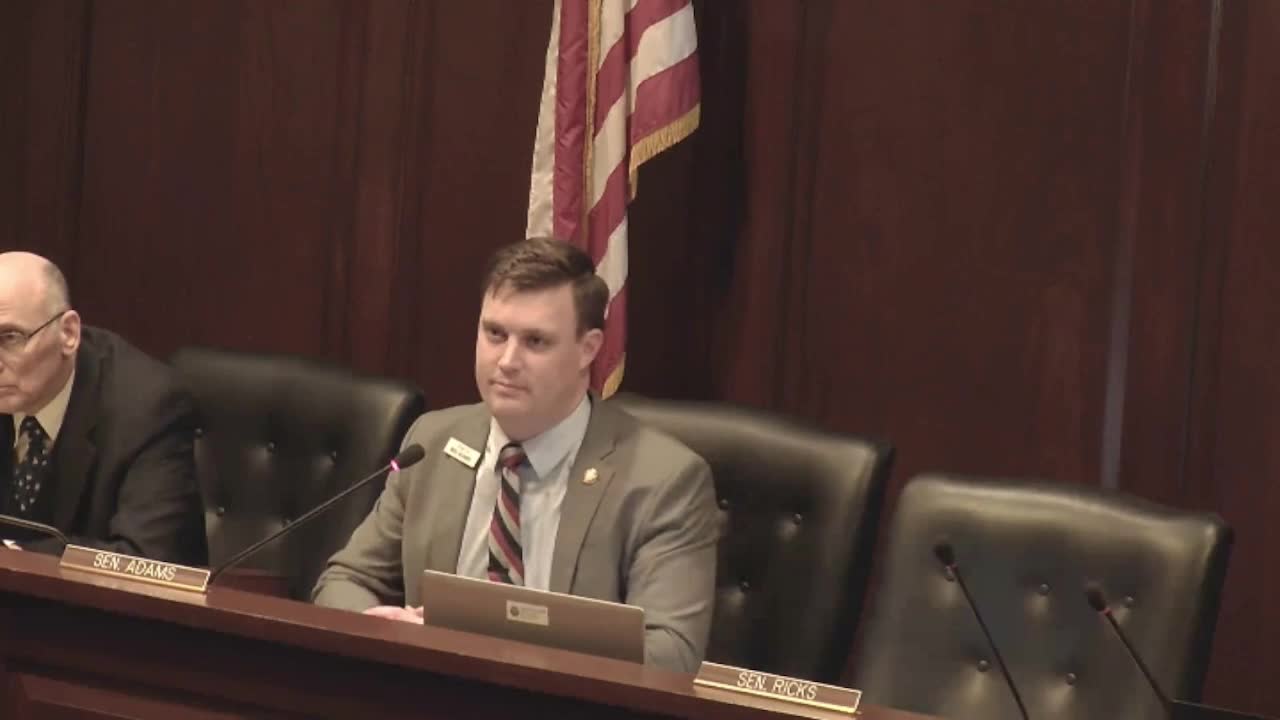
After roughly an hour of presentation and testimony, Senator Adams moved to send the bill to the Senate floor with a due-pass recommendation; the committee adopted the motion in a voice vote. The measure will next be scheduled for consideration by the full Senate.
Votes at a glance: House Bill 231 — send to Senate floor with a due-pass recommendation (motion made by Senator Adams; second recorded). Committee recorded unanimous "Aye" on the voice vote; exact roll-call count was not provided in the transcript.