Get Full Government Meeting Transcripts, Videos, & Alerts Forever!
Get email alerts on the Criminal Appeals Evidence topic
No spam. Unsubscribe anytime.
Tennessee Court of Criminal Appeals weighs whether trial court wrongly limited cross-examination about accuser's affair
Summary
At oral argument in State v. Daniel J. Dreardon, attorneys disputed whether the trial court's restrictions on cross-examining the accuser about an extramarital affair were preserved for appeal and whether exclusion violated the defendant's confrontation and due-process rights. The appellate court took the matter under advisement.
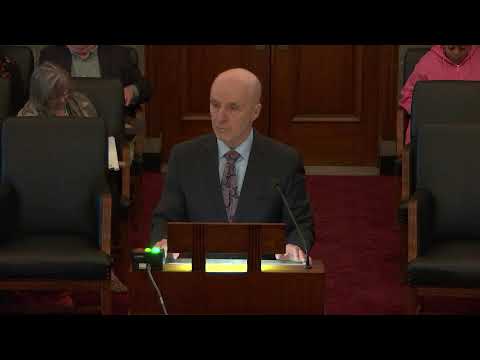
NASHVILLE, Tenn. — The Tennessee Court of Criminal Appeals heard oral argument over whether a trial court improperly limited cross-examination of an accuser about an extramarital affair in the case State of Tennessee v. Daniel J. Dreardon, an issue defense counsel argued deprived the defendant of his constitutional right to confront witnesses.
The dispute centers on whether trial counsel preserved a confrontation-clause claim and whether exclusion of evidence about the accuser's alleged affair — argued by the defense to show motive to fabricate in pending divorce and custody proceedings — constituted reversible error. The court took the case under advisement at the close of argument.
Appellant counsel Pat McNally told the three-judge panel that the contested evidence was offered to show motive to fabricate and that the trial judge's ruling effectively denied the defendant “the right to have a cross examination.” McNally said the trial court treated the questions under several rules of evidence but ultimately focused on Rule 608, and he argued the record preserved the constitutional claim for plenary review. “This is a substantial right that was denied, and it had a prejudicial effect in the outcome of the case,” McNally said.
Garrett Ward, arguing for the State, countered that the confrontation claim was not preserved and is therefore subject only to plain-error review. Ward said the state’s motion in limine had raised two categories of evidence — alleged prior sexual encounters with the defendant and evidence of an extramarital affair — and that the defendant’s responsive pleadings treated those categories separately. Ward said the record shows defense counsel knew how to assert a confrontation objection when intended and did so in one pleading but not in the other that concerned the affair.
The judges questioned counsel about whether the trial court’s in‑court rulings and the pleadings placed opposing counsel and the court on sufficient notice that a confrontation-clause claim was being raised. Presiding Judge Camille McMullen and the panel discussed case law the parties cited, including Olden and this court’s own Bowers decision, and queried whether the facts here are materially different from those precedents.
Argument on the facts emphasized that the underlying trial was a one-day bench trial in which the trial judge found aspects of the accuser’s testimony less than fully credible. The State pointed to testimony from third-party witnesses and text messages from the defendant that the State contends independently supported the conviction regardless of the excluded evidence. McNally said the trial judge acknowledged the case was close and that the excluded evidence could have “added to the scales.”
At the end of argument, the court said it would take the matter under advisement. No decision was announced in court.
The appeal raises procedural and constitutional questions about (1) whether a confrontation-clause objection was adequately preserved in the trial record and (2) whether exclusion of impeachment evidence about the accuser’s extramarital relationship was erroneous and prejudicial. Counsel for the parties agreed the transcript and pleadings are ambiguous in places about which rules the trial court applied and which specific lines of inquiry were permitted at trial.
The court’s forthcoming opinion will determine the standard of review and whether the trial judge’s evidentiary rulings require reversal or a new trial. For now, the appellate panel has reserved judgment while it considers the briefs and the arguments presented.