Get Full Government Meeting Transcripts, Videos, & Alerts Forever!
Get email alerts on the Court Appeals topic
No spam. Unsubscribe anytime.
Appeals panel weighs challenge to redacted traffic-stop video, jury instruction and sentence in DUI appeal
Summary
An appellate panel heard arguments over whether a redacted videotape and a trial judge's jury instruction limited the defendant's right to present a defense in a DUI case, and whether the sentence's length and manner of service were proper; the court took the matter under advisement.
An appellate panel heard oral argument over an appeal of a DUI conviction that centers on three issues: whether the trial court prevented the defense from presenting an unredacted videotape of a traffic stop, whether a jury instruction about excluded evidence hampered the defense, and whether the 11 months and 29 days sentence and its manner of service were proper. The court took the matter under advisement at the end of the hearing.
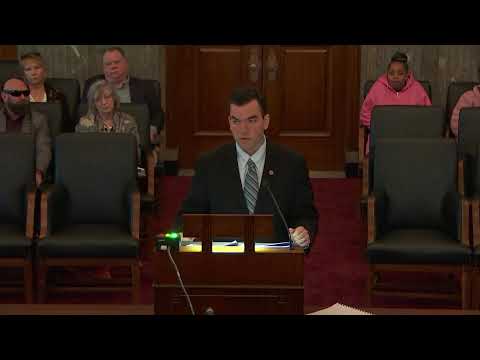
Mister Nesbitt, defense counsel for the appellant, told the panel that the trial court's handling of a heavily redacted video and the judge's instruction telling jurors not to “worry about what I've excluded” deprived his client of the right to present a defense. "My whole trial strategy has been, my defense is, what is the state not showing you?" Nesbitt said, arguing he could not ethically press that argument after the trial judge instructed the jury that excluded material should not be considered.
Alan Groves, representing the state, said the trial court did not exclude the evidence and that the transcript shows the court allowed defense counsel to play either a redacted or an unredacted copy if counsel was prepared to do so. "He just wasn't prepared to present that evidence," Groves told the panel, and he urged the court to affirm the convictions and the sentence. Groves also said the jury instruction was proper because it prevents counsel from asking jurors to speculate about material not in evidence.
The panel questioned whether defense counsel should have sought a continuance when the matter of playing the full video arose during trial and a jury was already in the box. One panel member read back the trial transcript that, according to the appellate record, allowed defense counsel to choose whether to play part or all of the video, and asked why a continuance was not requested if counsel was unprepared.
Defense counsel said he had not sought a continuance and acknowledged in hindsight that doing so would have been an option and would have created a separate appellate issue if denied. He told the panel he was attempting to highlight portions the state omitted, including what he described as HGN (horizontal gaze nystagmus) field sobriety-test material that he said the state had redacted because the test results would elicit inadmissible officer testimony.
Groves countered that counsel could have cross-examined the trooper about performing the HGN test if counsel was not prepared to present the video, and that the defense strategy appeared aimed at inviting juror speculation about excluded evidence. He described the appeal as centered on the constitutional right to present a defense but said the record showed the trial court did not prevent presentation of the full videotape.
Nesbitt also raised, and then acknowledged uncertainty about, an argument that the continued use of HGN as a probable-cause basis by officers raises broader legal questions; the panel noted that issue was not clearly presented in the statement of the issues and may be waived if not properly raised.
On sentencing, Nesbitt urged the court to reduce the confinement portion, saying the trial court imposed "11 months between 9 days to serve" and that the sentence was excessive given his client's health concerns. Groves responded that Tennessee Code Annotated § 55-10-402(e) requires the court to impose the term of 11 months and 29 days for this class of offense, and that the statute governs the length while the trial court determines the manner of service; he said the statute requires at least 20 days in confinement if full confinement is ordered but permits the balance to be served on probation if only 120 days are imposed in custody.
Counsel for both sides agreed that several issues had been waived or withdrawn; Nesbitt indicated he was withdrawing one juror-exclusion complaint and that other claims were not presented in a way the panel could consider. After rebuttal argument and questions from the panel, the court announced it would take the case under advisement and recessed for 10 minutes.
The appellate court's decision will resolve whether the trial record supports the defense's claims that the redacted video and jury instruction prevented presentation of a defense and whether the sentence's length or manner of service must be altered under the cited statute.