Get Full Government Meeting Transcripts, Videos, & Alerts Forever!
Get email alerts on the Judicial Forensic Interview Admissibility topic
No spam. Unsubscribe anytime.
Tennessee appeals court hears challenge to admission of child’s forensic interview in Cunningham case
Summary
At oral argument, defense counsel argued the trial court erred by admitting a videotaped forensic interview without the child testifying under oath that it was true; the state said the victim’s live testimony and medical evidence undercut any claimed error. The panel took the case under advisement.
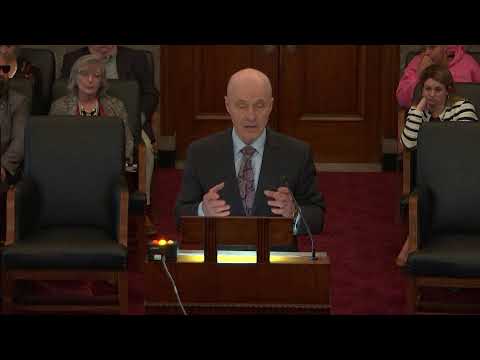
A Tennessee appellate panel heard oral argument in State of Tennessee v. John David Cunningham on whether a videotaped forensic interview of the alleged child victim was admissible at trial and whether any error requires reversal under plain-error review.
Appellate counsel McNally urged the court to reverse, saying the controlling statute requires that, for admission, “the child must testify under oath that it is true and correct,” and that did not occur. McNally said trial counsel failed to preserve the issue with contemporaneous objections or a motion for new trial, leaving the appellate court to consider plain error. He repeatedly cited the court’s recent decision in Stegall and the Supreme Court’s McCoy precedent as requiring strict compliance with the statute’s authentication requirement.
The argument centered on three disputed points: whether the statute (cited in argument as TCA 27-24-7-123) requires the child to authenticate the recording under oath; whether other trial evidence independent of the recording supported the convictions; and whether, given trial counsel’s choices, the defendant can meet the third and fourth prongs of plain-error review (a substantial right was affected and review is necessary to do substantial justice).
McNally argued the second recorded forensic interview improperly “bolsters the credibility of the child” because the child’s trial testimony and other record evidence were inconsistent with portions of the video. McNally pointed to multiple moments in the record where the child either disavowed statements from the interview (“I lied a lot at that interview,” according to the record) or said she did not recall alleged acts. He also highlighted an in-court sequence in which the state had obtained the court’s permission to recall the child to authenticate the tape but later did not call her back, and instead introduced the video through the forensic interviewer.
State counsel Lacey Wilbur acknowledged the trial court erred in admitting the interview under the statute but argued the defendant could not satisfy the remaining plain-error factors. Wilbur stressed that the victim gave live testimony describing specific conduct (including repeated instances of licking) and that medical witnesses testified under the medical-diagnosis hearsay exception to corroborate parts of the victim’s account. Wilbur also invoked precedent the state reads as limiting relief where a defendant had the opportunity to cross-examine the witness at trial but elected not to do so.
Panel questioning probed distinctions between Stegall — where the forensic interview was the only evidence of contact — and the record here, in which the court and both parties agreed there was other testimony and medical evidence. Judges also asked about trial counsel’s choices, whether a later opportunity to call the victim would have cured an objection, and what remedy would follow if the panel found plain error. One judge noted the trial transcript shows the state prepared to recall the child and then, on the next day, did not call her; the reason for the change in plan does not appear in the record.
Counsel for both sides acknowledged the record is mixed: there are passages where the child says she lied in the interview, passages where she explicitly confirmed on redirect that the interview contents were true, and other evidence the state says corroborates several convictions. The parties also disagreed about how Stegall and the Supreme Court’s McCoy decision control the plain-error analysis.
After argument the panel took the case under advisement. The court did not announce a decision at argument.