Get Full Government Meeting Transcripts, Videos, & Alerts Forever!
Get email alerts on the Judicial topic
No spam. Unsubscribe anytime.
Appellate panel hears arguments over election on one count and trial courts consecutive-sentence findings in Bassett case
Summary
An appellate panel heard arguments in the appeal of Brandon Bassett focused on whether the state improperly failed to elect a single act for count 5, risking a non-unanimous jury verdict, and whether the trial court made adequate findings to justify consecutive sentences that produced a 30-year total term.
An appellate panel on Tuesday heard oral arguments in the appeal of Brandon Bassett, who was convicted in Montgomery County on five aggravated battery counts involving an 11-year-old victim. The arguments centered on whether the state was required toelect a single act for count 5 to avoid a non-unanimous verdict and whether the trial courtmade adequate findings to impose consecutive sentences that together total 30 years.
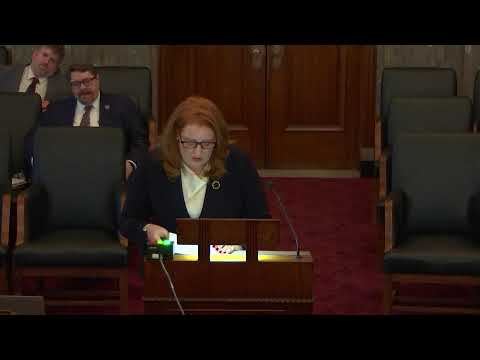
Appellate counsel Kendra Stivers Jones, appearing "from the appellate division of the public defender's conference," told the court that the defense raises two issues on appeal: "elections," specifically that the trial court erred when the state did not elect with regard to count 5 only, and the adequacy of findings supporting consecutive sentencing. Stivers Jones said the victim had documented alleged incidents on a cell phone and that the indictment listed five specific dates between October and November 2020, with count 5 charging conduct on Nov. 25, 2020.
Stivers Jones argued the trial record shows potentially conflicting evidence about what acts were tied to Nov. 25, saying in part that the prosecutionin closing rebuttal told jurors "both the touching of the breast and the touching of the area below the stomach occurred," creating a risk the jury might not have been unanimous about which specific act supported the count. She asked the court to find plain error on count 5 and said the trial courts sentencing findings were "sparse," arguing they did not justify giving consecutive mid-range 10-year sentences on five class B felonies.
Caroline Weldon, representing the State, urged the panel to affirm. "This court should affirm the judgments of the trial court because no election was required as to count 5 and the trial court's findings were adequate to impose consecutive sentencing," she said. Weldon told the court the victims forensic interview and cross-examination tied the Nov. 25 date to touching of the breast and that the prosecutors misstatement in closing argument was not evidence. She noted the defendant did not object at trial or raise election in a post-trial motion, and argued the appellant therefore waived plenary review.
On sentencing, both sides agreed on several record facts: Bassett was convicted of five class B felonies as a Range I offender with no prior convictions; the trial court imposed 10-year mid-range sentences on each count, ordered the first three to run consecutively and the last two to run concurrently to the third, producing an aggregate 30-year term. The defense argued the trial court failed to make sufficient findings required for permissive consecutive sentencing; the State said the court adequately considered the relevant factors and the time span of the offenses.
Judges questioned counsel closely about whether the record sufficiently shows two distinct acts tied to the Nov. 25 date and whether any trial-court statements or other record evidence would cure the risk of a non-unanimous jury verdict. Counsel for the defense said the record was at best ambiguous and that an explicit election after the close of proof could have avoided the issue; the State said the forensic interview, cross-examination, and the victim's contemporaneous notes placed the Nov. 25 conduct within the record as touching the breast.
The court took the arguments under advisement and did not issue a decision from the bench. No additional proceedings or rulings were announced at the hearing.