Get Full Government Meeting Transcripts, Videos, & Alerts Forever!
Get email alerts on the Judicial topic
No spam. Unsubscribe anytime.
Appeals panel hears challenges to expert testimony, judges role as "thirteenth juror," verdict form and phone evidence in Gavin Clark case
Summary
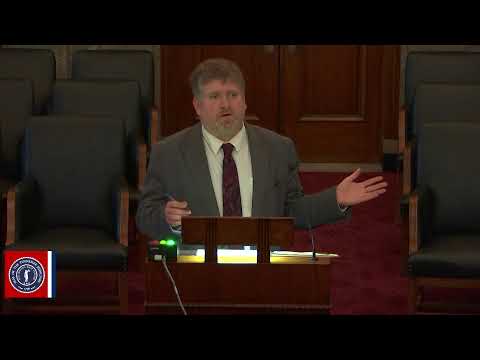
Drew Justice, counsel for appellant Gavin Clark, told a three-judge appellate panel that the trial judge repeatedly "refus[ed] to take a stand, refus[ed] to rule on the relevant issues, and ultimately pass[ed] the buck on to others," and asked the court to reverse the convictions.
Drew Justice, counsel for appellant Gavin Clark, told a three-judge appellate panel that the trial judge repeatedly "refus[ed] to take a stand, refus[ed] to rule on the relevant issues, and ultimately pass[ed] the buck on to others," and asked the court to reverse the convictions.
The argument focused on four principal issues raised on appeal: whether the trial court abused its gatekeeping role for expert medical testimony (the McDaniel issue), whether the judge acted properly as the so-called thirteenth juror weighing the evidence, whether the written verdict form produced an ambiguous or internally inconsistent verdict, and whether the seizure and use of cell-phone data was supported by a valid search-warrant affidavit or was harmless error.
The McDaniel/hearing issue
Justice said the trial judge "was supposed to serve as gatekeeper" and that the court "basically passed the buck onto the experts" by refusing to conduct a collective McDaniel-style hearing before trial and by admitting each expert in separate voir dire proceedings. He argued the separate, piecemeal hearings prevented the judge from seeing and resolving direct conflicts among the witnessesfor example, testimony suggesting both that a single blow can produce multiple disconnected fractures and testimony that multiple fractures must be connectedand denied the defense a meaningful opportunity to rebut the state's experts.
Alan Groves, arguing for the state, answered that the record shows the trial court held McDaniel inquiries before each witness in the voir dire context and that the court considered the relevant factors. "The trial court properly exercised its discretion by holding the McDaniel hearings when it did based on the scheduling availability of the state's witnesses," Groves told the panel, adding that three of the four experts offered similar pediatric critical-care testimony and the separate hearings were cumulative.
Thirteenth juror / weight-of-the-evidence issue
Justice told the panel the trial judge applied the Jackson v. Virginia standard in places where he should have acted as the thirteenth juror weighing the evidence and making an independent determination of whether the verdict should stand. He argued the judgeby citing the wrong standard and, at times, using language that suggested deference to the juryfailed to perform that role.
Groves countered that the trial court "did separately analyze sufficiency of the evidence and the weight of the evidence" in both its written order and oral ruling, and that the court's references to "great weight of the evidence" show it performed the thirteenth-juror function even if an appellate citation error appeared in the written order.
Ambiguous verdict form
Justice told the panel that the jury returned a form showing the defendant guilty of aggravated child abuse while also marking not guilty on a related child-abuse count, producing a potential internal inconsistency. "We had Mr. Clark being found guilty of aggravated child abuse, but also not guilty of child abuse," Justice said, pointing to circuit and federal authorities he said support relief when a verdict and related interrogatories are inconsistent.
Groves urged a different reading: the additional markings could be "surplusage" and a contemporaneous polling of jurors could have cured the ambiguity. "I do think a poll could could cure that, error in the form," Groves said, and he argued a common-sense construction of the form favors affirmance because the jury announced the greater offense in open court.
Search warrant and cell-phone evidence
Justice argued the affidavit supporting a search warrant lacked any direct factual showing that the defendant's phone contained communications or other evidence, calling the affidavit "totally bald" on that point and contending the state relied on improperly seized browser and search-history material to prove the defendant's state of mind for aggravated neglect.
Groves replied that the affidavit reasonably allowed inference of communications because the mother had agreed to "hand over evidence of the alleged crime, which was to include his cell phone," and that the mother's in-court testimony about texts and calls undercuts any claim of prejudice: even if the warrant were defective, he said, the state has a strong harmless-error argument.
What the panel asked and what it left open
Judges pressed both sides on timing of McDaniel hearings, the clarity of the trial courts written findings, whether sentencing comments shed light on the judges view of the verdict, and what remedy would follow an ambiguous verdict (acquittal, reversal with dismissal, or remand for new trial). Defense counsel said he sought reversal and possible remand or dismissal; the state urged affirmance but acknowledged a new trial could be an available remedy if the court finds an error that cannot be cured on the record.
The court took the arguments under advisement at the close of the session. The panel recessed with no immediate decision announced.