Get Full Government Meeting Transcripts, Videos, & Alerts Forever!
Get email alerts on the Rule 404b Prior Bad Acts topic
No spam. Unsubscribe anytime.
Public defender urges reversal, says trial court admitted prior-bad-acts evidence without clear showing
Summary
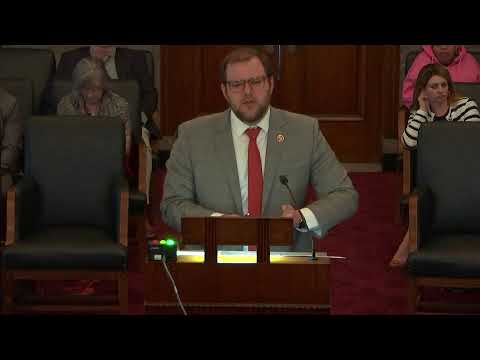
Mitch Rains, a public defender with the public defender's office representing Jonathan Duncan, told an appeals panel that the trial court improperly admitted evidence of prior bad acts without proof meeting the clear-and-convincing standard under Tennessee Rule of Evidence 404(b).
Mitch Rains, a public defender with the public defender's office representing Jonathan Duncan, told an appeals panel that the trial court improperly allowed evidence of prior bad acts to reach the jury and that the record does not show the required clear-and-convincing proof for admission under Rule 404(b).
“The prior bad act ... would be admissible at trial,” Rains said of the trial court’s pretrial statements, but he told the court the hearing produced no testimony, exhibits or videos to satisfy the clear-and-convincing standard and that, because defense counsel did not renew a pretrial challenge, review on appeal is limited to plain error. “When you look at the evidence that was introduced at trial ... I do not believe that it amounts to a clear and convincing showing of proof that ... Mr. Duncan engaged in these prior bad acts,” Rains said.
Rains asked the panel to apply this court’s prior guidance in State v. Kirkpatrick and in Gilly (a Tennessee Supreme Court decision) and said those precedents counsel against relying on a bare summary at a pretrial hearing—especially in a murder case where the possible punishment can be severe. He told the court the primary trial evidence tying the Nashville incident to Duncan came from one witness, Mr. Malone, and that video and officer testimony introduced at trial did not clearly show Duncan conducting the alleged bag exchange or driving the black truck thought to be involved.
Will Lundy, who represents the State of Tennessee in the appeal, told the panel the court may evaluate 404(b) issues from a summary and that, on the trial record, the evidence was relevant and necessary to prove motive and identity. “The record showed that the defendant had texted with Mr. Sanders, and they had agreed to meet up,” Lundy said, and he added that he recalled video showing the defendant at the Thornton’s gas station and the black truck later identified as the defendant’s vehicle. “When you take into account the fact that the defendant had planned on meeting the victim at Thornton’s, I think the evidence is clear and convincing as to what happened that day,” Lundy argued.
Rains acknowledged that the state offered summaries at the 404(b) hearing but stressed that the hearing produced no formal 404(b) order reflecting presentation of proof, and that on appeal the court must consider only the evidence actually admitted at trial. He called the pretrial absence of live proof a “process” error and said the weight and sufficiency of the later trial evidence do not meet the clear-and-convincing threshold.
Lundy responded that Kirkpatrick permits—and in many cases requires—trial courts to evaluate proffered 404(b) material based on summaries when appropriate, and that, in any event, the trial record contains videos, text messages and officer testimony that together established motive and identity.
The panel did not issue a ruling at argument; the court took the matter under advisement.