Get Full Government Meeting Transcripts, Videos, & Alerts Forever!
Get email alerts on the Behavioral Health topic
No spam. Unsubscribe anytime.
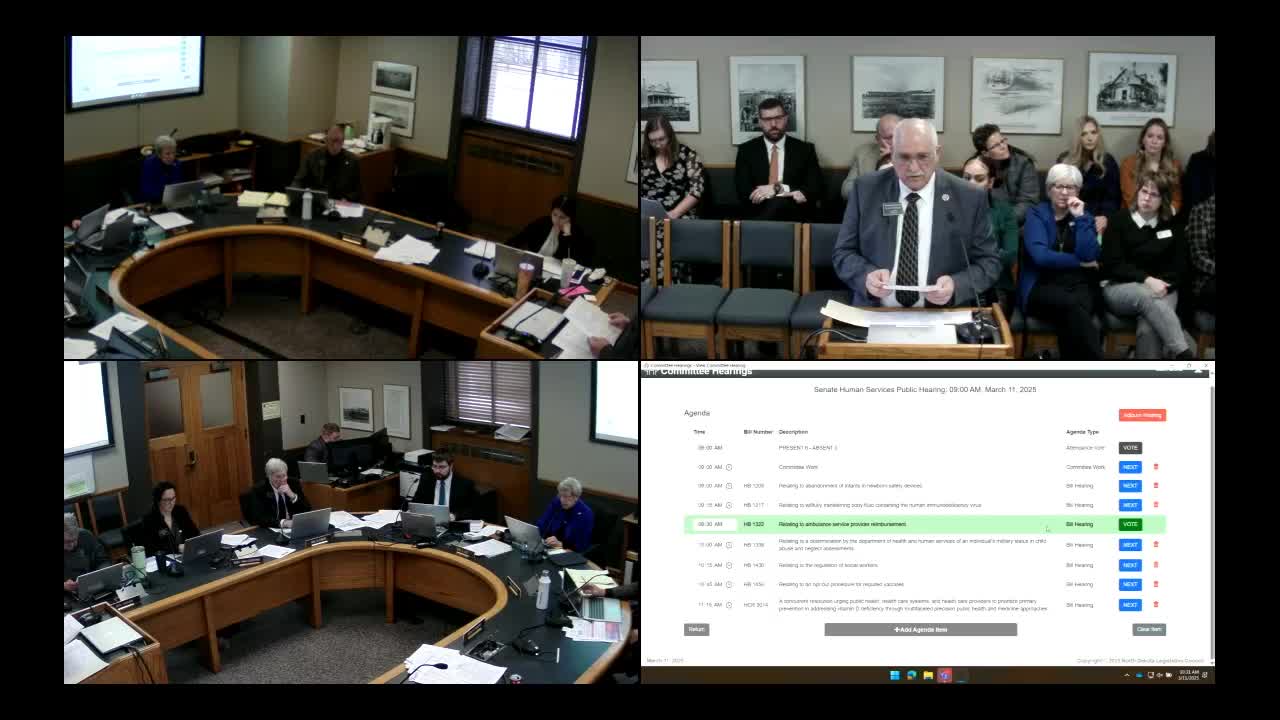
Panel debate as lawmakers weigh amendment to social‑work ethics on treatment of questioning youth (HB1430)
Summary
The Senate Human Services Committee heard competing testimony on House Bill 1430, which seeks to amend the state social‑work board's administrative guidance related to treatment options for individuals questioning sexual orientation or gender identity. Supporters said the bill would prevent what they view as affirm‑only restrictions and ensure
Representative Laurie Van Winkle introduced House Bill 1430, seeking to reverse an administrative rule that, in her view, restricts licensed social workers to "affirmation only" services for individuals questioning sexual orientation or gender identity. Van Winkle said the rule adopted by the Board of Social Work in 2021 prohibits practices that attempt to change sexual orientation or gender identity and that HB1430 would allow counselors to offer a broader spectrum of evidence‑based, client‑directed care when requested.
Allison Trainor, a licensed clinical social worker testifying on behalf of the National Association of Social Workers (NASW), opposed the bill and described conversion‑therapy practices as unethical and harmful. Trainor said contemporary clinical guidance and the state board’s administrative rule prohibit practices that seek to change a person’s sexual orientation or gender identity because those practices are associated with increased suicide risk and poor outcomes.
Other clinicians opposed the bill as drafted, arguing it creates ambiguity and loopholes that could permit harmful practices. Elizabeth Anderson, a licensed clinician who testified in opposition, said the bill’s language could create gray areas that allow unvalidated methods to be used under the guise of "self‑determination" or "spiritual" counseling, and she recommended relying on existing board rules and professional standards.
Supporters said the proposal merely clarifies that a client who requests counseling consistent with their personal or spiritual beliefs should be able to receive such services and that parental authorizations and disclosures would be required for minors. Opponents argued the bill is unnecessary because the current administrative rule already allows neutral, evidence‑based exploration and that enacting the bill risks undoing protections against practices judged harmful by major medical and mental‑health organizations.
Ending: The committee heard lengthy, at times emotional, testimony on both sides and asked legislative staff, the social‑work board and stakeholders to consider precise statutory language and potential unintended consequences before making a decision.